
Feeling constantly drained, losing muscle mass despite working out, or noticing a drop in your sex drive? You might not just be getting older. You could be dealing with male hypogonadism, a condition defined by insufficient testosterone production by the testes. It’s not a rare issue; it affects millions of men globally. But here is the catch: not every man with low numbers needs treatment, and treating the wrong people can cause serious health problems. Understanding what is actually happening in your body-and distinguishing between normal aging and a medical disorder-is the first step toward feeling like yourself again.
What Is Male Hypogonadism?
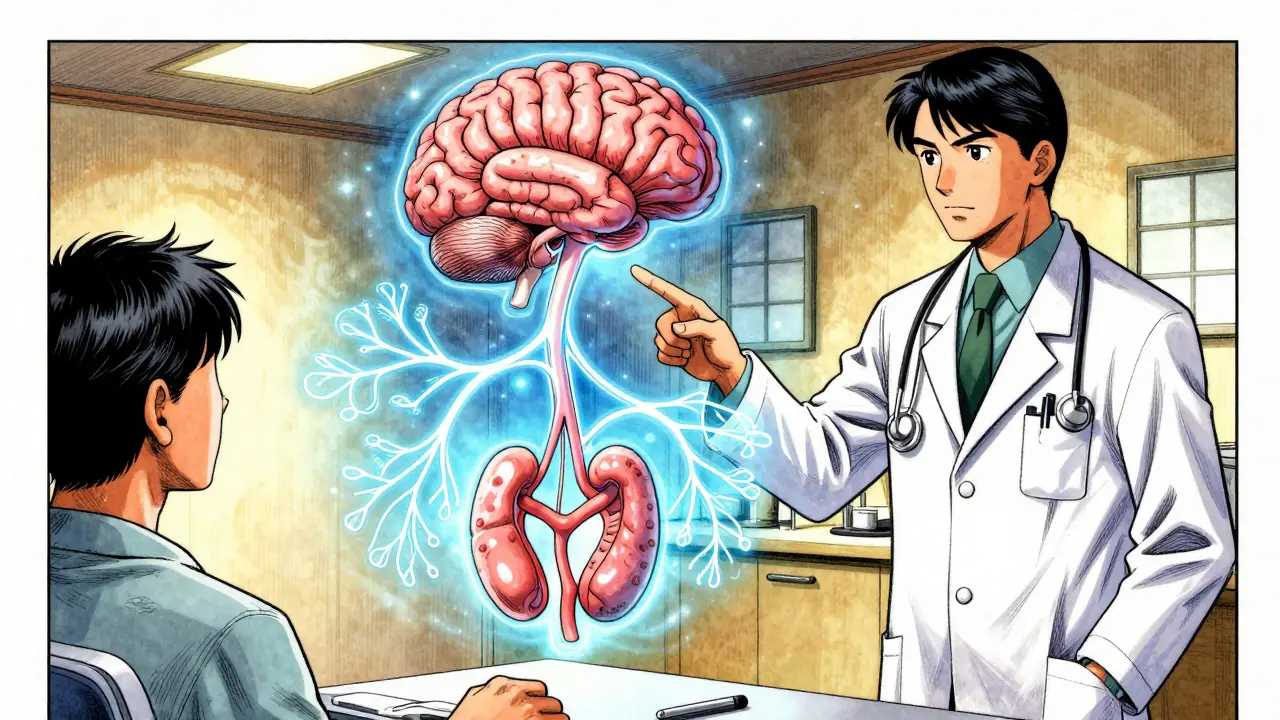
At its core, hypogonadism means your testes aren’t producing enough testosterone, which is the primary male sex hormone responsible for libido, muscle mass, bone density, and red blood cell production. Think of it as a supply chain issue. Either the factory (the testes) is broken, or the management team (the brain’s hypothalamus and pituitary gland) isn’t sending the right signals to start production.
Doctors split this into two main types, and knowing which one you have changes everything about how you get treated:
- Primary Hypogonadism: The problem is in the testes themselves. Your brain is screaming at the testes to produce testosterone (sending high levels of Luteinizing Hormone or LH), but the testes can’t respond. This is often called hypergonadotropic hypogonadism.
- Secondary Hypogonadism: The testes are fine, but the brain isn’t sending the signal. Levels of LH and Follicle-Stimulating Hormone (FSH) are low because the hypothalamus or pituitary gland is underactive. This is far more common, accounting for 85-90% of cases.
Historically, we’ve known about this since Adolf Butenandt and Leopold Ruzicka isolated testosterone in 1935. But today, the landscape has changed. We see more secondary cases linked to lifestyle factors like obesity, whereas primary cases are often genetic or due to injury.
Symptoms That Signal Low Testosterone
You can’t diagnose hypogonadism based on feelings alone. Fatigue and low mood are vague-they could be stress, poor sleep, or depression. However, specific physical signs point directly to hormonal deficiency. If you are experiencing several of these, it’s time to talk to a doctor.
The most reliable indicators include:
- Sexual Dysfunction: A significant drop in spontaneous erections (reported in 78% of symptomatic men) and reduced libido (present in 85% of patients). If morning erections disappear completely, that’s a strong biological signal, not just psychological.
- Body Composition Changes: Without testosterone, your body struggles to maintain lean tissue. You may notice a 20-30% decrease in muscle mass and a simultaneous 10-15% increase in body fat, even if your diet hasn’t changed.
- Bone Health Issues: Testosterone helps build bone density. Men with long-standing hypogonadism face a 33% risk of developing osteoporosis, with bone density dropping 2-3% annually if untreated.
- Anemia: Testosterone stimulates red blood cell production. Low levels often lead to hemoglobin dropping below 13.5 g/dL, causing persistent tiredness and shortness of breath.
If you’re just feeling "off," it might not be hormones. But if you’re losing muscle, gaining fat, and losing sexual function simultaneously, the pattern fits hypogonadism.
How Doctors Diagnose Low Testosterone
This is where many men get it wrong. One bad blood test doesn’t mean you have hypogonadism. Testosterone levels fluctuate wildly throughout the day. They follow a circadian rhythm, peaking between 8:00 AM and 11:00 AM. Testing at 4 PM could give you a falsely low result.
Current clinical guidelines from the American Urological Association require a strict protocol:
- Timing: Blood must be drawn early in the morning, ideally before 10 AM.
- Repetition: You need two separate measurements showing serum testosterone below 300 ng/dL.
- Methodology: Mass spectrometry testing is preferred. Standard immunoassays have a 15-20% false-positive rate, meaning they might tell you your levels are low when they aren’t.
- Hormonal Context: Doctors will also check LH and FSH levels to determine if your case is primary or secondary, plus prolactin and hematocrit to rule out other issues.
If your total testosterone falls in the gray zone (250-350 ng/dL), doctors may order a free testosterone measurement using equilibrium dialysis. Treatment is only considered if free levels drop below 65 pg/mL. This precision matters because treating someone who doesn’t truly need it exposes them to unnecessary risks.
Treatment Options: Beyond the Stereotypes
If you meet the diagnostic criteria-symptoms plus confirmed low levels-treatment aims to restore balance while minimizing risks. The cornerstone intervention is Testosterone Replacement Therapy (TRT), which involves administering exogenous testosterone to alleviate symptoms of hypogonadism. But TRT isn’t one-size-fits-all. Here are the main delivery methods:
| Method | Dosage/Frequency | Pros | Cons |
|---|---|---|---|
| Gels/Patches | 5-10g daily | Steady levels; easy to adjust | Risk of transfer to others (1.5% of contacts); skin irritation |
| Injections | 200-400mg every 2-4 weeks | Low cost ($30-50/month); highly effective | Peaks and troughs in levels; requires medical visits |
| Pellets | 150-450mg every 3-6 months | Stable levels; "set and forget" | Minor surgery required; $500-1,000 per procedure |
| Oral Capsules (Jatenzo) | Twice daily with food | No transfer risk; high bioavailability (95%) | Must take with high-fat meals; potential liver monitoring needed |
For men with obesity-related secondary hypogonadism, lifestyle change is often the first line of defense. Losing just 10% of body weight can boost testosterone by 150-200 ng/dL. In fact, 65% of obese men who lose 10% of their weight can discontinue TRT within 18 months. For genetic causes like Klinefelter syndrome, however, lifelong replacement is usually necessary.
Risks, Side Effects, and Safety Concerns
Let’s address the elephant in the room: cardiovascular risk. In 2015, the FDA mandated black box warnings on TRT after observational studies suggested a 30% increased risk of heart attack in men over 65 during the first 90 days of treatment. This sparked intense debate.
Dr. Ronald Swerdloff of Harbor-UCLA Medical Center argues that TRT should be reserved strictly for men with unequivocal symptoms and confirmed low levels, not as an anti-aging tool. Conversely, Dr. Abraham Morgentaler from Harvard Medical School contends that recent data shows a 30% reduction in all-cause mortality among appropriately treated men, suggesting the risks were overstated.
The truth likely lies in the middle. The ongoing TRAVERSE trial, tracking 5,000 men until 2025, aims to settle this once and for all. Until then, safety protocols are strict. You should avoid TRT if you have:
- Prostate cancer or breast cancer
- Untreated severe heart failure
- Erythrocytosis (hematocrit >50%), as TRT thickens the blood
Common side effects include acne (35% of users), polycythemia requiring blood donation (15%), and testicular atrophy (25%). Monitoring is non-negotiable. You’ll need hematocrit checks every 3-6 months and PSA tests to ensure prostate health remains stable.
Who Should Avoid TRT?
Not everyone with low numbers needs medication. The Endocrine Society notes that inappropriate TRT use has skyrocketed 300% since 2009, with 40% of prescriptions lacking proper diagnostic testing. This is dangerous. If your low testosterone is caused by temporary factors like extreme stress, sleep apnea, or opioid use, treating the root cause is better than masking it with hormones.
Also, consider fertility. Exogenous testosterone shuts down natural production. If you plan to have children soon, TRT might make you sterile. In those cases, doctors might prescribe Clomiphene Citrate or hCG injections instead, which stimulate natural production without suppressing sperm count.
Future Directions in Hypogonadism Care
The field is evolving rapidly. In 2023, the FDA approved Jatenzo, an oral capsule with 95% bioavailability, eliminating the transfer risks associated with gels. Meanwhile, research into Selective Androgen Receptor Modulators (SARMs) like enobosarm shows promise. Early trials suggest they can improve muscle mass by 70% without suppressing natural testosterone-a game-changer if proven safe.
By 2024, guidelines are shifting toward phenotype-specific approaches. Instead of targeting a fixed number on a lab sheet, doctors will tailor treatment to your specific symptom profile. As Dr. Shalender Bhasin puts it, the future isn’t about one-size-fits-all replacement; it’s about personalized restoration.
What is the difference between primary and secondary hypogonadism?
Primary hypogonadism originates in the testes, where they fail to produce testosterone despite high signals from the brain (high LH/FSH). Secondary hypogonadism stems from the brain (hypothalamus/pituitary), which fails to send the signal to the testes (low LH/FSH). Secondary cases are much more common, often linked to obesity or pituitary issues.
Is low testosterone just a part of aging?
Testosterone naturally declines with age, but a sharp drop causing symptoms is not inevitable. While 20% of men aged 60-70 have levels below 300 ng/dL, only 10-15% have symptomatic hypogonadism requiring treatment. Many older men maintain healthy levels through lifestyle management.
Can I reverse hypogonadism without medication?
If your hypogonadism is secondary and driven by obesity, yes. Losing 10% of your body weight can significantly raise testosterone levels, allowing some men to stop TRT. However, primary hypogonadism caused by genetic conditions like Klinefelter syndrome or testicular injury typically requires lifelong hormone replacement.
Does TRT cause infertility?
Yes, standard TRT suppresses natural sperm production by signaling the brain to stop stimulating the testes. If fertility is a priority, discuss alternatives like hCG injections or Clomiphene with your doctor, which can restore testosterone levels while maintaining sperm count.
How quickly do I feel results from TRT?
Most men report improved energy within 2 weeks and restored morning erections after 4-6 weeks. Muscle mass gains and body composition changes take longer, typically visible after 6 months of consistent therapy combined with resistance training. Full symptom resolution occurs in only 25-35% of patients, indicating other factors may be involved.
Author
