
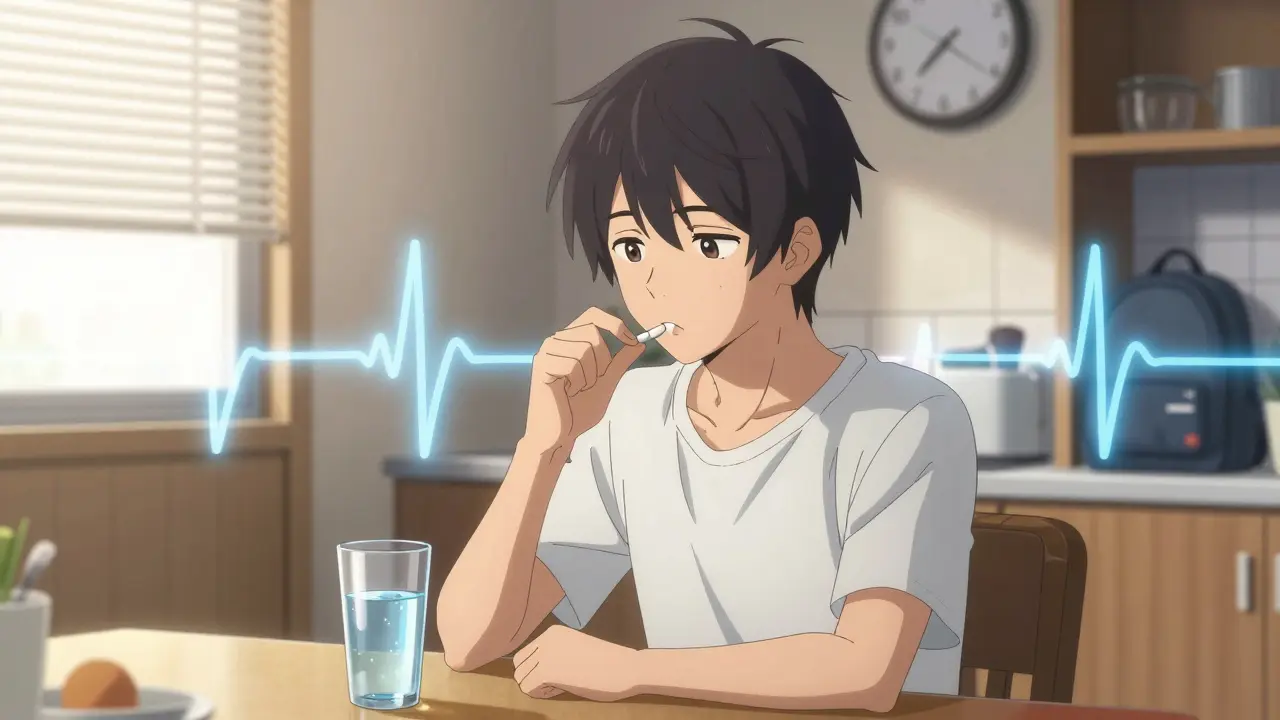
When you or your child starts taking ADHD medication, the goal is simple: focus better, feel calmer, get through the day. But for many families, a quiet worry follows - what’s this doing to the heart? And why can’t we sleep? These aren’t just random concerns. They’re real, documented, and backed by years of research. The truth? Stimulants for ADHD work well - for most people. But they aren’t harmless. Understanding the risks around heart health and sleep isn’t about scaring you. It’s about giving you the facts so you can make smart, informed choices.
How Stimulants Work - And What They Do to Your Body
ADHD stimulants like methylphenidate (Ritalin, Concerta) and amphetamines (Adderall, Vyvanse) aren’t magic pills. They’re brain chemicals with a job: boost dopamine and norepinephrine. That’s what helps with attention and impulse control. But here’s the catch - these same chemicals also affect your heart and nervous system. They tell your heart to beat faster, your blood vessels to tighten, and your body to stay alert. It’s why you feel more awake. It’s also why your pulse might climb, and your blood pressure goes up - even if you don’t feel it.
These effects aren’t dramatic. Most studies show an average increase of 1 to 4 mmHg in systolic blood pressure and 1 to 2 beats per minute in heart rate. Sounds tiny? Maybe. But over months and years, those small changes add up. A 2024 study in JAMA Psychiatry followed over 10,000 people for 14 years. It found that long-term stimulant use was linked to a 17% higher risk of heart disease - especially high blood pressure and artery problems. The risk didn’t jump overnight. It grew slowly, especially during the first three years of use. And it didn’t happen to everyone. But it happened more often in people taking higher doses.
Cardiovascular Risks: Real, But Not Common
Back in 2006, the FDA issued a warning after 25 cases of sudden death in people taking ADHD meds. That sent shockwaves. Hospitals started asking for ECGs before prescribing. But here’s what happened next: more data came in. And it painted a different picture.
Large studies now show the absolute risk is very low. For example, one 2024 study from the American College of Cardiology found that young adults on stimulants were 17% more likely to develop cardiomyopathy after one year - and 57% more likely after eight years. Sounds scary? Let’s put it in perspective. Out of 1,000 people taking these meds, maybe one or two might develop heart muscle issues over eight years. That’s rare. But it’s not zero.
And it’s not just stimulants. A 2025 study from the University of Southampton compared stimulants to non-stimulants like atomoxetine and viloxazine. Surprise - the non-stimulants had nearly the same effect on blood pressure and heart rate. Only guanfacine lowered both. That means if you’re avoiding stimulants thinking you’re safer, you might not be. The real issue isn’t whether a drug is labeled “stimulant.” It’s how your body reacts to it.
For people with existing heart conditions - like Long QT Syndrome - things get trickier. Some studies show increased fainting or irregular rhythms. Others show no problems. That’s why experts now say: don’t assume. Don’t skip the heart history. Ask about family members who had sudden cardiac death before age 50. Ask about dizziness, chest pain, or unexplained fainting. If any of that’s there, talk to a cardiologist. Don’t panic. Just be informed.
Why Sleep Gets Disrupted - And How to Fix It
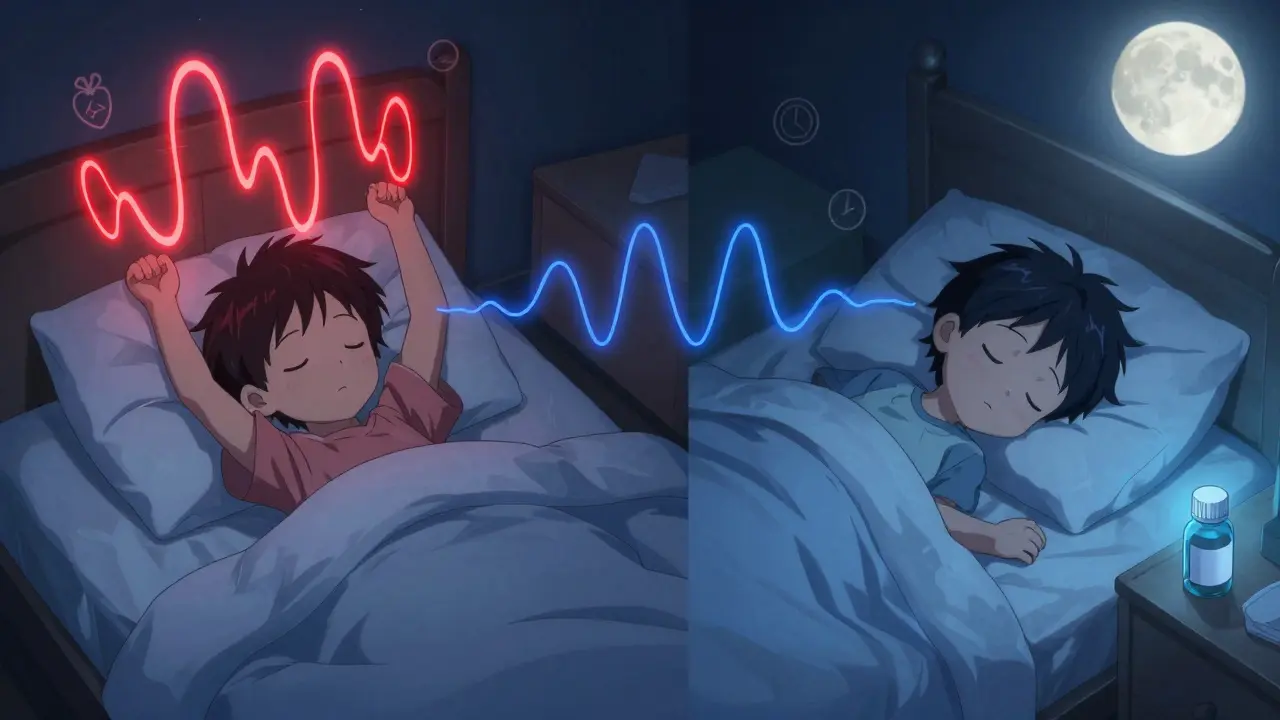
If your child is lying awake at night, or you’re tossing and turning after taking your afternoon dose, you’re not alone. About 30% to 50% of people experience sleep problems when starting stimulants. It’s not just “being wired.” It’s biology. The same brain chemicals that help you focus also delay the signal that says, “It’s time to rest.”
Extended-release pills make this worse for some. A pill that lasts 12 hours? That means it’s still active at 9 p.m. If you take it at 8 a.m., your body doesn’t fully clear it until late evening. That pushes back sleep onset by 15 to 30 minutes on average. Not huge - but enough to make mornings rough when you’re already tired.
There are fixes. First, take the medication earlier. If you’re on a long-acting pill, try taking it before 8 a.m. instead of 9. Second, talk to your doctor about switching to a shorter-acting version. You take it in the morning, and it wears off by dinnertime. Third, if sleep stays bad, melatonin can help. A low dose - 0.5 to 5 mg - taken 1 to 2 hours before bed often resets the clock without side effects. It’s not a cure, but it’s a simple tool that works for many.
And here’s something surprising: some non-stimulants actually help sleep. Guanfacine, for example, can improve sleep quality. It lowers blood pressure and calms the nervous system. Atomoxetine might make you tired at first, but it rarely causes insomnia. If sleep is your biggest problem, it’s worth exploring these alternatives - not because stimulants are dangerous, but because better sleep matters just as much as better focus.
Monitoring: What Your Doctor Should Be Doing
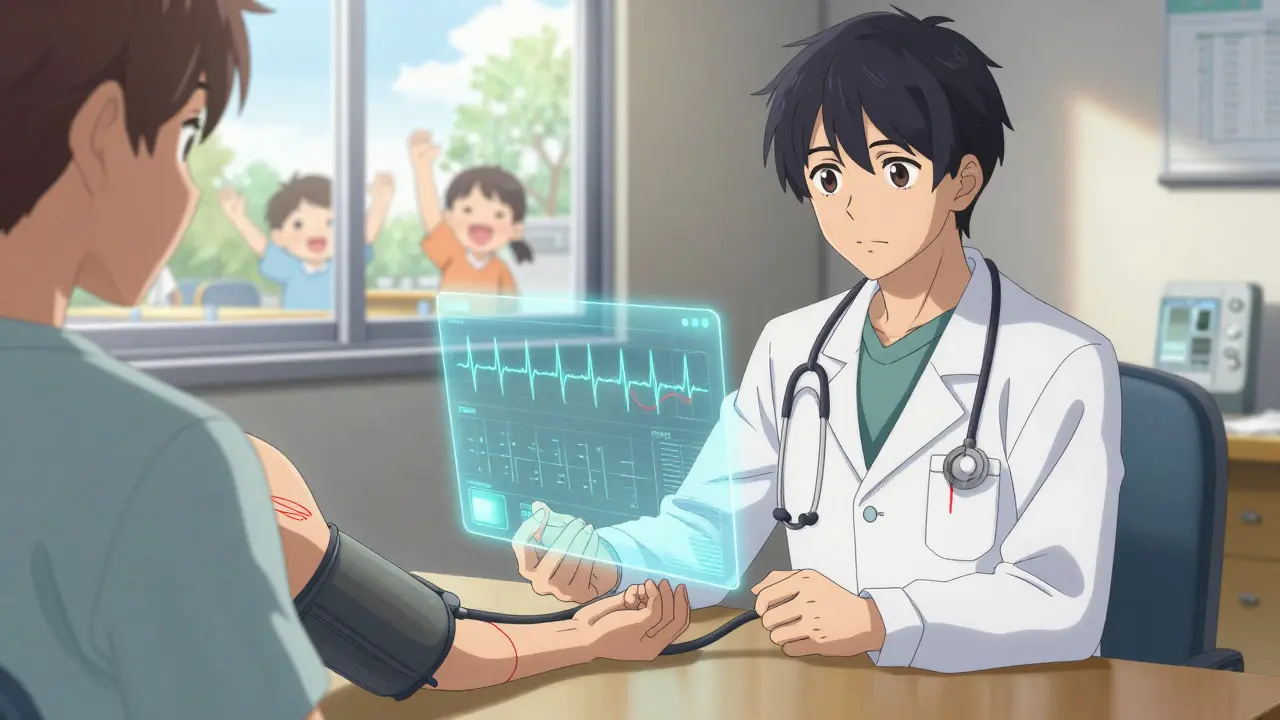
You don’t need an ECG before every prescription. But you do need basic checks. The American Academy of Pediatrics says: get baseline blood pressure and heart rate before starting. Then check again every 3 to 6 months. That’s it. No fancy tests. Just a simple measurement. If you’re over 18, have high blood pressure, heart disease, or a family history of sudden death - then talk to a cardiologist. But for most kids and adults? Routine monitoring is enough.
Start low, go slow. A typical first dose of methylphenidate is 5 mg. Increase by 5 to 10 mg per week. That gives your body time to adjust. Watch for signs: headaches, dizziness, chest tightness, palpitations. If any of those show up, tell your doctor. Don’t wait. Don’t assume it’s “just anxiety.”
And if you’re already on medication? Keep monitoring. Even if you’ve been on it for years. The risk of heart problems increases over time. That doesn’t mean stop. It means stay aware.
What About Non-Stimulants?
Not everyone needs stimulants. Atomoxetine (Strattera) doesn’t raise heart rate as much. Guanfacine (Intuniv) actually lowers blood pressure. Viloxazine (Qelbree) has minimal cardiovascular effects. These aren’t “second choices.” They’re valid first options - especially if sleep or heart concerns are high on your list.
And here’s the truth: many people switch to non-stimulants not because stimulants failed, but because they wanted to fix sleep or avoid the heart bump. And it worked. If your child can’t sleep, or you feel your pulse racing after lunch - it’s okay to ask: “Is there another way?”
The Bigger Picture: Benefits vs. Risks
Let’s say you have a child with ADHD. They’re failing math. They’re getting in trouble at school. They’re losing friends because they can’t sit still or control their impulses. Their self-esteem is crumbling. Now, imagine they start medication. Within weeks, they’re turning in homework. They’re raising their hand. They’re smiling again.
The risk of heart problems? Very low. The benefit? Huge. A 2024 study from Harvard Medical School put it bluntly: the number of people you’d need to treat with stimulants before one serious heart event occurs is over 1,000. That’s a tiny number compared to the millions who benefit.
That’s why doctors still prescribe these meds. Not because they’re perfect. But because untreated ADHD carries its own risks - poor grades, job loss, accidents, depression, substance abuse. The goal isn’t to avoid medication. It’s to use it wisely.
What You Can Do Today
- Ask your doctor for a baseline blood pressure and pulse reading before starting any ADHD med.
- Take the pill earlier in the day - ideally before 8 a.m.
- Keep a sleep log: note when you take the med, when you feel awake, and when you fall asleep.
- Watch for symptoms: dizziness, chest pain, racing heart, fainting. Report them immediately.
- If sleep stays bad, ask about melatonin or switching to a non-stimulant.
- Don’t skip follow-ups. Even if you feel fine, check your numbers every few months.
There’s no one-size-fits-all here. What works for one person might not work for another. But the data is clear: with careful monitoring, stimulants are safe for most. And the benefits? They’re life-changing.
Author

Sean Callahan
March 6, 2026 AT 20:19Tim Hnatko
March 7, 2026 AT 17:10Vikas Verma
March 8, 2026 AT 04:36phyllis bourassa
March 8, 2026 AT 17:34Ferdinand Aton
March 9, 2026 AT 18:17Weston Potgieter
March 11, 2026 AT 17:25William Minks
March 13, 2026 AT 17:13Jeff Mirisola
March 14, 2026 AT 09:40Susan Purney Mark
March 14, 2026 AT 17:13