
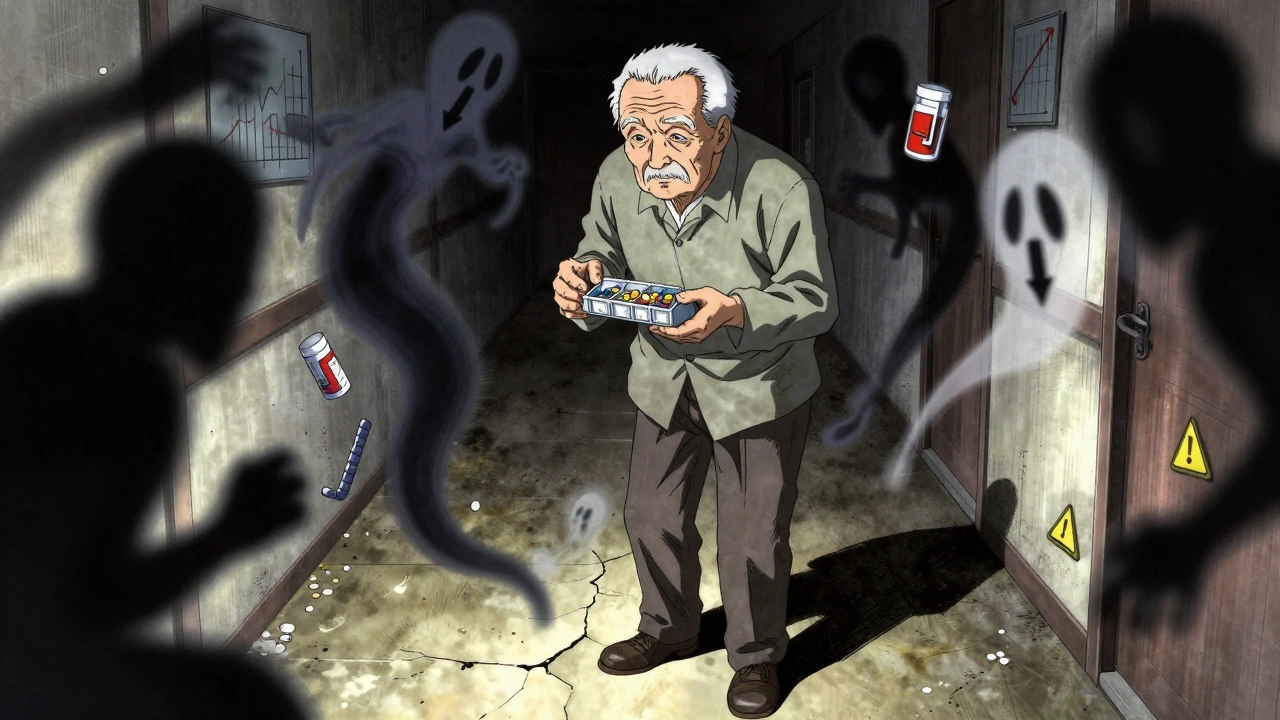
Every year, more than 36,000 older adults in the U.S. die from falls. That’s more than car accidents or gun violence. And it’s not just about weak muscles or slippery floors. A huge part of the problem? The medicines many seniors take every day.
Medicines That Make You Unsteady
It’s easy to assume that if a doctor prescribed it, it’s safe. But for seniors, some of the most common medications - even ones taken for years - can turn a simple walk into a dangerous gamble. The American Geriatrics Society’s Beers Criteria, updated in 2023, lists dozens of drugs that should be avoided or used with extreme caution in people over 65. Why? Because they mess with balance, blood pressure, or thinking.Take antidepressants. Not all of them are equal, but many - especially tricyclics like amitriptyline and nortriptyline - are known to cause dizziness, dry mouth, and a sudden drop in blood pressure when standing up. This is called orthostatic hypotension. One study found that seniors taking these drugs are twice as likely to fall compared to those not on them. Even newer SSRIs like sertraline or fluoxetine carry a 102% higher risk of falling, according to a 2018 meta-analysis. That’s not a small increase. That’s a red flag.
Benzodiazepines - drugs like diazepam (Valium) and lorazepam (Ativan) - are another major culprit. Prescribed for anxiety or sleep, they slow down the brain. That means slower reactions, fuzzy thinking, and unsteady steps. A 2023 JAMA Health Forum study showed that over 90% of seniors hospitalized after a fall were taking at least one medication known to increase fall risk. Many were taking two or three.
Antipsychotics, often given off-label for agitation in dementia, are especially dangerous. Drugs like quetiapine (Seroquel) and risperidone (Risperdal) can cause sedation, muscle stiffness, and a condition called tardive dyskinesia - all of which make walking risky. The CDC’s STEADI program calls these psychoactive drugs the #1 drug category linked to falls.
Blood Pressure Meds: The Silent Danger
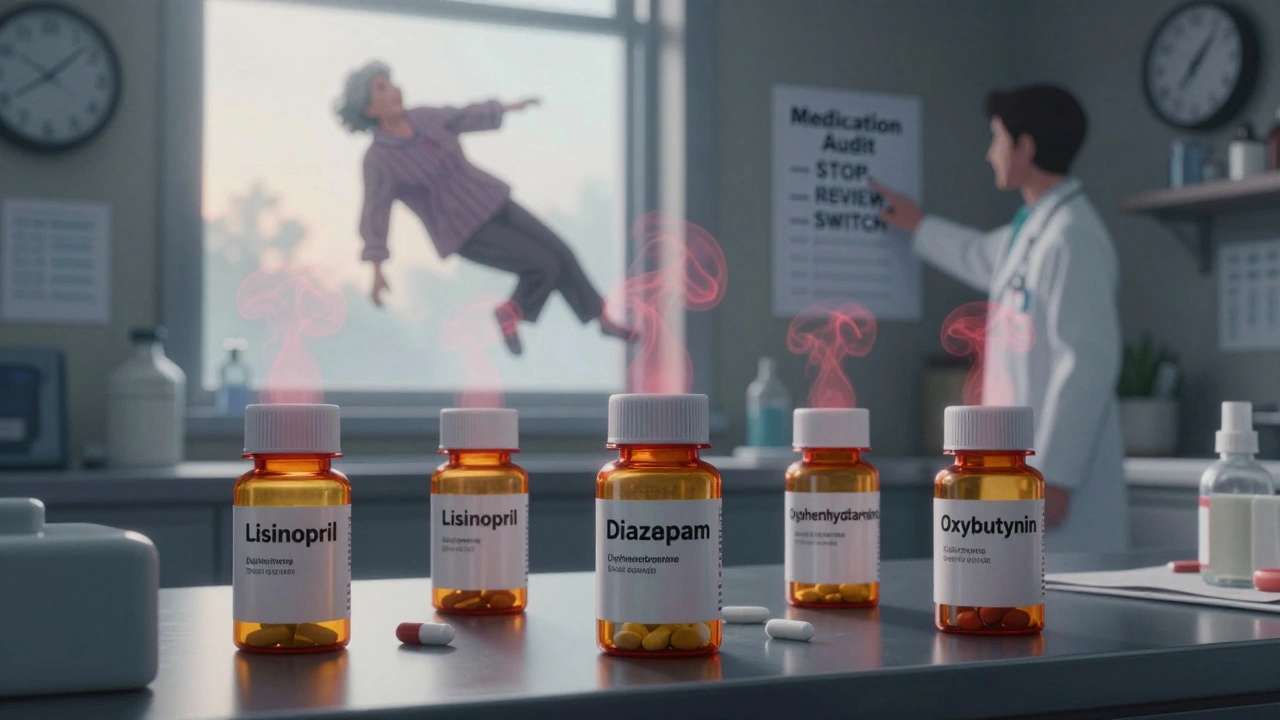
You’d think lowering blood pressure would help. But for older adults, it’s a tightrope walk. Blood pressure medications like lisinopril (an ACE inhibitor), carvedilol (a beta blocker), and hydrochlorothiazide (a diuretic) can cause blood pressure to drop too low - especially when standing up. This isn’t just about feeling lightheaded. It’s about collapsing.Doctors often adjust these doses after a hospital stay or when someone’s blood pressure spikes. But for seniors, even a small change can be enough to trigger a fall. The NHS Greater Glasgow and Clyde guidelines point out that falls are often caused not by new prescriptions, but by medications that have been taken for years without review. That’s why a routine checkup isn’t enough. You need a full medication audit.
Other High-Risk Meds You Might Not Expect
Some of the most dangerous drugs aren’t even prescription. Over-the-counter sleep aids and allergy pills like diphenhydramine (Benadryl) are loaded with anticholinergic properties. These block a brain chemical needed for memory and coordination. In older adults, even one pill can cause confusion, dry mouth, blurred vision, and loss of balance.Muscle relaxants like cyclobenzaprine (Flexeril) and carisoprodol (Soma) are another hidden risk. They’re often prescribed for back pain, but they cause drowsiness and slow reflexes. Combine them with painkillers like opioids, and the risk skyrockets. A 2022 JAMA Network study found that taking opioids and benzodiazepines together increases fall risk by 150% compared to either drug alone.
Even medications for overactive bladder - like oxybutynin or tolterodine - can be risky. They’re anticholinergics, too. And they’re often prescribed long-term without ever being re-evaluated. One senior might be on five different meds that all pull the same dangerous lever: slowing the brain and weakening balance.
Polypharmacy: The Silent Killer
Taking four or more medications is common for seniors. But it’s not just the number - it’s the combination. Each drug has side effects. When they stack up, the result isn’t just additive - it’s exponential.A 2021 study in the Journal of the American Geriatrics Society found that seniors taking four or more fall-risk-increasing drugs had a 50% higher chance of falling than those on one or none. And the risk keeps climbing with each added pill. This is called polypharmacy - and it’s not always the doctor’s fault. It’s the system. One specialist prescribes for heart failure, another for arthritis, another for sleep. No one looks at the full picture.
The National Council on Aging warns that most falls aren’t caused by a single bad drug. They’re caused by the slow, silent buildup of multiple small risks. A sleep aid here, a painkiller there, a blood pressure pill that’s been unchanged for five years. Together, they create a perfect storm.
What Can Be Done? Stop, Review, Switch
The good news? You can fix this. The CDC’s STEADI program says the single most effective way to reduce falls is to review medications with every patient over 65. Not every year. Not when they’re sick. Every time they walk in the door.Here’s what a real medication review looks like:
- Bring every pill, capsule, patch, and OTC bottle to your appointment - including vitamins and herbal supplements.
- Ask: “Which of these are I really still need?”
- Ask: “Could any of these be causing my dizziness or unsteadiness?”
- Ask: “Is there a safer alternative?”
- Ask: “Can any of these be lowered or stopped?”
Pharmacists are your allies here. Programs like HomeMeds, run by the University of South Florida, have shown that pharmacist-led reviews reduce falls by 22%. These experts spot hidden interactions and outdated prescriptions that doctors miss.
Deprescribing - the careful, planned removal of unnecessary or risky meds - is no longer experimental. It’s standard. The American Geriatrics Society recommends it. The CDC recommends it. And research shows it cuts fall rates by 20-30%.
It’s not about stopping all meds. It’s about stopping the ones that are doing more harm than good. For example, a senior on long-term benzodiazepines for sleep might switch to cognitive behavioral therapy for insomnia. Someone on a tricyclic antidepressant might switch to a safer SSRI - or even a non-drug option like exercise or light therapy.
What to Ask Your Doctor
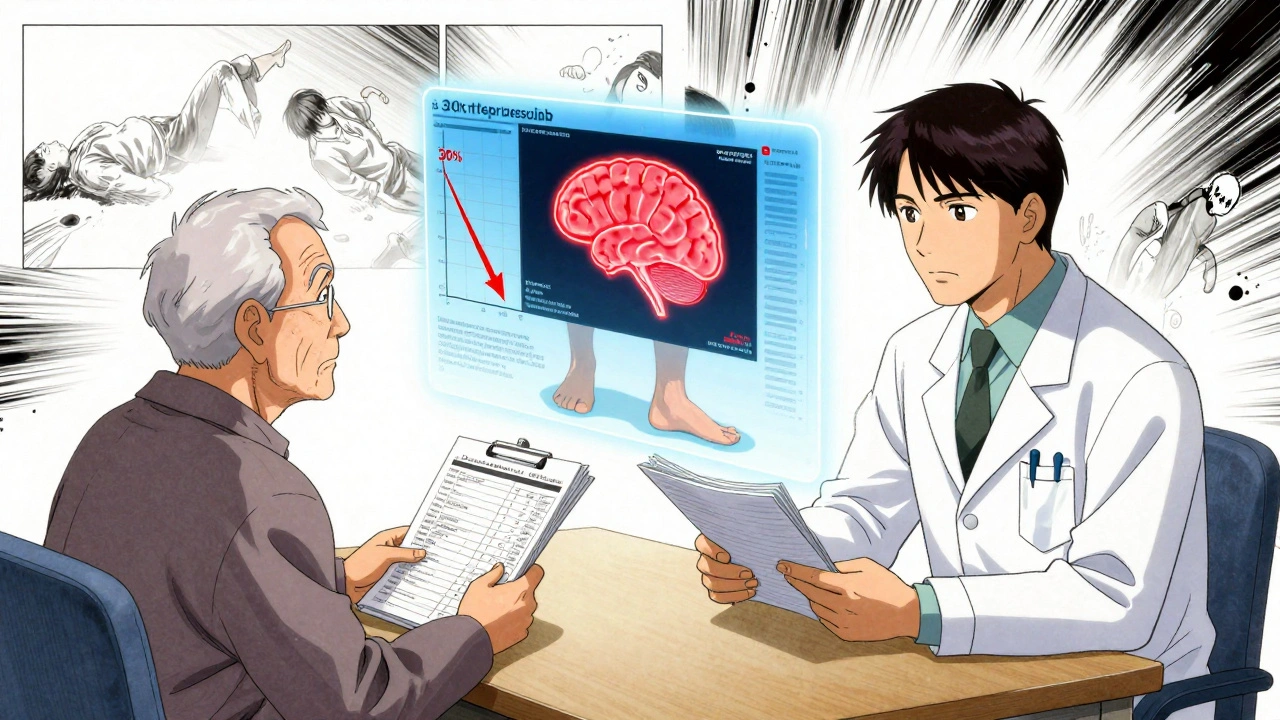
Don’t wait for your doctor to bring it up. Be the one to ask. Use these exact phrases:- “I’ve been feeling unsteady lately. Could any of my medications be causing this?”
- “I’m on five prescriptions. Are any of them known to increase fall risk?”
- “Can we go through each one and see if I still need it?”
- “Is there a non-drug option for this problem?”
Doctors are under pressure. They’re rushed. But if you come in with a list and a clear question, they’ll listen. And if they push back, ask for a referral to a geriatrician or clinical pharmacist. These specialists are trained to untangle complex medication regimens.
Check Your Balance - and Your Pill Bottle
You don’t need to wait for a fall to act. If you’re 65 or older and you’ve had even one near-miss - a stumble, a wobble, a feeling like you’re going to tip over - that’s your cue. Get your meds reviewed.Also, test your balance. Stand on one foot for 10 seconds. If you can’t, you’re at higher risk. Walk heel-to-toe in a straight line. If you wobble, it’s time to talk to your doctor. These aren’t just exercises. They’re early warning signs.
Falls aren’t inevitable. They’re preventable. And the most powerful tool you have? Your medicine cabinet. Not every pill is helping. Some are hurting. And the sooner you find out which ones, the safer you’ll be.
What are the most dangerous medications for seniors when it comes to falling?
The top three categories are antidepressants (especially tricyclics), benzodiazepines (like Valium and Xanax), and antipsychotics (like Seroquel). Blood pressure meds, muscle relaxants, and over-the-counter antihistamines like Benadryl are also high-risk. These drugs cause dizziness, low blood pressure, drowsiness, and poor coordination - all of which lead to falls.
Can stopping a medication really reduce fall risk?
Yes. Studies show that carefully reducing or stopping fall-risk-increasing medications can lower fall rates by 20-30%. For example, one 2021 study found that pharmacist-led medication reviews cut falls by 22%. The key is doing it safely - never stopping cold turkey. Work with your doctor or pharmacist to taper off slowly and safely.
Are newer antidepressants safer than older ones for seniors?
Newer SSRIs like sertraline or escitalopram are less risky than older tricyclics like amitriptyline, but they still increase fall risk by over 100%. No antidepressant is completely safe for seniors. The American Geriatrics Society advises using them only when absolutely necessary and always considering non-drug options like therapy or exercise first.
Why do blood pressure meds cause falls in older adults?
As people age, their bodies don’t regulate blood pressure as well. Blood pressure meds can lower pressure too much - especially when standing up. This causes orthostatic hypotension: a sudden drop that leads to dizziness or fainting. It’s most common after a dose change or when multiple blood pressure drugs are taken together.
How often should seniors have their medications reviewed?
Every time they see their doctor - not just when they’re sick. The CDC and American Geriatrics Society recommend a full medication review at least once a year, and immediately after any hospital stay, new diagnosis, or fall. If you’re on four or more medications, you should ask for a review every six months.
If you’re worried about your balance or your meds, don’t wait. Make a list of everything you take - including supplements and OTC pills - and bring it to your next appointment. One conversation could prevent a lifetime of consequences.
Author

Rupa DasGupta
December 4, 2025 AT 11:07Marvin Gordon
December 5, 2025 AT 05:40ashlie perry
December 5, 2025 AT 10:29Norene Fulwiler
December 5, 2025 AT 18:01William Chin
December 6, 2025 AT 15:02Ada Maklagina
December 7, 2025 AT 03:21Chris Brown
December 8, 2025 AT 20:31Jennifer Patrician
December 10, 2025 AT 06:40