
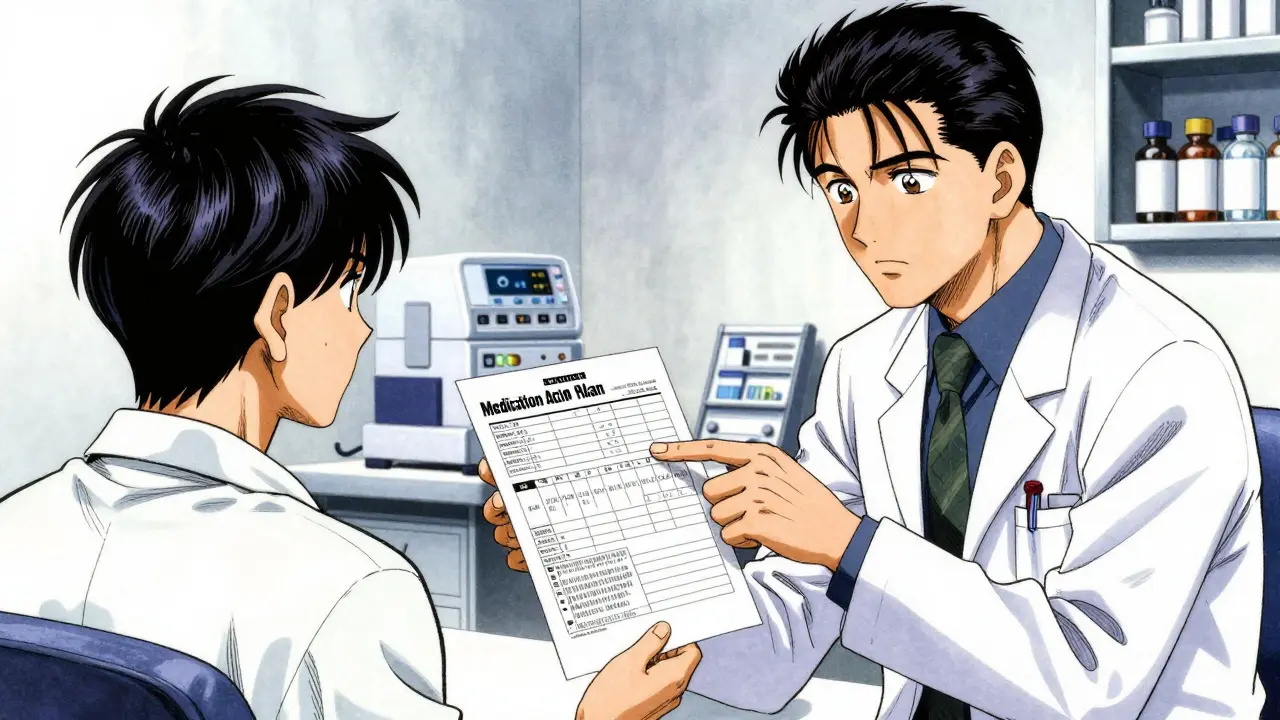
Imagine sitting in a doctor’s office, feeling rushed, and leaving with three new prescriptions but no clear idea of how they interact or when to take them. This is a common scenario that leads to confusion, missed doses, and even hospital visits. A Medication Action Plan (MAP) is a structured document used during healthcare visits to outline specific steps for managing medications, resolving drug-related problems, and achieving health goals. It is not just a list of pills; it is a dynamic tool designed to bridge the gap between what your provider prescribes and what you actually do at home.
Using this template correctly can be the difference between staying healthy and ending up in the emergency room due to an adverse drug event. Research from the Agency for Healthcare Research and Quality suggests that standardized plans like these can decrease adverse drug events by up to 23%. But holding the paper isn’t enough. You need to know how to use it actively during every visit to get the most out of your care.
Understanding the Core Components of the Template
Before you walk into the clinic, you need to understand what you are looking at. While templates vary slightly depending on whether they come from Medicare Part D programs, private insurers, or international standards like Germany’s E-Health law, the core structure remains consistent. The goal is clarity and actionability.
| Section Name | Purpose | What Goes Here |
|---|---|---|
| What We Talked About | Summarize clinical discussion | Notes on symptoms, side effects discussed, and therapy goals agreed upon. |
| What I Need to Do | Define specific actions | Exact instructions: "Take Metformin 500mg with breakfast." Avoid vague terms like "take as directed." |
| What I Did / When | Track adherence | Patient logs dates of doses taken, missed doses, or changes in routine. |
| Follow-Up Plan | Schedule next steps | Date of next review, lab tests needed, or when to call the doctor. |
| Questions I Want to Ask | Patient advocacy | Pre-written questions about costs, side effects, or interactions before the visit starts. |
The Comprehensive Medication Review (CMR) is a detailed assessment of all patient medications required for Medicare Part D beneficiaries, resulting in the creation of the MAP. This process ensures that every drug has a purpose. If a section is missing or blank, ask your provider to fill it in. A plan without specific start dates or clear stop instructions is incomplete and potentially dangerous.
Preparing Before the Visit: The Foundation of Safety
Most people rush into appointments unprepared. To make the MAP effective, preparation must happen days before. The Centers for Disease Control and Prevention (CDC) recommend bringing not just the paper plan, but all current medication containers. Why? Because relying on memory alone reduces accuracy significantly. Studies show that bringing physical bottles improves medication verification accuracy by over 37% compared to recall alone.
- Update your list: Cross out any medications you have stopped taking. Write the date you stopped and why (e.g., "Finished course" or "Caused nausea").
- Log recent issues: In the "What I Did" section, note if you missed doses last week or experienced dizziness after starting a new pill.
- Write down questions: Use the dedicated question box. Anxiety often makes us forget important queries. Writing "Does this blood thinner interact with my aspirin?" ensures it gets asked.
- Bring a companion: If possible, bring a family member. They can help track information and serve as a second set of ears.
This preparation turns a passive encounter into an active collaboration. It signals to your provider that you are engaged in your own care, which often leads to more thorough reviews.
During the Visit: Maximizing the Interaction
Once you are in the room, the MAP becomes the agenda. Don’t let the conversation drift entirely. Gently guide your provider back to the document. The National Association of Boards of Pharmacy suggests dedicating the first 5-7 minutes specifically to reviewing this plan.
Watch for these critical moments during the interaction:
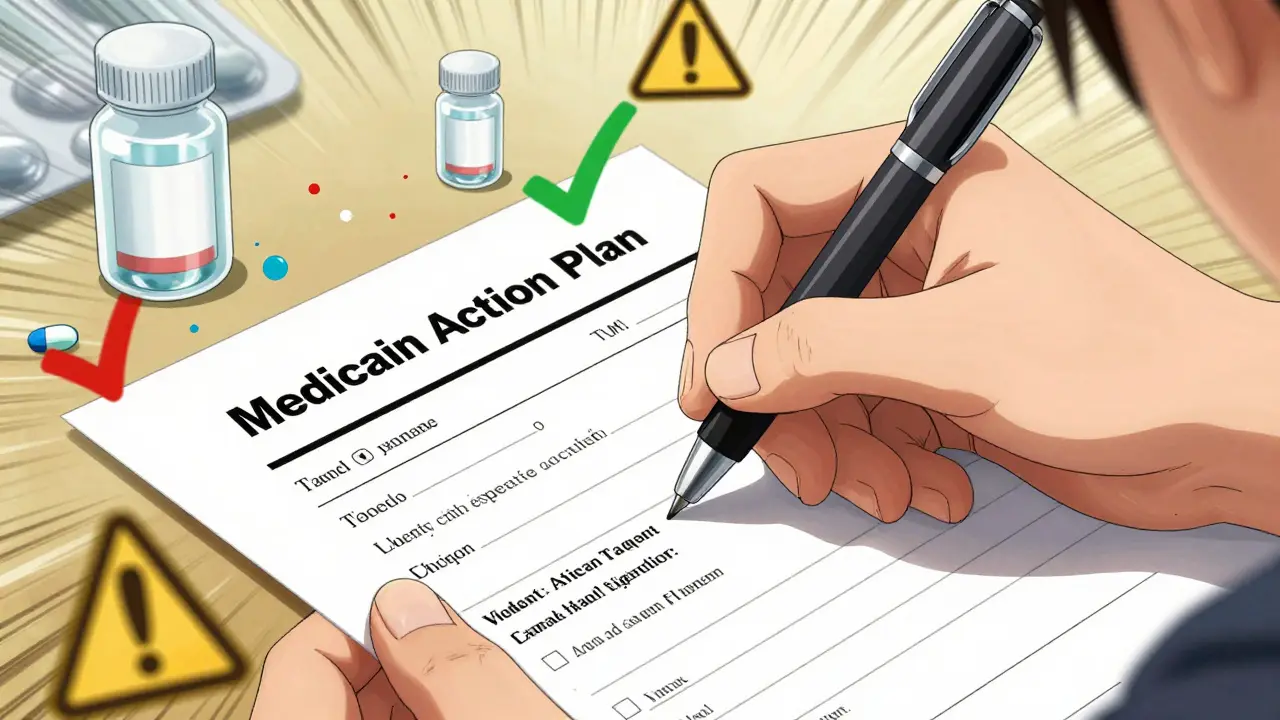
- Real-time updates: As the doctor speaks, watch them update the "What I Need to Do" section. If they say, "Start this at night," ensure "at night" is written down, not just the drug name.
- Clarify discontinuations: This is where errors often hide. The Institute for Safe Medication Practices notes that failing to document exact discontinuation dates contributes to nearly 19% of reconciliation errors. Ask: "When exactly should I stop the old pill? Today? Tomorrow?"
- Discuss high-risk meds: If you are older, explicitly ask about fall risks. Providers should spend time assessing medications that cause drowsiness or dizziness.
- Sign off together: Both you and the provider should sign the updated plan. This validates that you understood the instructions and agrees on the next steps.
If the provider rushes through, politely pause them. Say, "I want to make sure I have this right in my plan so I don’t make a mistake at home." This simple phrase reinforces the importance of accuracy without being confrontational.
After the Visit: Keeping the Plan Alive
A Medication Action Plan is a living document, not a static form filed away in a drawer. The American College of Clinical Pharmacy emphasizes that its value diminishes rapidly if not updated. Immediately after the visit, take these steps:
- Share copies: Give a copy to your primary care physician, specialist, and pharmacist. Patients who share their MAP with multiple providers have been shown to have 22.8% fewer duplicate therapies.
- Inform caregivers: If you have family helping with meds, give them a copy. They need to know the "What I Need to Do" instructions clearly.
- Start tracking: Begin using the "What I Did" section immediately. Check off doses as you take them. Note any side effects in real-time.
- Keep it accessible: Store the original in a visible place, like on the fridge or in a wallet-sized folder. Many elderly patients lose bulky documents; laminated, condensed versions can help here.
Between visits, if you experience unexpected changes in your condition or severe side effects, add a note to the plan. When you return, this log provides invaluable data for your provider to adjust therapy effectively.

Overcoming Common Challenges
Even with the best intentions, using a MAP can hit snags. Health literacy is a major barrier; only 12% of U.S. adults possess proficient health literacy skills. If the medical jargon confuses you, ask for plain language explanations. For example, instead of "titrate dose," ask, "Do I increase the amount slowly?"
Another challenge is electronic health record (EHR) incompatibility. Some clinics may not have the system to easily print or update your specific MAP format. In these cases, keep your own master copy. You are the owner of this document. If a provider refuses to update it, ask them to write the changes on a separate piece of paper and attach it, or dictate them so you can transcribe them accurately.
For those who struggle with reading small print, consider asking for a large-print version or using digital tools that read text aloud. The key is adaptation. The template serves you, not the other way around.
Why Consistency Matters for Long-Term Health
Consistent use of a Medication Action Plan transforms fragmented care into coordinated management. Dr. Jerry Fahrni, Director of Clinical Services at the National Association of Chain Drug Stores, has stated that consistent use of standardized MAPs is the single most effective intervention in reducing medication-related hospitalizations. By creating a continuous loop of feedback-planning, acting, tracking, and reviewing-you reduce discrepancies by over 40% during transitions of care.
It empowers you to move from being a passive recipient of treatment to an active partner in your health journey. The next time you schedule an appointment, print out a fresh template, fill in your questions, and bring it with confidence. Your health depends on clear communication, and this document is your strongest advocate.
Is a Medication Action Plan legally binding?
No, a Medication Action Plan is not a legal contract. It is a clinical tool designed to improve communication and safety. However, it serves as a documented record of the care plan agreed upon by the patient and provider, which can be useful in demonstrating adherence to recommended treatments.
Who creates the Medication Action Plan?
The plan is typically created collaboratively. Pharmacists often lead the initial Comprehensive Medication Review (CMR) and draft the plan, especially in Medicare Part D programs. However, physicians, nurse practitioners, and patients all contribute to updating and finalizing the document during visits.
Can I use a digital version of the MAP?
Yes, digital versions are increasingly common and encouraged for interoperability. However, many older patients prefer paper formats for ease of annotation. Ensure that whatever format you choose is easy to update and share with all your healthcare providers.
How often should the MAP be updated?
The MAP should be treated as a living document and updated at every healthcare encounter where medications are discussed, changed, or reviewed. At minimum, it should be formally reviewed annually as part of MTM services, but real-time updates are crucial for safety.
What if my doctor doesn't recognize the MAP template?
Explain that it is a standardized tool for medication reconciliation. Most providers will appreciate the organized summary. If they are unfamiliar, simply ask them to review your current medications against the list and note any changes directly on your copy.
Author
