
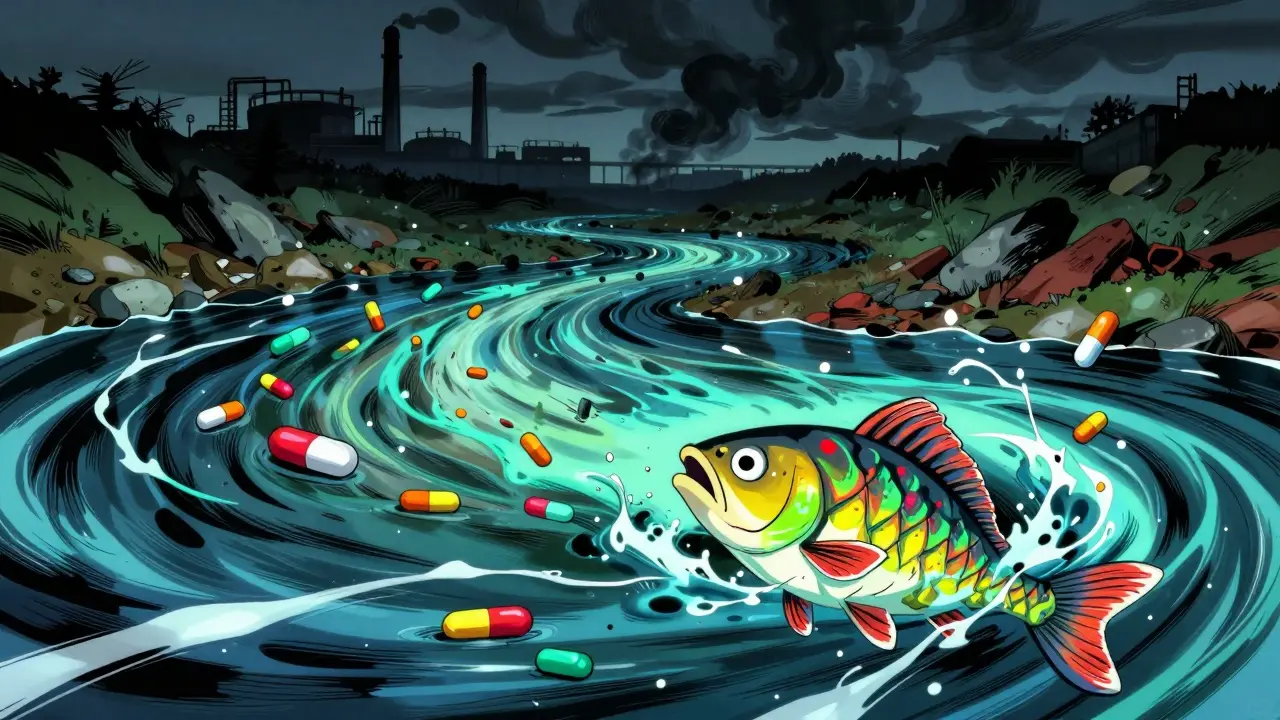
You might think that tossing an old pill bottle in the trash or flushing expired tablets is harmless. After all, one tiny pill seems insignificant against a massive river. But when you combine millions of households doing this every day, the result is a quiet crisis for our water systems. We are essentially turning our rivers and groundwater into chemical soups, filled with traces of antidepressants, antibiotics, and painkillers. This isn't just about keeping nature pristine; it’s about protecting the food chain that eventually leads back to your plate.
The problem started becoming clear in the early 2000s. A landmark study by the U.S. Geological Survey (USGS) analyzed 139 rivers across 30 states. They found traces of pharmaceuticals in 80% of the samples. Antibiotics alone were present in half of them. Since then, we’ve learned that these chemicals don’t just disappear. They linger, mutate wildlife, and challenge our ability to treat drinking water effectively. If you have unused medications sitting in your cabinet, how you get rid of them matters more than you probably realized.
How Medicines End Up in Our Waterways
To understand why flushing is so damaging, you need to look at how wastewater treatment plants work. These facilities are designed to remove solids, bacteria, and nutrients like nitrogen and phosphorus. They are not built to filter out dissolved chemical compounds. When you flush a drug, it passes right through the standard filtration process and ends up in local streams or oceans.
There are two main ways medicines enter the environment: human excretion and improper disposal. Your body absorbs only about 20-30% of most active pharmaceutical ingredients (APIs). The rest leaves your system through urine or feces, entering the sewage system naturally. This is unavoidable if you need medication to stay healthy. However, improper disposal-like flushing unused pills or pouring liquid meds down the sink-adds a massive, unnecessary load on top of that natural background level.
Some people argue that throwing pills in the trash is worse because they can leach from landfills into groundwater. While landfill leachate does contain high concentrations of drugs like acetaminophen, flushing causes immediate contamination of surface waters where aquatic life lives and breeds. It bypasses any soil filtration that might occur in a landfill. The speed and directness of water contamination make flushing particularly risky for ecosystems.
The Ecological Damage: More Than Just Pollution
The presence of drugs in water isn't just a dirty statistic; it causes real biological harm. Fish and other aquatic animals are exposed to constant low doses of human medications. This has led to documented cases of sexual abnormalities in fish due to estrogen exposure from birth control pills. Steroids and other endocrine disruptors interfere with their reproductive systems, threatening population stability.
Antibiotics in waterways contribute to antibiotic resistance. Bacteria in the water evolve defenses against these drugs, creating superbugs that can potentially spread back to humans. This creates a feedback loop where our medical tools become less effective over time. Additionally, some pharmaceuticals break down into "daughter compounds" that may be even more toxic than the original drug. Standard treatment plants cannot detect or remove these complex molecules.
Biomagnification is another serious concern. Tiny organisms absorb trace amounts of drugs. Small fish eat those organisms. Larger predators eat the small fish. With each step up the food chain, the concentration of chemicals increases. Eventually, this could affect the seafood we consume. While current levels in drinking water are often below 100 nanograms per liter, the long-term health effects of chronic exposure to this cocktail of chemicals remain largely unknown.
The FDA Flush List: An Exception, Not the Rule
If you’ve ever read instructions on a prescription label saying "flush if unused," you might be confused. Why would health authorities recommend something that harms the environment? The answer lies in safety versus ecology. The Food and Drug Administration (FDA) maintains a specific "flush list" of about 15 medications that pose a high risk of fatal overdose if misused by others.
This list includes powerful opioids like fentanyl, oxycodone, and hydromorphone. For these specific drugs, the immediate danger of a child or pet finding and ingesting them outweighs the environmental risk of flushing. The ecological impact of these few high-risk drugs is considered negligible compared to the public health benefit of preventing accidental poisoning or diversion.
However, this exception applies to a tiny fraction of medications. Most common drugs-including blood pressure meds, statins, antidepressants, and over-the-counter pain relievers-are NOT on this list. For these, you should never flush them. Always check the FDA’s updated flush list before deciding. If your medication isn’t there, assume it belongs in a take-back program or proper home disposal method.
Safe Alternatives to Flushing and Trashing
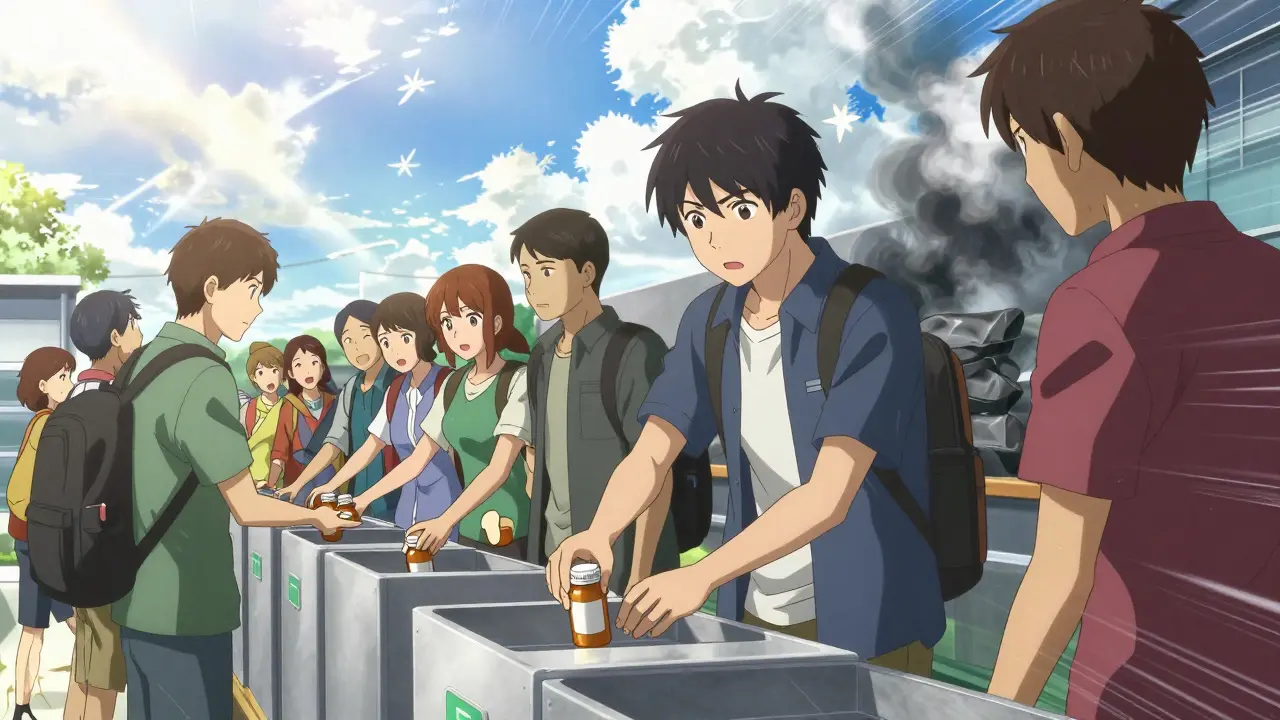
So, what should you do with your old pills? The gold standard is using a medication take-back program. These programs collect unused drugs and destroy them safely, usually through incineration, ensuring they never touch water or soil. In the UK, many pharmacies offer collection bins for this purpose. In the US, the DEA hosts National Prescription Drug Take Back Days, and many local law enforcement agencies or pharmacies have permanent drop-off boxes.
| Method | Environmental Impact | Safety from Misuse | Accessibility |
|---|---|---|---|
| Take-Back Programs | Lowest (Incinerated) | Highest | Moderate (Varies by location) |
| Home Disposal (Mix & Seal) | Low-Moderate (Landfill risk) | High | High (Do it yourself) |
| Flushing (Non-FDA List) | High (Water contamination) | High | Very High |
| Trash (Loose Pills) | Moderate (Leaching) | Low (Easy to retrieve) | High |
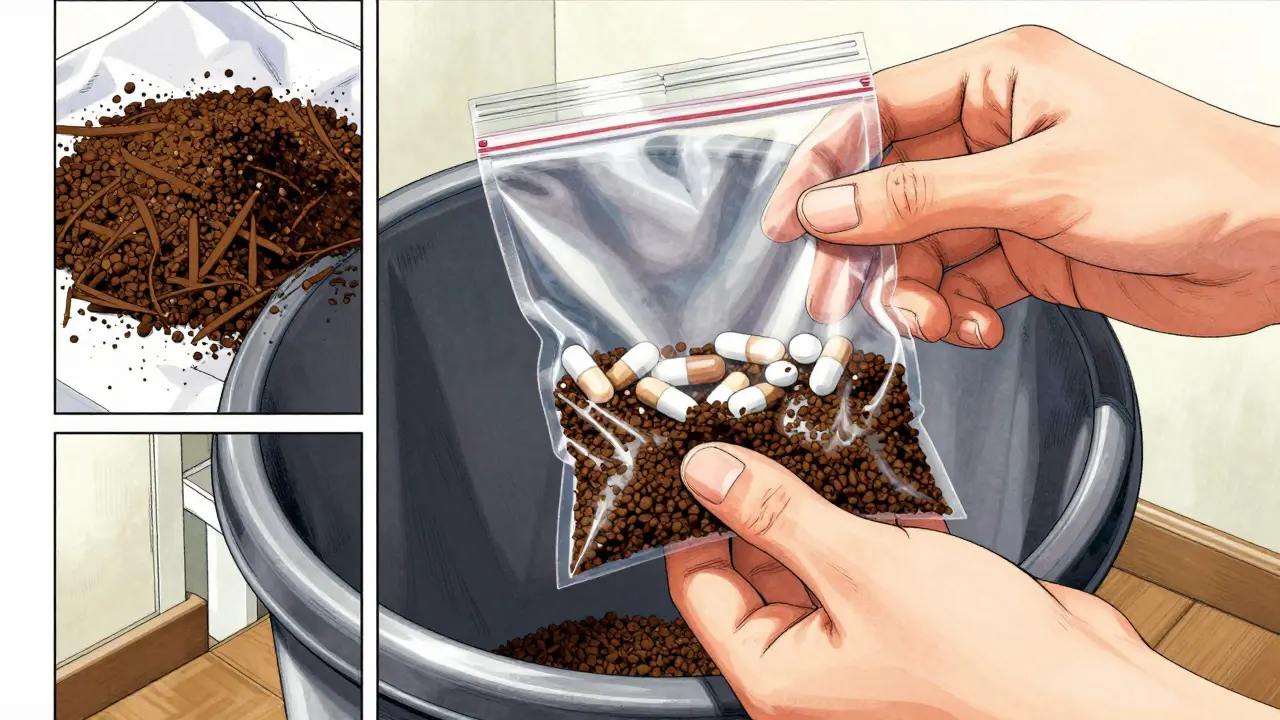
If take-back sites are hard to find, the Environmental Protection Agency (EPA) recommends a home disposal method. Mix your medications with an unappealing substance like used coffee grounds, cat litter, or dirt. This makes the drugs unrecognizable and discourages anyone from trying to use them. Place the mixture in a sealed container, like a plastic bag or jar, and throw it in your household trash. Remove or scratch out personal information from the prescription label before discarding the empty bottle.
Another option is removing pills from their blister packs and mixing them directly with the garbage. This prevents easy retrieval while still sending them to a landfill. While landfill leaching is a concern, studies suggest it is generally less harmful to immediate aquatic ecosystems than direct flushing. Avoid putting loose pills in recycling bins, as they can contaminate the entire batch of recyclable materials.
Barriers to Proper Disposal
Despite knowing the risks, many people struggle to dispose of meds correctly. Awareness is a major hurdle. Surveys show that only about 30% of residents know where to find local take-back options. Many people simply don’t realize that flushing is bad for the environment, having been taught otherwise decades ago when advice was less nuanced.
Access is another significant barrier. In rural areas, pharmacy take-back bins might be miles away. The DEA reported that only 15% of U.S. counties had permanent collection sites recently. Driving 20 minutes to drop off five old aspirin pills feels inconvenient, leading people to choose the easiest option: the toilet or the bin. Community education and expanding infrastructure are critical to solving this gap.
Confusion also plays a role. The FDA’s flush list contradicts general environmental advice, leaving patients unsure of what to do. Plus, expiration dates are often misunderstood. People stockpile meds "just in case," leading to cabinets full of expired drugs that eventually need disposal. Better prescribing practices and patient education could reduce the volume of unused medications created in the first place.
What You Can Do Today
Start by auditing your medicine cabinet. Check expiration dates and identify anything you no longer need. Don’t wait until it piles up. Separate any medications that appear on the FDA’s flush list (mostly strong opioids) from the rest. Flush only those specific high-risk items if you cannot find a take-back site immediately.
For the majority of your unused drugs, locate the nearest take-back location. Use online tools provided by the EPA or DEA to find pharmacies, hospitals, or police stations that accept them. If none are nearby, prepare your home disposal kit: buy some coffee grounds or cat litter, keep a sealable container ready, and mix your pills before trashing them.
Advocate for better access. Support policies that require pharmacies to provide disposal information with every prescription, similar to California’s SB 212 law. Encourage your local pharmacy to install a take-back bin. Small actions, multiplied by millions of households, can significantly reduce the pharmaceutical load in our waterways. Protecting our environment starts with how we handle the smallest details of daily life.
Is it okay to throw pills in the regular trash?
Yes, but only if you mix them with an unappealing substance like coffee grounds or cat litter first. This prevents children or pets from accidentally retrieving and ingesting them. Place the mixture in a sealed container before throwing it away. Never throw loose pills in the trash or recycling bins.
Which medications should I flush according to the FDA?
The FDA flush list includes about 15 high-risk medications, primarily potent opioids like fentanyl, oxycodone, and hydromorphone. These drugs pose a severe risk of fatal overdose if misused. Flushing them is recommended only if a take-back program is not immediately available. Most other medications should not be flushed.
Does flushing one pill really hurt the environment?
One pill has a minimal individual impact, but millions of people flushing medications daily creates a cumulative effect. Pharmaceuticals accumulate in waterways, harming aquatic life and contributing to antibiotic resistance. Consistent proper disposal by everyone is necessary to protect water systems.
Where can I find a medication take-back program near me?
You can find take-back locations through the EPA’s Medication Disposal website or the DEA’s Controlled Substance Collection Program locator. Many local pharmacies, hospitals, and law enforcement agencies also have permanent drop-off boxes. Check with your pharmacist for the closest option.
Why can't wastewater treatment plants filter out drugs?
Standard treatment plants are designed to remove solids, bacteria, and nutrients. They are not equipped to filter dissolved chemical compounds like pharmaceuticals. Advanced treatments like ozone or activated carbon can remove some drugs, but they are expensive and not widely implemented yet.
Author

Roderick Gooden
May 29, 2026 AT 19:52Look, I've been saying this for years and nobody listens until some article comes out with charts. It's not just about the fish, it's about the whole system breaking down because we refuse to take five minutes to do it right. You think one pill doesn't matter? Try explaining that to the water treatment plant manager who is watching his budget get eaten alive by trying to filter shit they never designed to handle. We are literally poisoning our own well because we're too lazy to drive to a pharmacy. And don't give me that 'it's too far' excuse, you have a car, use it. The environmental cost of your convenience is higher than the gas you'd burn driving there.
ANGELA CHINENYE
May 31, 2026 AT 19:15It is crucial to note that the EPA guidelines are quite specific regarding the mixing agents. Coffee grounds, cat litter, or dirt are recommended specifically because they absorb moisture and make the medication unpalatable and difficult to extract. This method serves as a secondary safety measure against accidental ingestion by children or pets, which is often the primary concern cited by parents. Furthermore, ensuring the container is sealed prevents any potential leaching into the landfill environment before decomposition occurs. It is a simple process that requires minimal effort but yields significant safety benefits for both household members and the broader ecosystem.
Aishwarya Thankachan
June 2, 2026 AT 06:37The bioaccumulation factors (BAF) for certain pharmaceuticals in aquatic organisms are frankly alarming when you look at the peer-reviewed literature 🧪🐟. We are seeing endocrine disruption cascading through trophic levels, leading to skewed sex ratios in fish populations. It’s not just 'pollution', it’s a systemic failure of our waste management infrastructure to account for emerging contaminants like APIs. The current wastewater treatment paradigms are woefully inadequate for removing lipophilic compounds. We need advanced oxidation processes (AOPs) integrated into municipal plants ASAP, otherwise, the biomagnification effect will hit us hard in the seafood supply chain 😬💊.
Jerry Mathews
June 2, 2026 AT 08:18I guess it makes sense now why my local pharmacy has those little bins. I always thought they were just for recycling bottles or something. It's pretty cool that there are actual programs for this stuff instead of just throwing everything away. Makes me feel better knowing there's a proper way to handle it without hurting nature too much. Thanks for sharing this info, really helpful for clearing out my cabinet.
Lenny Cruz
June 4, 2026 AT 07:43Oh, please. Spare me the moral panic. You want to talk about environmental damage? Talk about the carbon footprint of the plastic blister packs, the energy used to manufacture these drugs, and the industrial runoff from the factories producing them. Flushing a few aspirin is a drop in the ocean compared to the systemic industrial pollution we ignore because it's convenient. Also, the idea that coffee grounds magically neutralize toxins is pseudoscience at best. It just makes them smell bad. The chemicals still leach. Stop pretending you're saving the planet by mixing pills with dirt in your kitchen trash can.
Aswin Narayan J
June 4, 2026 AT 08:01In India, we have a different problem entirely because the regulation is almost non-existent. People throw everything in the drains, including medicines, plastics, and god knows what else. The Ganges is already a chemical soup, so adding more pills doesn't change much statistically, but it's still wrong. Here, most people don't even know what an expiration date means for liquid antibiotics. They keep them for years. The concept of 'take-back' is alien to most households outside big cities. We need massive awareness campaigns, not just fancy disposal methods that require infrastructure we don't have.
Jennifer Legore
June 4, 2026 AT 21:26What an incredibly informative and timely discussion! :) It is truly inspiring to see how small individual actions can collectively lead to significant positive changes for our environment. I encourage everyone to take a moment this weekend to audit their medicine cabinets. Let us support our local pharmacies and community resources by utilizing take-back programs whenever possible. Together, we can ensure a safer and healthier future for our waterways and wildlife! Keep up the great work in spreading awareness! :)
Alyssa Zucker
June 6, 2026 AT 02:22I used to flush everything because that's what my mom told me to do when I was a kid. She said it was the safest way to keep kids away from dangerous meds. It's scary to think how much I might have contributed to this problem without realizing it. I feel a bit guilty now, but I'm glad I know better now. I'll definitely start using the coffee ground method for my old vitamins and painkillers.
Francis Saul
June 6, 2026 AT 03:29hey guys, just wanted to say that its really important to check if ur meds are on that fda list before flushing. i made the mistake of flushing my blood pressure meds once thinking it was fine, but then read this article later. dont worry tho, just mix em with cat litter next time. easy peasy. also dont forget to scratch out ur name on the bottle so no one steals ur identity lol. hope this helps!
Dave Villeneue
June 7, 2026 AT 17:13The data presented is misleading. The concentration of pharmaceuticals in drinking water is measured in nanograms per liter. This is effectively zero risk to human health. You are creating fear based on negligible exposure levels. The real issue is antibiotic resistance, which is driven by agricultural overuse, not your leftover ibuprofen. Focus on the farms, not the toilets. Your argument lacks statistical rigor and relies on emotional manipulation rather than toxicological evidence. Cease this hysteria.
Rachel Harrypersad
June 7, 2026 AT 22:37we are all just dust floating in the void anyway so does it really matter if the fish eat our sadness pills? the universe is indifferent to our tiny chemical traces. yet here we are arguing about coffee grounds vs flushing. it's pathetic really. we project our need for control onto nature because we can't control our own lives. the water takes it all eventually. nothing stays pure. embrace the decay.
Brian Irwin
June 8, 2026 AT 01:03i hear you on the frustration with finding take back spots especially if you live in a rural area like i do. it can be a real hassle to drive 30 mins just to drop off a handful of pills. i usually wait till i go to the city for other errands and then stop by the police station or pharmacy. its worth the extra trip though to know im doing the right thing. maybe we should push for more local options in our communities