

Alpha-Glucosidase Inhibitor Symptom Timeline & Relief Estimator
Calculate Your Estimated Side Effect Severity
Based on your current dose and dietary habits, this tool estimates how intense your symptoms might be during the first month.
Flatulence (Gas)
Caused by bacterial fermentation in the colon.
Bloating
Abdominal discomfort from trapped gas.
Diarrhea
Osmotic effect pulling water into the bowel.
Recommendations Based on Your Profile:
Typical Adaptation Timeline
Most patients see significant improvement as their gut microbiome adapts. Hover over the timeline to see what to expect at each stage.
Go Slow
Symptoms
Begins
Tolerance
You take your diabetes pill with the first bite of dinner. An hour later, you’re sitting on the couch, feeling like a balloon that’s been over-inflated. Your stomach gurgles loudly enough to embarrass you at work, and you know exactly where the next bathroom break is coming from. If this sounds familiar, you aren’t imagining things. You are likely experiencing the hallmark side effects of alpha-glucosidase inhibitors, a class of drugs that includes acarbose (Precose) and miglitol (Glyset).
These medications do something very specific: they slow down how your body breaks down carbohydrates. While this helps keep your blood sugar stable after meals, it also means those carbs travel further down your digestive tract than usual. When they reach your colon, bacteria feast on them, producing gas as a byproduct. It’s a messy biological trade-off. But here is the good news: for most people, these symptoms don’t last forever. With the right strategy, you can often keep the medication without keeping the misery.
Why Your Gut Is Revolting (The Science Made Simple)
To understand why you feel this way, we have to look at what these drugs actually do. Alpha-glucosidase inhibitors work in the small intestine. Normally, enzymes called alpha-glucosidases chop up complex carbs-like bread, pasta, and potatoes-into simple sugars so your body can absorb them quickly into your bloodstream. These drugs block those enzymes.
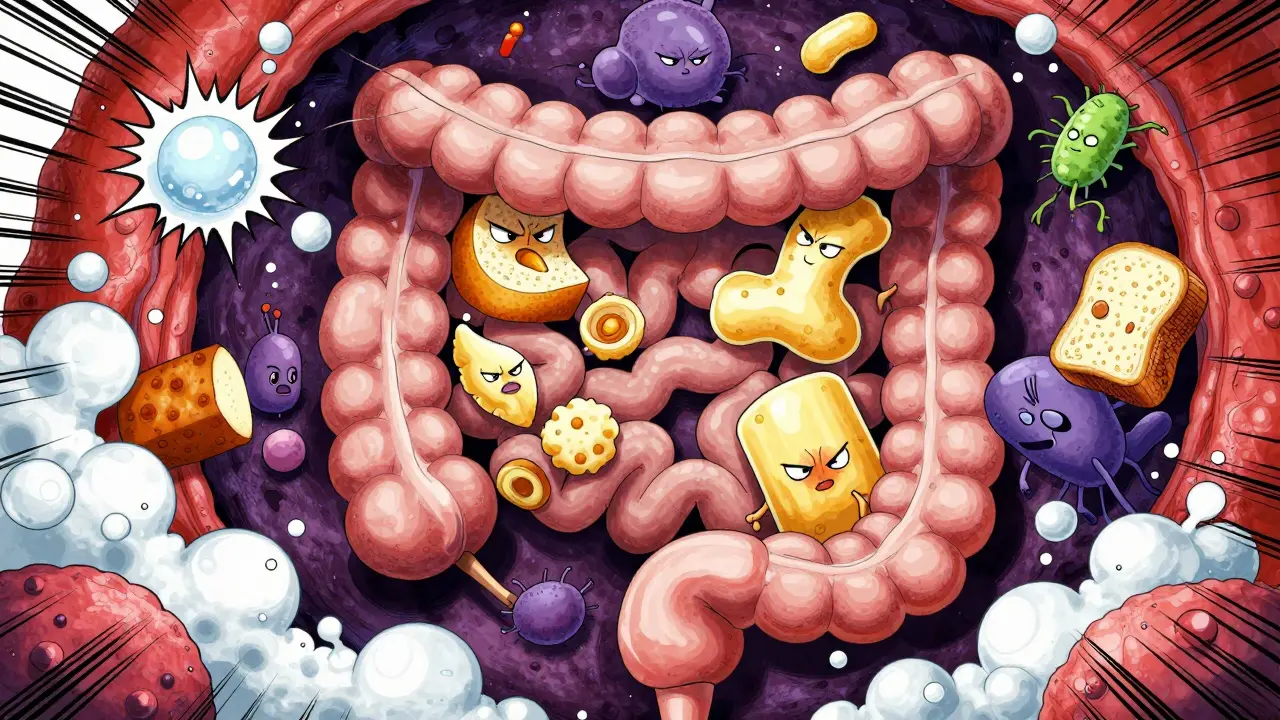
Because the carbs aren’t broken down immediately, they pass through the small intestine largely intact. They end up in the large intestine (colon). This is where the trouble starts. The bacteria living in your colon love undigested carbohydrates. They ferment them rapidly. Fermentation produces three main things: hydrogen gas, carbon dioxide, and short-chain fatty acids. That gas causes flatulence and bloating. The osmotic effect of the unabsorbed carbs pulls water into the bowel, which leads to loose stools or diarrhea.
This isn’t a defect in the drug; it’s the mechanism of action. However, because only about 1-2% of acarbose enters your bloodstream, the entire process happens locally in your gut. This is why you don’t get systemic side effects like dizziness or low blood sugar (hypoglycemia) when taking these drugs alone. But your gut pays the price.
| Symptom | Incidence Rate (First Month) | Typical Timeline |
|---|---|---|
| Flatulence (Gas) | 30-73% | Peaks in weeks 2-4, improves by month 6 |
| Bloating/Abdominal Discomfort | 14-30% | Often correlates with gas severity |
| Diarrhea | 10-20% | Can be persistent if diet isn't adjusted |
| Soft Stools | ~15% | Mild version of diarrhea, often resolves faster |
The "Start Low, Go Slow" Rule
The biggest mistake patients make is starting at the full therapeutic dose. Doctors sometimes prescribe 50 mg or even 100 mg of acarbose three times a day right out of the gate. For many guts, this is a shock to the system. Think of it like going to the gym and trying to lift 200 pounds on your first day. Your muscles will rebel. Your gut does the same thing.
The standard protocol, backed by the American Diabetes Association, is to start incredibly low. Begin with 25 mg once daily, taken with your largest meal. Keep this dose for at least one week. If you tolerate it, increase to 25 mg twice daily for another week. Then move to three times daily. Only after you are comfortable at 25 mg TID should you consider increasing to 50 mg or 100 mg.
Why does this help? It allows your gut microbiome-the community of bacteria in your intestines-to adapt. Over time, the bacterial population shifts. They become more efficient at handling the altered carbohydrate load, producing less gas per gram of carb fermented. Most studies show that side effects drop significantly between months 3 and 6. If you quit at week two because it was uncomfortable, you missed the window where your body would have adapted.
Dietary Tweaks That Actually Work
Since these drugs target carbohydrate digestion, your diet is the lever you can pull to reduce side effects. You don’t need to give up carbs entirely, but you do need to change *which* carbs you eat and *how much* you eat at one time.
- Reduce Rapidly Digestible Carbs: White bread, white rice, sugary cereals, and potatoes break down quickly. Even though the drug slows this down, the sheer volume creates a lot of fermentable material. Switch to whole grains like oats, quinoa, or brown rice. These have more fiber and digest more slowly naturally.
- Watch the Legumes: Beans, lentils, and chickpeas are healthy, but they are notorious for causing gas on their own due to complex sugars called oligosaccharides. Combining legumes with an alpha-glucosidase inhibitor can create a perfect storm for bloating. Try soaking beans thoroughly before cooking, or limit portion sizes to half a cup per meal while you adjust.
- Limit Total Carb Load Per Meal: Aim for 30-45 grams of carbohydrates per meal. If you eat a plate piled high with pasta and bread, you are overwhelming the enzyme inhibition capacity. Smaller portions mean less undigested food reaching the colon.
- Avoid High-Fat Foods: Fat delays gastric emptying. This keeps food in your stomach longer, mixing with the drug and potentially worsening bloating. Stick to lean proteins and healthy fats in moderation.
A study from the London Diabetes Centre found that patients who received specific dietary counseling alongside their prescription were twice as likely to stay on the medication long-term compared to those who just got a bottle of pills. Knowledge is power here.
What About Over-the-Counter Remedies?
It’s tempting to grab a bottle of Beano or Simethicone from the pharmacy shelf. Here is what you need to know about using OTC aids with these drugs.
Beano (Alpha-Galactosidase): Beano contains an enzyme that helps break down complex sugars in beans and vegetables. Since alpha-glucosidase inhibitors work by *blocking* breakdown, there is a theoretical risk that Beano could counteract the drug’s effectiveness. While some doctors say occasional use is fine, it’s generally safer to avoid combining them regularly unless your doctor explicitly approves it. You want the drug to work, not fight against a supplement.
Simethicone (Gas-X): This is different. Simethicone doesn’t stop gas production; it changes the surface tension of gas bubbles, allowing them to combine and pass more easily. It doesn’t interfere with the absorption or action of acarbose or miglitol. Taking 125 mg before meals can provide modest relief from the pressure and discomfort of bloating, even if it doesn’t stop the wind itself.
Loperamide (Imodium): For diarrhea, loperamide is the go-to. It slows down bowel movements, giving your body more time to absorb water. Use it sparingly-only when needed-and stick to the recommended dose (usually 2 mg). If you find yourself needing Imodium every day, the dose of your diabetes medication is likely too high, or your diet needs adjustment.

When to Talk to Your Doctor
Not everyone tolerates these drugs, and that’s okay. About 15-20% of people stop taking them within the first three months because the side effects are too disruptive to their quality of life. Don’t suffer in silence.
Contact your healthcare provider if:
- Your symptoms haven’t improved after 8-12 weeks of gradual titration.
- You experience severe abdominal pain, not just discomfort.
- You have signs of dehydration from diarrhea (dark urine, dizziness, dry mouth).
- You notice blood in your stool.
There are other options. Metformin is often the first line of defense, though it has its own GI quirks. SGLT2 inhibitors (like Jardiance or Farxiga) cause minimal GI distress but carry risks of yeast infections. GLP-1 agonists (like Ozempic) can cause nausea but aren’t associated with gas. If alpha-glucosidase inhibitors aren’t working for you, switching classes might be the better path.
Realistic Expectations for Long-Term Use
If you decide to stick with it, remember that the goal is postprandial glucose control. These drugs are particularly good at blunting the spike in blood sugar that happens right after eating. For many patients, especially older adults or those who cannot take other medications due to kidney issues, this benefit outweighs the temporary inconvenience of gas.
Patient reviews on platforms like Drugs.com reflect this divide. Many users report a rough first month, describing the experience as "unbearable" initially. But a significant portion note that by month three, the symptoms became manageable, and their post-meal blood sugar numbers dropped consistently-from highs of 220 mg/dL down to 160 mg/dL. That kind of control reduces the risk of long-term complications like nerve damage and vision loss.
Patience is key. Your gut is learning a new job. Give it time, tweak your diet, and communicate with your doctor. You don’t have to choose between managing your diabetes and enjoying a normal social life. With the right approach, you can do both.
How long does it take for gas and bloating to go away with alpha-glucosidase inhibitors?
For most patients, gastrointestinal side effects peak during the first 2-4 weeks of treatment. Symptoms typically begin to improve significantly between weeks 8 and 12 as the gut microbiome adapts. By month 6, many users report that gas and bloating have reduced to manageable levels or resolved entirely. If symptoms persist beyond 12 weeks despite dose adjustments, discontinuation may be necessary.
Can I take Beano with acarbose or miglitol?
It is generally not recommended to combine Beano (alpha-galactosidase) with alpha-glucosidase inhibitors like acarbose. Beano works by breaking down complex carbohydrates, which may counteract the drug's mechanism of delaying carbohydrate digestion. This could reduce the effectiveness of your diabetes medication. Consult your doctor before combining them.
Why do these drugs cause diarrhea specifically?
Diarrhea occurs because undigested carbohydrates pass into the colon. These carbs draw water into the intestinal tract through osmosis. Additionally, the fermentation process by gut bacteria produces short-chain fatty acids that can stimulate bowel movements. The combination of increased water content and accelerated motility leads to loose stools.
Is it safe to drive while taking these medications?
Yes, alpha-glucosidase inhibitors are considered safe for driving because they rarely cause hypoglycemia (low blood sugar) when used as monotherapy. Unlike sulfonylureas or insulin, they do not stimulate insulin secretion directly. However, if you are taking them alongside other diabetes medications that do cause hypoglycemia, be aware of the signs of low blood sugar.
What should I do if I miss a dose?
If you miss a dose, skip it and take your next dose with your next meal. Do not double up on doses to make up for a missed one. These drugs must be taken with the first bite of food to be effective; taking them on an empty stomach or after a meal has started will not provide the intended glucose-lowering benefit.
Are alpha-glucosidase inhibitors safe for elderly patients?
Yes, they are often preferred for elderly patients because they do not cause weight gain or hypoglycemia, which are common risks with other diabetes drugs. However, caution is advised regarding hydration status due to the risk of diarrhea. Always start with the lowest possible dose (25 mg) and monitor tolerance closely.
Author
