
23
Dec
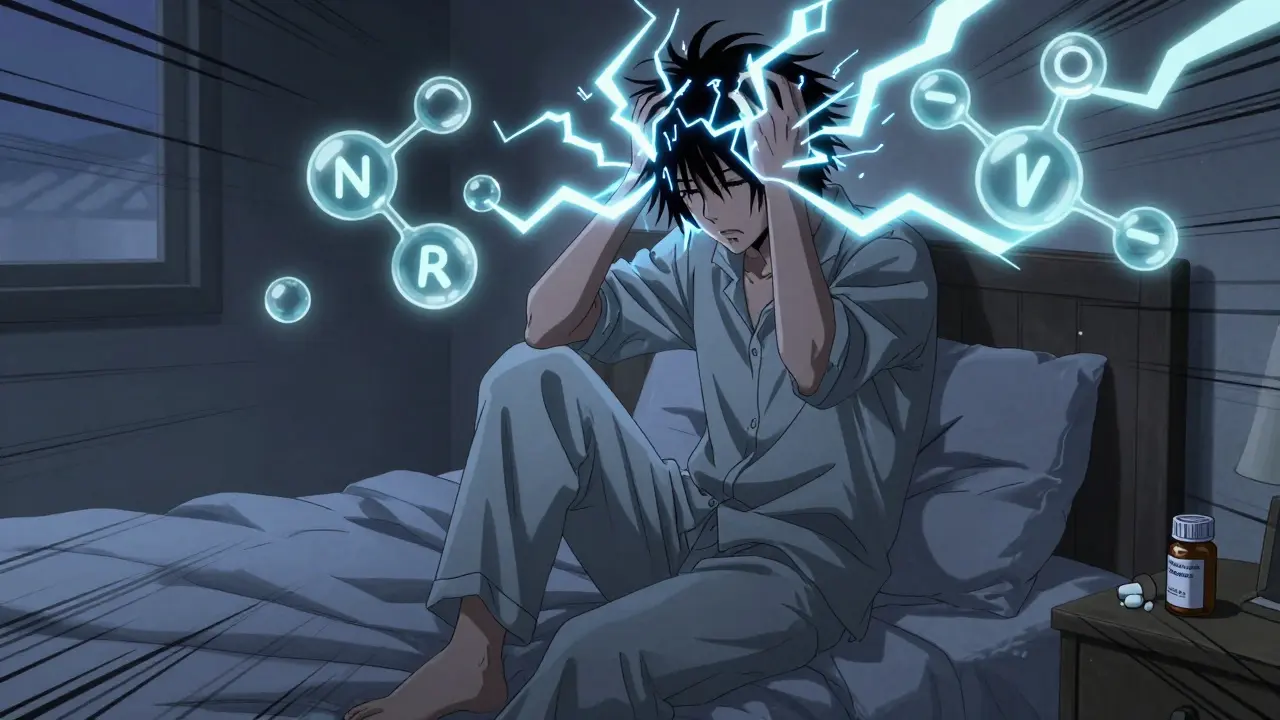
Stopping SSRIs or SNRIs isn’t as simple as taking your last pill and calling it a day. For many people, the body doesn’t adjust overnight. In fact, antidepressant withdrawal is far more common than most doctors admit - and it’s not just feeling a little down. It’s dizziness that hits like a wave, electric shocks in your head, nausea, insomnia, and anxiety so intense it feels like your nervous system is rewiring itself. These aren’t signs of depression coming back. They’re signs your brain is adjusting to life without the drug.
Why Some People Feel Worse When They Stop
When you take an SSRI like sertraline or an SNRI like venlafaxine, your brain adapts. It changes how it produces and uses serotonin - and sometimes norepinephrine, too. After weeks or months of this, your brain gets used to the drug being there. When you stop, it’s like pulling the plug on a system that’s been running on artificial power. The receptors that were once stimulated by the medication suddenly go quiet. That’s when symptoms start. This isn’t addiction. It’s pharmacological adaptation. And it’s real. Studies show between 20% and 80% of people experience withdrawal symptoms when stopping these medications - depending on the drug, how long they’ve been on it, and how fast they stop. The Cleveland Clinic found that 65% of people stopping venlafaxine report severe symptoms, including dizziness in 78% of cases and those terrifying "brain zaps" in 62%.Half-Life Matters More Than You Think
Not all antidepressants are created equal when it comes to stopping. The key factor? Half-life - how long it takes for half the drug to leave your system. Take paroxetine (Paxil). It has a 24-hour half-life. That means after you skip a dose, 50% of it’s gone in a day. Symptoms often start within 1 to 3 days. Same with sertraline (Zoloft) and escitalopram (Lexapro). Even though they’re slightly longer acting, you’ll still feel something within a few days. Now look at fluoxetine (Prozac). It has a half-life of 4 to 6 days. That’s not a typo. It stays in your body for weeks. People on fluoxetine often don’t feel withdrawal for a full month - or even longer. That’s why some doctors suggest switching from short-acting drugs like paroxetine to fluoxetine before tapering. It gives your brain a smoother transition. SNRIs are trickier. Venlafaxine (Effexor) has a half-life of just 5 hours. That means 90% of it’s out of your system in under 24 hours. Symptoms can hit within hours. Duloxetine (Cymbalta) and desvenlafaxine (Pristiq) aren’t much better - 12-hour half-lives mean you’re likely to feel withdrawal within 1 to 3 days.How Long Should You Taper?
Here’s where things get messy. Clinical guidelines disagree. Some say taper over 2 to 4 weeks. Others say 6 to 12 months. And patient stories? They tell a different story entirely. The British Association of Psychopharmacology admits there’s little solid evidence on the best taper speed. The NSW Therapeutic Advisory Group recommends cutting your dose by 25% every 1 to 4 weeks, slowing down even more at the end. But Outro.com’s 2023 guide, based on patient data and pharmacokinetics, recommends something called hyperbolic tapering: reduce by 10% of your current dose at a time, wait 4 to 8 weeks between cuts, and repeat. This method accounts for the fact that withdrawal symptoms can be delayed - sometimes for weeks. Why does this matter? Because if you cut too fast, your brain doesn’t have time to adapt. And when symptoms hit, many patients think it’s their depression returning. So they go back on the medication - only to try again later, often with worse symptoms. Reddit’s r/antidepressants community has over 15,000 posts from people who’ve gone through this. 68% say their symptoms lasted longer than the 1 to 2 weeks most doctors say they should. One person reported paroxetine withdrawal lasting 11 months - even after a 6-month taper. A 2019 Lancet Psychiatry study found 46% of people needed more than 6 months to fully stop. The Surviving Antidepressants community reports 73% needed over a year.
What Symptoms Should You Watch For?
Withdrawal symptoms vary, but they usually fall into a few categories:- Neurological: Brain zaps (sudden electric shock feelings), dizziness, headaches, tingling
- Gastrointestinal: Nausea, vomiting, diarrhea, loss of appetite
- Emotional: Anxiety, irritability, mood swings, crying spells
- Sleep: Insomnia, vivid dreams, nightmares
- Physical: Fatigue, flu-like symptoms, sweating, tremors
What Works in Real Life?
Most doctors don’t have time to manage slow tapers. A 2022 JAMA Internal Medicine study found only 31% of primary care doctors follow tapering guidelines. Most give patients a 2-week plan. That’s not enough. The Cleveland Clinic says 92% of successful discontinuations happen when patients work with providers who specialize in gradual tapering. General practitioners? Only 47% success rate. Here’s what actually helps:- Switch to fluoxetine first if you’re on paroxetine or venlafaxine - its long half-life acts like a buffer.
- Use liquid formulations if available. They allow micro-dosing - reductions as small as 1-2.5%. A 2023 University of Toronto pilot study showed this cut severe symptoms by 63%.
- Go slower at the end. The last 10-20% of the dose is the hardest. Reduce by 10% or less, and wait at least 4 weeks between cuts.
- Monitor symptoms daily. Keep a simple log: rate your brain zaps, sleep, anxiety on a scale of 1 to 10. That helps you and your doctor see patterns.
- Don’t switch generics. A 20% difference in concentration between brands can mimic withdrawal. If you’re on sertraline, stick with the same manufacturer.

When to Get Help Immediately
Most withdrawal symptoms are uncomfortable but not dangerous. But some need urgent attention:- Thoughts of self-harm or suicide
- Severe confusion or hallucinations
- Seizures
- Extreme heart palpitations or chest pain
What’s Changing in 2025?
The tide is turning. In 2023, the FDA required updated medication guides that now include half-life-specific tapering advice. The American Psychiatric Association is preparing new guidelines for 2024 that will include patient-reported outcomes - meaning your experience matters in the plan. The European Medicines Agency admitted in 2023 that current guidelines fail 40-60% of patients, especially those on short-half-life drugs. New tapering algorithms are being developed and expected in 2025. Meanwhile, the NIH-funded TAPER-SSRI study is tracking 1,200 people over 12 months. Results are due in late 2025. This could finally give us solid data on what works.Bottom Line: Slow Is Safe
If you’re thinking about stopping your SSRI or SNRI, don’t rush. Your brain didn’t adapt overnight. It won’t un-adapt overnight either. The fastest way to get through this is the slowest way. Work with a provider who understands tapering. Use liquid doses if you can. Track your symptoms. And remember: if you feel awful after a reduction, it’s not a failure - it’s feedback. Go back to your last stable dose. Wait. Then try again, slower. This isn’t about being weak. It’s about respecting your biology. Thousands of people have done this successfully - not by pushing through, but by listening to their bodies.Author

Harsh Khandelwal
December 24, 2025 AT 13:07So let me get this straight - Big Pharma’s been hiding the fact that these drugs rewire your brain like a rogue AI, and now they’re acting surprised when people start seeing electric ghosts in their skulls? 😏 I’ve been on sertraline for 3 years, went cold turkey because my doctor said ‘it’s just anxiety,’ and I spent 4 months convinced my teeth were vibrating. Turns out, it was my neurotransmitters throwing a rave without me. They don’t teach this in med school because the pill pipeline’s too profitable. Wake up, people.
Lindsey Kidd
December 24, 2025 AT 14:55Thank you for this 💗 I tapered off venlafaxine over 9 months using liquid drops and kept a daily journal - brain zaps were brutal at first, but knowing they were temporary made all the difference. You’re not broken. Your brain is just learning to walk again. And yes, it’s okay to go back to your last stable dose if it feels like falling off a cliff. 🌱 You’re doing better than you think.
Rachel Cericola
December 26, 2025 AT 01:55Let’s cut through the noise: the fact that 65% of people on venlafaxine have severe withdrawal isn’t a fluke - it’s a systemic failure. Doctors are trained to prescribe, not to manage discontinuation. The half-life data is clear, yet most GPs still hand out 2-week taper plans like they’re coupon books. Liquid formulations aren’t a luxury - they’re a medical necessity for short-half-life drugs. And if your provider doesn’t know what hyperbolic tapering is, find someone who does. This isn’t about being ‘weak’ - it’s about demanding science over speed. The FDA’s new guidelines are a start, but real change only happens when patients stop accepting ‘it’ll pass in a week’ as an answer. Your nervous system deserves better.
Blow Job
December 26, 2025 AT 07:39I went off Lexapro after 5 years. Took 14 months. Had brain zaps, insomnia, and cried for no reason while watching dog videos. But here’s the thing - I didn’t quit because I wanted to. I quit because I felt like a ghost in my own body. The worst part? Everyone told me I was ‘better now’ - but I wasn’t better, I was just numb. Slowing down saved me. Not because I’m special - because biology doesn’t care about your schedule.
Christine Détraz
December 27, 2025 AT 22:33I’m so glad someone finally wrote this without sounding like a drug ad. I switched from paroxetine to fluoxetine before tapering - life-changing. The brain zaps didn’t vanish, but they became predictable. I started tracking my symptoms on a scale of 1–10 and realized I wasn’t failing - I was healing in waves. One week I felt fine, next week I couldn’t get out of bed. Neither meant I was ‘backsliding.’ It meant my brain was rearranging furniture. Give yourself space. You’re not broken. You’re rebuilding.
Bhargav Patel
December 28, 2025 AT 13:58It is a matter of profound epistemological significance that the medical establishment continues to conflate pharmacological adaptation with psychological pathology. The cessation of SSRI/SNRI administration precipitates a neurochemical recalibration - not a relapse, nor a moral failing, nor a sign of weakness. The persistence of symptoms beyond the arbitrary temporal boundaries imposed by clinical guidelines speaks not to the inadequacy of the patient, but to the inadequacy of the paradigm. The brain, having undergone structural and functional reorganization under sustained serotonergic modulation, requires time commensurate with the duration of exposure to re-establish homeostasis. To demand rapid discontinuation is to impose a Cartesian reductionism upon a phenomenologically complex process. The patient’s lived experience is not anecdotal - it is data. And data, when aggregated, must inform protocol. The TAPER-SSRI study, when published, may finally afford this truth its due recognition.
Joe Jeter
December 30, 2025 AT 03:23Yeah right. ‘Brain zaps’ are just people who can’t handle life without a chemical crutch. You think your nervous system is ‘rewiring’? Nah. You’re just scared of being normal. Everyone else manages to quit - why can’t you? Maybe you’re not sick. Maybe you’re just addicted to feeling like a victim. Go outside. Exercise. Stop blaming Big Pharma for your lack of discipline.
Sidra Khan
December 31, 2025 AT 06:54Actually, I did the 2-week taper and felt fine. Everyone else is just overdramatizing. I think this whole ‘withdrawal is real’ thing is just a Reddit cult. Also, I switched generics and didn’t notice anything. So maybe you’re just anxious about being anxious?