
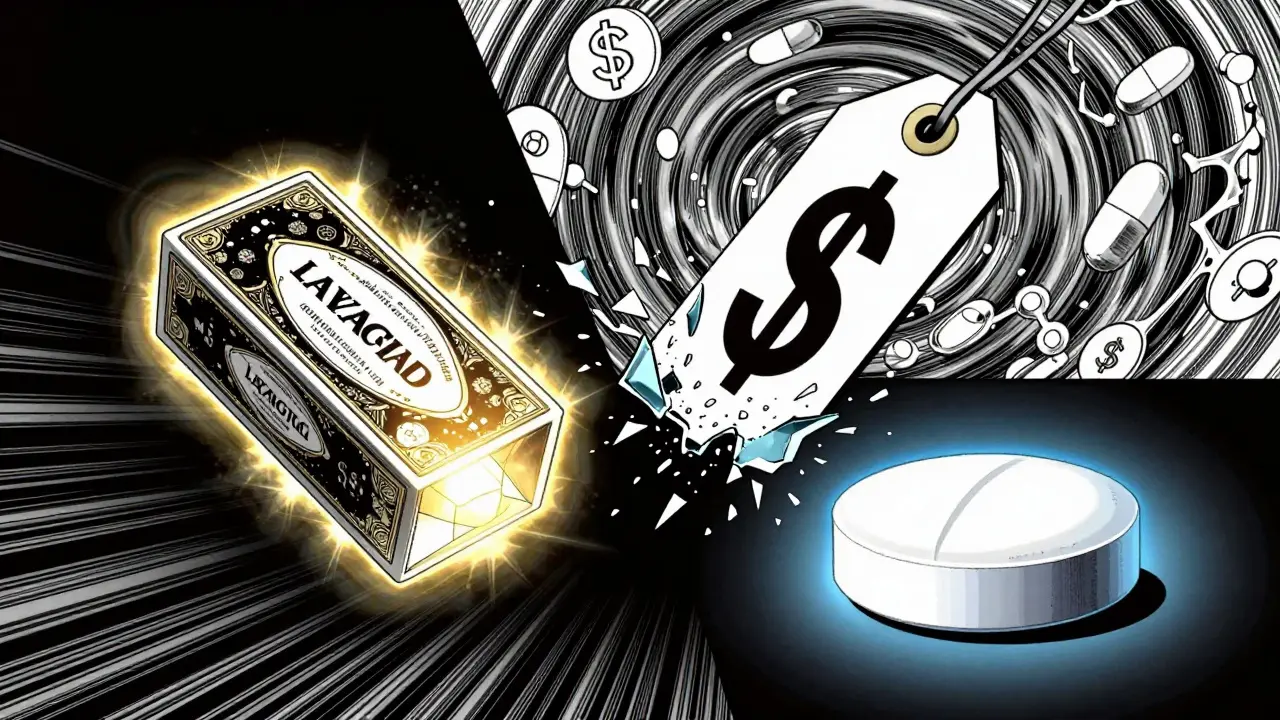
Imagine you have a choice between two pills. One costs $450. The other costs nothing. They treat the exact same condition. You take them at the same time. But one has a fancy logo, and the other looks like a plain white tablet. Which one do you pick? Most people would grab the free one without hesitation. Yet, when it comes to our health, many of us hesitate. We worry that "cheap" means "weak."
This hesitation is understandable but often misplaced. The debate between generic drugs and their branded counterparts isn't just about saving money-it's about understanding how modern medicine works. If you are paying full price for a brand-name medication when a generic version exists, you might be throwing hundreds or even thousands of dollars away every year. Let’s look at what the science actually says about whether these cheaper alternatives work as well as the originals.
What Exactly Is a Generic Drug?
To understand why generics are so much cheaper, we first need to define what they are. A generic medication is a pharmaceutical equivalent of a brand-name drug that contains identical active ingredients, dosage forms, strengths, and routes of administration. It is not a copycat in the sense of a knockoff toy; it is chemically identical in its most important aspect: the active ingredient.
When a pharmaceutical company develops a new drug, they spend billions of dollars on research and development. To recoup this investment, they get a patent, which gives them exclusive rights to sell that drug for a certain period-usually 20 years from the filing date. During this time, no one else can make it. This is why brand-name drugs like Lipitor (atorvastatin) or Plavix (clopidogrel) used to cost hundreds of dollars a month.
Once that patent expires, other manufacturers can step in. They don’t need to repeat the expensive clinical trials that proved the drug was safe and effective in the first place. Instead, they only need to prove that their version behaves the same way in the body as the original. This legal framework was established by the Hatch-Waxman Act (Drug Price Competition and Patent Term Restoration Act of 1984), which created a streamlined approval pathway for generics. Because these companies skip the multi-billion dollar R&D phase, they can offer the drug at a fraction of the cost.
The Science of Bioequivalence: Do They Work the Same?
This is the core question everyone asks: if the inactive ingredients (like fillers or dyes) are different, does the drug still work? The answer lies in a concept called bioequivalence, which is a measure of the rate and extent to which the active ingredient becomes available at the site of drug action.
Regulatory bodies like the U.S. Food and Drug Administration (FDA) require rigorous testing before a generic can hit the shelves. Manufacturers must conduct randomized crossover trials with healthy volunteers. They measure two key pharmacokinetic parameters:
- Cmax (Maximum Peak Concentration): How high the drug levels get in your blood.
- AUC (Area Under the Curve): The total amount of drug exposure over time.
For a generic to be approved, the 90% confidence intervals for both Cmax and AUC must fall within 80% to 125% of the brand-name drug’s values. This range sounds wide if you aren't familiar with statistics, but it is designed to ensure clinical equivalence. In reality, studies show that the average difference is tiny. An analysis of over 2,000 bioequivalence studies found that the average difference in absorption was less than 4%. For most medications, this variance is clinically insignificant.
It is crucial to correct a common myth here: the 80-125% rule applies to how quickly and fully the drug enters your bloodstream, not to the amount of active ingredient in the pill. A generic pill contains the exact same milligram strength as the brand-name version. If the brand has 10mg of atorvastatin, the generic has 10mg of atorvastatin.
The Cost Difference: Why Your Wallet Should Thank You
The financial impact of choosing generics is staggering. On average, generic drugs cost 80% to 85% less than their brand-name equivalents. This isn't a small discount; it is a fundamental shift in affordability.
| Medication (Brand/Generic) | Brand-Name Cost (Approx.) | Generic Cost (Approx.) | Savings |
|---|---|---|---|
| Lipitor / Atorvastatin | $335.37 | $0.00 - $4.00 | >$330 |
| Plavix / Clopidogrel | $450.22 | $0.00 - $5.00 | >$445 |
| Nexium / Esomeprazole | $250.00 | $4.00 - $10.00 | >$240 |
These numbers come from recent market data, including GoodRx coupon programs and standard pharmacy pricing. When you multiply this by millions of patients, the savings become systemic. The Generic Pharmaceutical Association reports that generics save the U.S. healthcare system approximately $373 billion annually. Currently, generics constitute 90% of all prescriptions filled in the United States. Despite this dominance, some patients still refuse substitution, often due to misinformation rather than medical necessity.

When Should You Be Cautious? Narrow Therapeutic Index Drugs
While generics are safe for the vast majority of conditions, there is a specific category where extra care is needed: Narrow Therapeutic Index (NTI) drugs, which are medications where small changes in blood concentration can lead to treatment failure or serious toxicity.
Examples include warfarin (a blood thinner), phenytoin (an anticonvulsant), lithium (for bipolar disorder), and levothyroxine (for thyroid issues). For these drugs, the margin for error is slim. While FDA-approved generics for NTI drugs meet strict standards, some experts and patients prefer to stay on a single manufacturer's product to avoid any potential variability during switching.
If you are taking an NTI drug, ask your pharmacist or doctor about the specific generic manufacturer. The FDA uses a rating system in its "Orange Book" to classify generics. AB-rated products demonstrate the highest level of bioequivalence and are generally considered interchangeable. B-rated generics meet safety requirements but may have differences in formulation that make them less ideal for switching. For most non-NTI drugs, this distinction rarely matters in practice.
Patient Experiences vs. Clinical Evidence
Science and personal experience don't always align perfectly. Surveys reveal a persistent skepticism among patients. A 2022 survey by Pharmacy Times found that 43% of respondents believed generics were less effective, and 27% refused to switch. Why? Often, it comes down to inactive ingredients. Different manufacturers use different binders, fillers, or dyes. These can affect the pill's size, color, or shape, and in rare cases, cause minor digestive upset or allergic reactions in sensitive individuals.
However, large-scale clinical evidence overwhelmingly supports generics. A landmark study published in Scientific Reports analyzed 1.2 million patients across 17 drug classes. It found that generic medications were at least similar-and in some cases superior-to branded counterparts regarding mortality and major cardiovascular events. Patients on generics had significantly fewer deaths in 10 of the 17 drugs studied.
So, why do some people feel differently? The nocebo effect plays a role. If you believe a cheap pill won't work, you may unconsciously perceive it as less effective. Additionally, individual biology varies. Just because a generic works for 99% of people doesn't mean it will work for you. If you notice a change in efficacy after switching, don't ignore it. Talk to your doctor. There may be a legitimate reason to stick with the brand, or perhaps a different generic manufacturer works better for your body.
How to Make the Switch Safely
Switching to generics is usually automatic. In most states and countries, pharmacists are required by law to substitute a generic for a brand-name drug unless the prescriber explicitly writes "Dispense as Written" or "Brand Medically Necessary" on the prescription. Here is how to navigate the process:
- Check with your insurance: Most insurance plans have lower copays for generics. Sometimes, the brand name might even be covered fully, but check the formulary first.
- Ask your pharmacist: Pharmacists are medication experts. Ask them if the generic available at their store is AB-rated. They can also tell you if there are known shortages or quality concerns with a specific manufacturer.
- Monitor NTI drugs closely: If you are on warfarin or levothyroxine, request blood tests within 7-14 days after switching to a new generic manufacturer to ensure your levels remain stable.
- Don't mix manufacturers arbitrarily: Once you find a generic brand that works well for you, try to stick with it. Frequent switching between different generic manufacturers can introduce unnecessary variables.
The Future of Generics and Biosimilars
The landscape of affordable medication is evolving. As more patents expire, the list of available generics grows. The FDA is also focusing on "complex generics," such as inhalers, topical creams, and injectables, which require more nuanced bioequivalence testing. With initiatives like GDUFA III, the agency is accelerating the approval of these complex generics to increase competition and lower prices further.
Another emerging area is biosimilars, which are highly similar versions of biological medicines already approved by regulatory authorities. Unlike traditional small-molecule drugs, biologics are large, complex proteins made in living cells. They cannot be exactly copied, only closely mimicked. Biosimilars are undergoing rigorous comparison to reference products and are showing cost reductions of 15-30%. As of late 2023, 38 biosimilars were approved in the U.S., offering hope for reducing the cost of expensive treatments for cancer, rheumatoid arthritis, and diabetes.
Supply chain vulnerabilities remain a concern, with the FDA reporting hundreds of generic drug shortages in recent years, primarily affecting sterile injectables. However, the long-term trend is clear: generics and biosimilars will continue to dominate the market, driving down costs while maintaining high standards of safety and efficacy.
Are generic drugs really as safe as brand-name drugs?
Yes. Generic drugs must contain the same active ingredient, strength, and dosage form as the brand-name drug. They are required to meet the same strict standards for purity, potency, and stability. Large-scale studies involving millions of patients have shown that generics are clinically equivalent to brand-name drugs for the vast majority of conditions.
Why do generic drugs look different from brand-name drugs?
Generic drugs can differ in color, shape, size, and taste because they may contain different inactive ingredients (fillers, binders, or dyes). These inactive ingredients do not affect the therapeutic effect of the drug. The differences exist because generic manufacturers cannot infringe on the brand-name company's trademark for the drug's appearance.
When should I avoid switching to a generic?
You should exercise caution with Narrow Therapeutic Index (NTI) drugs, such as warfarin, phenytoin, lithium, and levothyroxine. Small variations in blood levels can have significant effects. While FDA-approved generics are safe, consistent monitoring is recommended when switching manufacturers for these specific medications. Always consult your doctor before making changes.
Can my pharmacist automatically substitute a generic for my brand-name prescription?
In most jurisdictions, yes. Unless your doctor specifically marks the prescription as "Dispense as Written" or "Brand Medically Necessary," pharmacists are typically required by law to dispense the generic equivalent if available. This helps reduce costs for both patients and the healthcare system.
What is the Hatch-Waxman Act?
The Hatch-Waxman Act (Drug Price Competition and Patent Term Restoration Act of 1984) is a U.S. federal law that streamlined the approval process for generic drugs. It allowed generic manufacturers to rely on the safety and efficacy data of the original brand-name drug, requiring only proof of bioequivalence. This act revolutionized the pharmaceutical industry by increasing competition and lowering drug prices.
Author
