
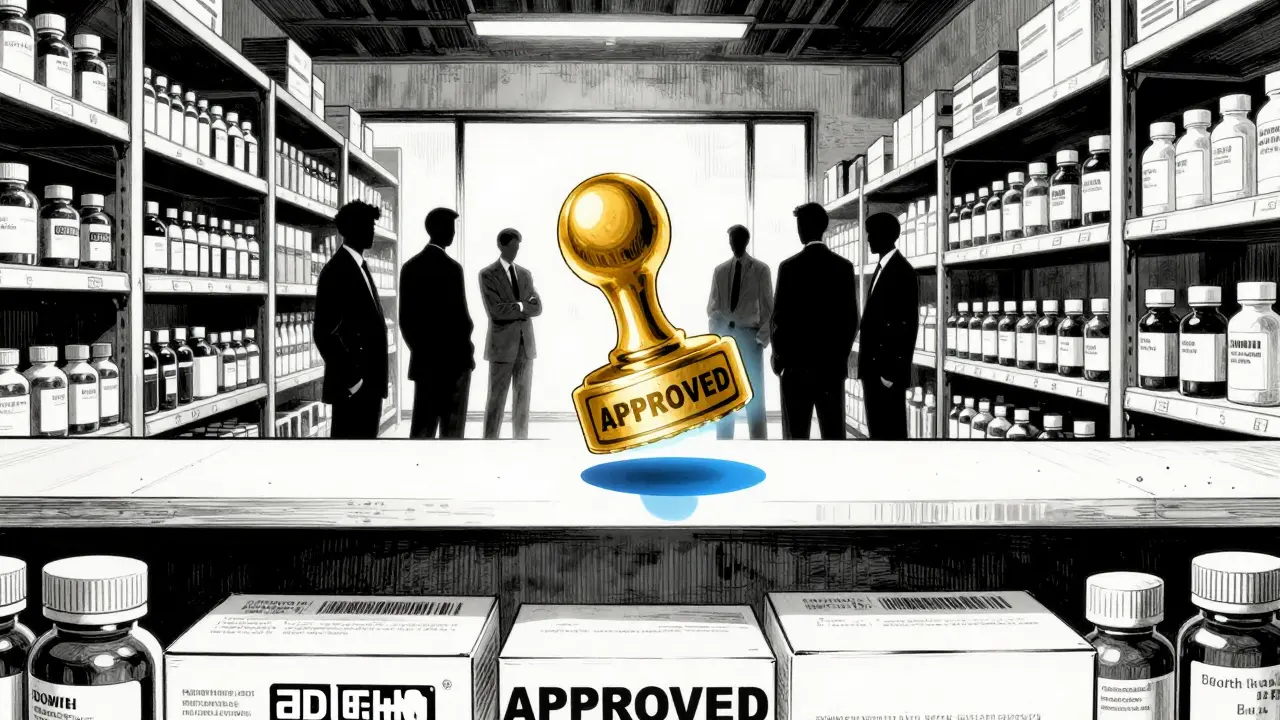
You might have noticed something strange lately. A generic version of a life-saving medication gets the green light from the FDA, yet you can't find it at your local pharmacy. It sits on paper as "approved," but remains invisible on shelves. Between 2023 and 2025, this disconnect became the defining story of the American pharmaceutical landscape.
This isn't about the quality of the medicine; it's about the complex battle fought behind closed doors. Brand-name manufacturers and generic companies are locked in a high-stakes game that keeps prices high long after exclusivity should have ended. By early 2026, looking back at the past three years reveals a clear pattern: patent wars are getting smarter, and the time gap between approval and actual launch is widening. We are seeing an average delay of over three years in some sectors, turning quick wins for competition into marathons for everyone involved.
The Mechanics of the Hold-up
Hatch-Waxman Act is the primary legislation governing generic drug entry and patent protection periods. It was designed to balance innovation with affordability, but its mechanisms have evolved into significant roadblocks.At the heart of this issue is a specific legal tool known as the 30-month stay. When a generic company files for approval using an Abbreviated New Drug Application (ANDA), they often challenge existing patents owned by the brand maker. If the brand manufacturer sues the generic company within 45 days of notification, the clock stops. For thirty months, the FDA cannot grant final marketing approval, even if the generic product is safe and effective. This period acts as a shield for the brand manufacturer, protecting their revenue stream regardless of whether their patents are actually strong or defensible in court.
In 2024 alone, 68% of generic applications included these challenges. It's become standard procedure. However, the process has gotten more crowded. According to FDA databases, the number of patents listed for a single drug in the Orange Book jumped from 12.3 in 2020 to 14.7 in 2025. Think of it as stacking obstacles in front of the finish line. Each patent represents another potential lawsuit, and thus, another potential trigger for a 30-month pause.
Real-World Impact on Approval Rates
The pressure isn't just legal; it's affecting how the FDA moves through its queue. In Q3 2025, the agency saw a noticeable slowdown. The approval rate dropped to 73%, down from an historical average near 87%. Meanwhile, rejections climbed to 15%. This wasn't a sudden drop in safety standards, but rather a reflection of how litigated cases clog the pipeline. Applications tied to patent disputes move slower because the FDA waits for courts to rule.
Delays also spiked. About 11% of application reviews missed their deadlines, double the usual rate. This backlog created a ripple effect throughout the supply chain. Even when a generic does get approved, we see a phenomenon where the first mover advantage is stolen. Sometimes, a brand company launches an "authorized generic"-their own drug sold under a generic label-to undercut the independent generic competitor just before the real competition arrives. While this tactic has declined slightly, with only 12% of brands doing it in 2025 compared to 28% in 2020, the threat remains a strategic lever to keep pricing power intact.
| Cause | Percentage of Delays | Average Duration |
|---|---|---|
| Patent Litigation | 72% | 3.2 Years |
| Supply Chain Issues (API) | 37% | 1.5 Years |
| Regulatory Review | 11% | 6 Months |
| Authorized Generic Launch | 12% | Variable |

Therapeutic Areas Under Siege
Not all drugs face the same hurdles. The type of medication matters immensely. Oncology drugs, for example, have faced the toughest battles. These medicines treat cancer, and the stakes for brand companies are incredibly high. An oncology generic takes nearly four years longer to reach the market after approval compared to heart disease medications. Injectables are particularly prone to delay because they are harder to manufacture consistently. Almost 90% of delayed complex generics fall into the injectable or inhaler category.
Biosimilars add another layer of complexity. These are versions of large molecule biologics like Humira. The patent thickets here are massive. One case involved 242 separate patents surrounding a single product. This creates a maze for generic applicants. Despite the complexity, the biosimilar space is moving faster than before, with 17 new approvals by late 2025. Still, the cost of fighting these battles means smaller generic companies are backing out. Two-thirds of the companies facing delays generate less than $500 million in annual revenue, leaving the market dominated by giants who can afford six-figure legal fees.
Case Studies from the Past Three Years
To understand the magnitude, we need to look at specific cases that defined this era. Eliquis (apixaban) remains a prime example. Pharmacists reported constantly hearing patient complaints about "approved but unavailable" versions. Even after the FDA signaled approval, patent challenges kept the generic off the market. Similarly, Trulicity and Steglatro were frequently mentioned in 2025 surveys regarding missing generic options.
One specific incident involving Vanda Pharmaceuticals in April 2025 highlighted the confusion. The agency cited Risk Evaluation and Mitigation Strategy issues to delay a hearing, confusing the legal timeline with safety requirements. This blurring of lines between administrative procedures and patent strategy frustrates patient advocacy groups. They documented over 400 instances where patients stopped taking prescribed meds simply because the cheaper generic wasn't physically present in the warehouse, even though the paperwork said it existed.
On the European side, the story looks different. The average wait there is 1.7 years versus 3.2 years in the US. The difference lies in how patent laws link to regulatory approval. Europe uses different frameworks that prevent the automatic 30-month stop-and-go seen in the US. This comparison proves the delays aren't inevitable scientific necessities; they are outcomes of the specific legal architecture in America.

Strategic Shifts by Generic Manufacturers
Generic companies aren't sitting idle. They are adapting their playbooks to survive this environment. The timing of their attack has changed. Instead of waiting until the end of a patent term, they now initiate research 4 to 5 years before expiration. This forward planning allows them to build a robust defense against litigation.
They are also diversifying their supply chains. Active Pharmaceutical Ingredients (APIs) were a major bottleneck. In 2023, a shortage could kill a launch. By 2025, top firms had tripled their number of approved suppliers. Teva and Sandoz led this charge, increasing reliance on multiple API sources to insulate themselves from disruptions.
Litigation costs remain the biggest hurdle, hitting $12.7 million per case on average. To combat this, the Citizen Petition process has gained traction. Generic firms are filing petitions to challenge improper patent listings in the Orange Book. While effective in some cases, the resolution time for these petitions is currently averaging over 18 months, meaning it helps long-term but doesn't solve immediate needs.
Regulatory Reform and the Road Ahead
Looking toward 2026, the pressure for reform is mounting. The Congressional Budget Office calculated that these delays cost Medicare Part D billions annually. Legislative efforts like the CREATES Act aim to force better cooperation between brand and generic companies during testing phases, reducing the ability to stall via sample denial. However, progress is slow. The bill stalled in committee in mid-2025.
There are signs of hope from the FDA side. The appointment of Dr. Peter Bach as Commissioner in January 2025 brought new focus to transparency. Analysts suggest his team could reduce entry times by a year or two by tightening rules around patent listings. Additionally, AI-assisted review tools launched in 2025 sped up non-litigated reviews by 22%. While patent litigation remains outside the FDA's direct control, increased scrutiny on the listing practices that fuel those lawsuits could change the tide.
Why do generic drugs stay on shelves after FDA approval?
This happens because of the "stay" provision in patent law. Even if the FDA approves the drug, patent litigation can legally block the sale of the generic for up to 30 months while the court decides if the patent is valid. The drug exists legally as approved but cannot be marketed.
How long does a typical patent delay last?
The statutory stay lasts 30 months, but in practice, the total time from initial approval to market entry averages 3.2 years across all sectors. Oncology drugs face even longer delays, averaging 4.1 years due to complex manufacturing requirements and more aggressive patent strategies.
What is a Paragraph IV certification?
It is a legal filing a generic company makes when applying for approval. It certifies that their new product does not infringe on existing patents or that the patents are invalid. Filing this triggers the risk of being sued by the brand owner, which starts the 30-month clock.
Are authorized generics delaying independent generics?
Yes, this strategy has decreased but persists. Brand companies sometimes release their own "generic" version of the drug shortly before competitors launch to capture market share. In 2025, this occurred in about 12% of relevant cases.
Is there any relief coming for patients in 2026?
While legislative changes like the CREATES Act are pending, FDA leadership changes in 2025 aim for better transparency in the Orange Book. This may speed up identification of weak patents, potentially shortening dispute times, but immediate relief depends on ongoing litigation outcomes.
Author

Katie Riston
March 31, 2026 AT 08:54It seems we are witnessing a slow erosion of the social contract between science and society where value is measured in currency rather than cures. When a molecule is synthesized and deemed safe by regulators the expectation was always that humanity would benefit from the innovation through accessibility. Instead the legal framework has become a fortress protecting revenue streams while families wait desperately for relief from suffering conditions. We observe that the mechanisms designed to incentivize creation are now being weaponized to stifle competition indefinitely. This transformation turns pharmaceuticals into luxury commodities that exclude the vulnerable populations who need them most. One has to question whether the original intent of legislation has been completely subverted by corporate lobbying power. The delay tactics described suggest a system where profit is prioritized over human life in a calculated manner. It is disheartening to see how bureaucratic procedures align so neatly with business goals regardless of public health outcomes. Patients remain the collateral damage in these high-stakes boardroom games that span years rather than months. Perhaps we need a fundamental rethink of how patents function in the medical sphere entirely. The disconnect between paper approval and physical availability creates a psychological toll on those seeking treatment options. Trust in institutions diminishes when rules appear to favor one side so heavily against the general public good. Every month lost in litigation represents a tangible loss of quality adjusted life years for individuals. The concept of intellectual property must evolve when applied to essential life-saving interventions. Society needs to reclaim the balance before this trend becomes permanent and unchangeable.
Ruth Wambui
March 31, 2026 AT 12:42these shadowy cabals design every loophole specifically to keep us sick and financially crippled by selling us poison wrapped in regulation. it is sinister how they stack patents like cards to block anyone trying to bring real relief to the masses. the corruption runs deeper than just lawyers fighting over paper. they want us dependent on their expensive poison forever.
Jonathan Sanders
April 1, 2026 AT 04:13oh sure let me explain the nuanced conspiracy theory while ignoring the fact that laws are written by people paid to write laws. your paranoia is adorable but statistically the system works exactly how big pharma wants it to. nobody is hiding anything except their bank account details.
emma ruth rodriguez
April 1, 2026 AT 21:51the Hatch-Waxman provisions, although originally intended to balance incentives; frequently result in extended exclusivity periods; which subsequently inflate costs for consumers. furthermore, the 30-month stay provision acts as a significant barrier; creating a bottleneck in the approval process. patent challenges; while necessary for validation; often stall progress indefinitely. one must consider the regulatory implications thoroughly. litigation strategies are increasingly sophisticated; utilizing every procedural tool available to brand manufacturers. the cumulative effect on patient access is undeniable; requiring systemic legislative review. transparency in the Orange Book listings; remains a critical area needing improvement. stakeholders must understand the complexity; rather than oversimplifying the issue. legal precedents set in recent years; have favored defensive patenting approaches.
Rick Jackson
April 2, 2026 AT 11:06I understand the frustration regarding the legal hurdles though we also need to acknowledge the investment required to develop new drugs initially. Finding a middle ground where innovation continues but access improves is the goal we all share collectively. The data shows delays exist yet solutions are emerging slowly through reform efforts. We should support changes that streamline the process without killing off future development entirely.
Beccy Smart
April 2, 2026 AT 18:15This is literally unethical behavior by the big corps 😡💊 why is this even allowed in civilized society 🤷♀️ they care more about cash than people lives 💔 stop profiting from sickness 🚫
sanatan kaushik
April 4, 2026 AT 07:52In my country we do not wait three years for a cheap version of medicine because the government forces competition sooner. This American delay system is aggressive and hurts poor people everywhere. You pay tax money to protect foreign companies instead of fixing your own laws quickly. Stop blaming the courts and fix the statute books properly.
Debbie Fradin
April 4, 2026 AT 22:46Your optimism about government fixes is hilarious considering Congress barely touches healthcare reform. They love the status quo because the donations roll in from pharma lobbyists every election cycle. It is funny how people think change is coming when the same politicians wrote these laws. Don't hold your breath waiting for Congress to save us.
Christopher Curcio
April 5, 2026 AT 02:17The interaction between the ANDA filing timeline and the Paragraph IV certification dictates much of this lag time. When the 30-month clock triggers under 35 USC 156 the FDA administrative pause becomes legally binding regardless of clinical data readiness. Supply chain bottlenecks for APIs further complicate the downstream manufacturing requirements for generic entry. Clinical pharmacology parameters often shift during the litigated interval causing additional regulatory queries before launch clearance. These technical hurdles combine with legal holds to create the observed backlog metrics seen in Q3 2025.
Angel Ahumada
April 5, 2026 AT 07:37you clearly do not understand the macroeconomic implications of IP protection which are absolutely vital for sustaining high-risk R&D pipelines that average decades of work before a viable product reaches market failure rates for new biologics are extremely high and without patent enforcement there would be zero incentive for private capital to fund these ventures in the first place so your outrage is misplaced on the legal mechanism itself rather than the cultural obsession with immediate gratification of lower prices without respecting innovation cycles.
Carolyn Kask
April 5, 2026 AT 23:01You elitist types talk about macroeconomics while old folks die because they can't afford insulin. This is a uniquely American problem created by greed disguised as policy genius. The rest of the world sees right through these excuses about R&D costs. We need action not academic lectures on why you deserve monopoly profits.
RONALD FOWLER
April 6, 2026 AT 17:47The numbers do not lie