
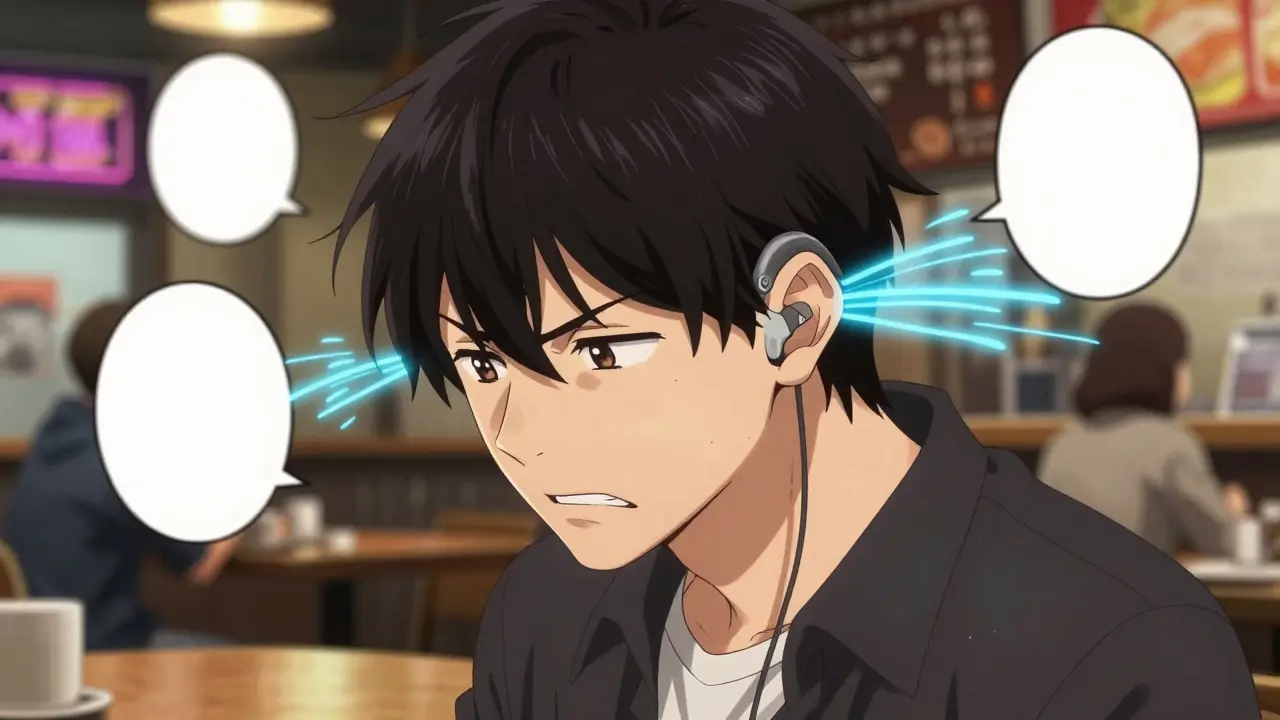
Imagine trying to follow a conversation in a busy café, but no matter how hard you listen, voices from your left side vanish into silence. You turn your head, lean in, raise your hand to signal - nothing changes. This isn’t just poor hearing. It’s single-sided deafness - total or near-total hearing loss in one ear, with the other ear working normally. About 4 to 5 people out of every 100,000 develop this condition each year, often after an infection, head injury, sudden sensorineural loss, or even a benign tumor like an acoustic neuroma. For decades, doctors told patients to just adapt. Today, two main technologies can help: CROS hearing aids and bone-anchored devices. Neither is perfect. But knowing the difference can change your life.
What Is CROS Hearing Aid Technology?
CROS stands for Contralateral Routing of Signals. It’s a non-surgical solution designed for people with single-sided deafness. One tiny hearing aid sits on the deaf ear, picking up sound. Another, more powerful device sits on the better-hearing ear, receiving that signal wirelessly. The sound isn’t amplified on the deaf side - it’s sent across your head to the good ear. Think of it like a radio broadcast from one side to the other. Modern CROS systems, like the Phonak CROS Marvel or Oticon CROS Free, use Bluetooth-like wireless tech to transmit sound. They’re small, discreet, and easy to put on. Most run on size 13 or 312 batteries that last 2 to 3 days. You can take them off at night, clean them easily, and replace them if they break. No surgery. No scars. No recovery time. But here’s the catch: CROS doesn’t restore binaural hearing. It doesn’t give you the ability to tell where a sound is coming from. Your brain still only hears with one ear. The sound from your deaf side comes through your good ear - but it sounds like it’s coming from inside your head, not from the actual direction. Many users describe it as “muffled,” “echoey,” or “like someone’s whispering in your ear.” In quiet settings, CROS works well. You’ll hear people on your deaf side. But in noisy places - restaurants, meetings, crowded streets - it often makes things worse. Studies show that when noise comes from the deaf side, CROS can actually reduce your ability to understand speech by up to 4.2 dB. That’s not a small drop. It’s the difference between catching every word and missing half the conversation.How Bone-Anchored Hearing Devices Work
Bone-anchored hearing devices (BAHD), also called bone conduction systems, work differently. Instead of sending sound through the air, they send vibrations directly through your skull bone to the inner ear. This bypasses the outer and middle ear entirely. The sound travels faster, more naturally, and without the muffling effect of air conduction. There are two types: percutaneous and transcutaneous. Percutaneous systems, like the Cochlear Baha 6 Max, use a titanium implant screwed into the skull behind the ear. Over 3 to 6 months, the bone grows around the implant - a process called osseointegration. After healing, a sound processor snaps onto a small abutment sticking out of the skin. Transcutaneous systems, like the Oticon Medical Ponto 5 SuperPower, use magnets to hold the processor against the skin. No hole in the skin. Less risk of infection, but slightly less efficient sound transmission. The MED-EL Bonebridge is an implantable system with no external abutment. The transmitter sits under the skin, vibrating the bone directly. It’s more complex, but avoids skin issues entirely. BAHDs are more expensive. Surgery costs $3,000 to $7,000 out-of-pocket in the U.S., not counting the device itself ($4,000-$8,000). Recovery takes weeks. You need a CT scan to check bone thickness. You must clean the abutment daily to prevent skin infections - a common problem. Up to 63% of percutaneous users report skin irritation at least once a year. But here’s what users say: “The sound is clearer. I can hear footsteps behind me. I don’t have to turn my head constantly.” In noisy environments, BAHDs improve speech understanding by 3.5 dB compared to CROS. They’re better at handling wind noise. And because the better ear isn’t blocked, you still hear naturally from that side.Real-World Performance: CROS vs. BAHD
A major 2015 study called CINGLE followed 113 people with single-sided deafness for two years. The results were clear: cochlear implants did best at sound localization. But between CROS and BAHD, BAHD won. - Sound localization: BAHD users could point to where a sound came from 15% more accurately than CROS users. That’s the difference between knowing someone’s calling your name from your left - or just hearing a voice somewhere in the room. - Noise in restaurants: CROS users struggled when noise came from their deaf side. BAHD users didn’t. In fact, BAHDs reduced the “head shadow effect” - the blockage of sound by your head - by 8-10 dB. CROS only helped a little. - Long-term use: In one study, nearly half of CROS users stopped using their device after a year. Only 7% of BAHD users did. Why? Battery life. Sound quality. Frustration. CROS users complained about changing batteries every two days. BAHD users complained about skin care - but they stuck with it because the benefit was real. One Reddit user wrote: “I loved the CROS at first. No surgery. Easy to use. But after three months, I was tired of hearing my own voice echo in my good ear. I switched to Baha. It’s not perfect - I get rashes - but I finally hear people on my bad side without feeling like I’m inside a tin can.”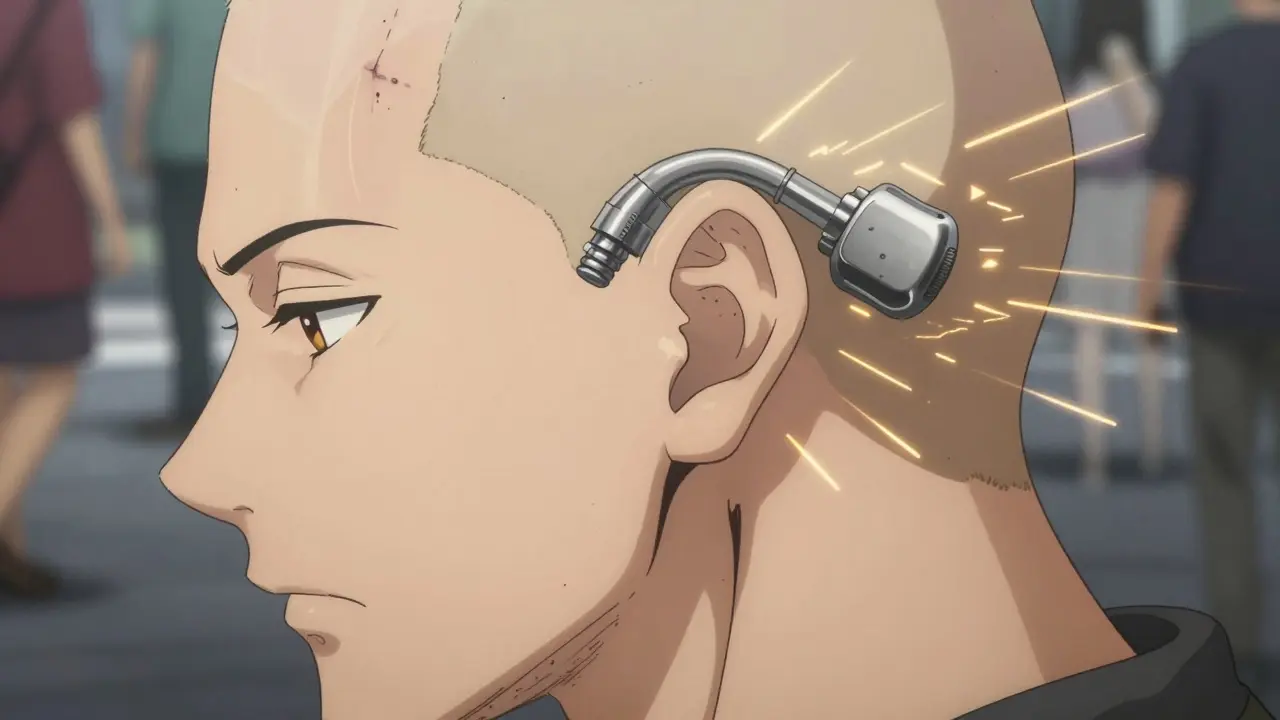
Who Gets What? Matching the Right Solution
Not everyone is a candidate for both. Your doctor will check your hearing, bone density, and medical history. Choose CROS if:- Your better ear has normal or near-normal hearing (pure-tone average ≤ 25 dB HL)
- You want to avoid surgery completely
- You’re okay with daily battery changes and occasional frustration in noise
- You’re trying it first - many clinics offer a 2-week trial
- You have mild to moderate hearing loss in your better ear (up to 45-55 dB HL)
- You work in noisy environments - construction, restaurants, factories
- You’re active - you exercise, play sports, sweat often
- You’ve tried CROS and found it insufficient
Cost, Care, and Daily Life
CROS systems cost $2,500 to $4,000. BAHDs, including surgery, run $7,000 to $15,000. Insurance often covers BAHD if you meet criteria, but rarely covers CROS. Medicare doesn’t cover either in most cases. Daily care is different: - CROS: Wipe with a dry cloth. Replace batteries every 2-3 days. Re-pair if wireless connection drops. Store in a dehumidifier. Simple. - BAHD: Clean the abutment daily with alcohol wipes. Watch for redness, swelling, or discharge. Use antibiotic cream if needed. Avoid heavy impacts to the head. Don’t sleep on the side with the implant. More work - but the sound quality makes it worth it for many. Repair times vary, too. CROS devices can be fixed in 2-3 business days. BAHD processors? You might wait 14 days if you need a replacement. Only a few clinics handle them.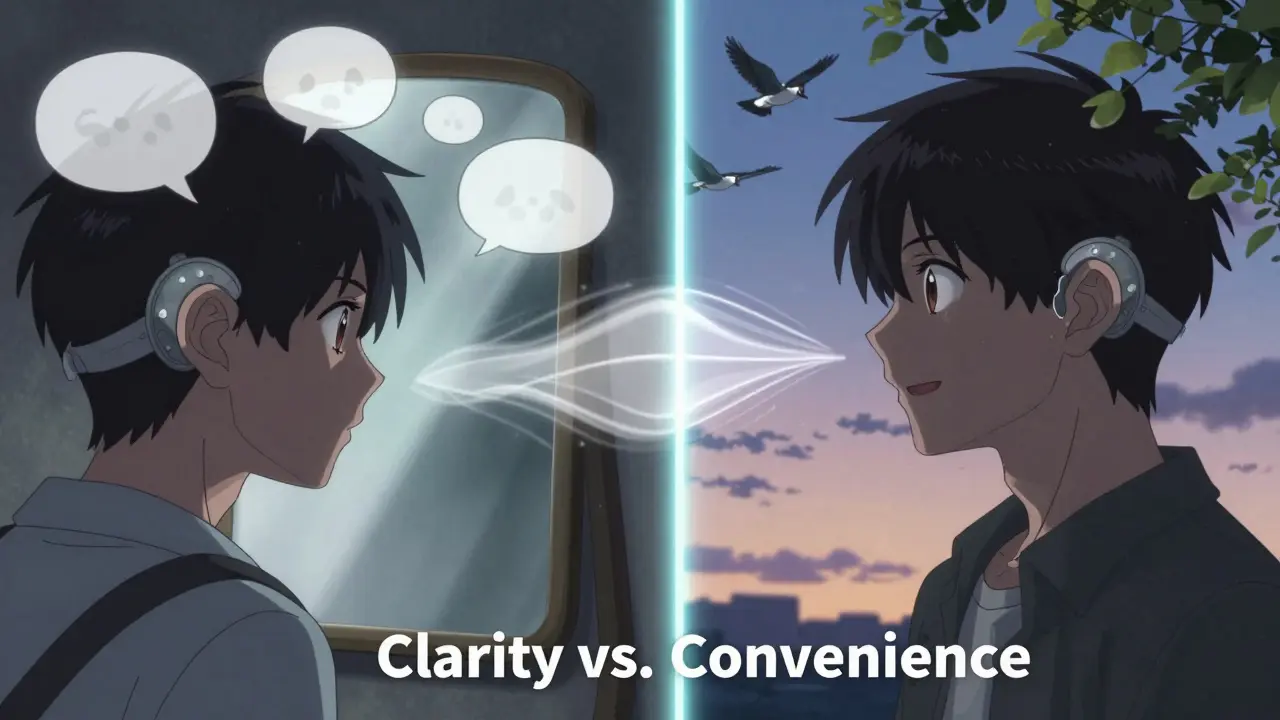
The Future: Where Do These Technologies Go?
CROS is evolving. New models now include tinnitus masking, AI noise reduction, and direct streaming to smartphones. Phonak and Signia are making them smarter. But they’re still fundamentally limited: one ear hears, the other just sends. BAHDs are getting better, too. Transcutaneous systems like the Ponto 5 SuperPower reduce skin problems. The Bonebridge is becoming more popular. And with cochlear implants now being considered earlier for SSD, the landscape is shifting. Experts are divided. Some say CROS will remain the first step - non-invasive, affordable, low-risk. Others believe that as implants become less invasive and more effective, CROS will fade. One study predicts CROS will be obsolete for most patients within 10 years. For now, the choice comes down to this: Do you want convenience - or clarity?Frequently Asked Questions
Can CROS hearing aids restore normal hearing in single-sided deafness?
No. CROS systems route sound from the deaf side to the better ear, but they don’t restore true binaural hearing. Your brain still only processes sound from one side. You won’t regain the ability to naturally locate where sounds come from, and speech in noisy environments may still be difficult. CROS improves awareness of sound direction but doesn’t fix the underlying issue of monaural hearing.
Is bone-anchored surgery risky?
The surgery itself is low-risk and takes about 45 minutes under local anesthesia. But complications can occur. Skin reactions around the abutment are common - up to 63% of users report irritation, infection, or overgrowth. There’s also a small risk of implant failure, nerve damage, or poor osseointegration. Long-term maintenance is required. However, transcutaneous systems reduce skin risks, and most patients find the benefits outweigh the upkeep.
How long does it take to adapt to a bone-anchored device?
It takes 3 to 6 months for the implant to fully integrate with the bone. After that, the sound processor is activated. Most users need 4 to 8 weeks to adapt to the new sound quality. Bone-conducted sound feels different - it’s deeper, more direct, and sometimes louder than expected. Many describe it as “like hearing through your skull.” With time, your brain learns to interpret it naturally.
Can I swim or shower with a bone-anchored hearing device?
You can shower with a transcutaneous system like the Oticon Ponto, as long as the processor is removed. For percutaneous systems like Cochlear Baha, you must take off the processor before swimming or showering. Water exposure to the abutment increases infection risk. Some users wear waterproof covers or use specialized waterproof cases for light water activities, but full submersion isn’t recommended without protection.
Do I need to replace the implant in a bone-anchored system?
The titanium implant is designed to last a lifetime. Once osseointegrated, it becomes part of your skull bone. You only replace the external sound processor - every 5 to 7 years, depending on wear and technology upgrades. The processor is the part that gets updated with new features, not the implant itself.
Are CROS hearing aids covered by insurance?
Most insurance plans, including Medicare and Medicaid, do not cover CROS hearing aids because they’re considered non-essential. Some private insurers may offer partial coverage if you have a documented medical need. Bone-anchored devices are more likely to be covered, especially if your better ear has some hearing loss. Always check with your provider before proceeding.
Can children use CROS or bone-anchored devices?
Yes. Children as young as 5 can use bone-anchored systems with softband holders before surgery. CROS devices are also available for kids, but they’re less commonly used because children need better spatial hearing for learning and safety. Many pediatric centers now recommend early cochlear implantation for SSD in children, especially if hearing loss is sudden or progressive.
What’s the difference between BAHD and a cochlear implant for SSD?
BAHD sends sound through bone vibration to the functioning inner ear on the deaf side. A cochlear implant bypasses the inner ear entirely and directly stimulates the auditory nerve. For SSD, a cochlear implant can restore true binaural hearing - including the ability to localize sound and hear in noise - because it activates the deaf ear’s nerve. BAHD doesn’t restore hearing in the deaf ear; it just uses bone conduction to route sound. Cochlear implants are more invasive and expensive, but offer the most complete solution.
Next Steps: What to Do Now
If you have single-sided deafness, start with a diagnostic hearing test. Ask your audiologist for a CROS trial. Most clinics offer a 2-week loaner. Wear it in your usual environments - at work, in traffic, during meals. Note what you hear, and what you still miss. If CROS doesn’t help enough, schedule a consultation with a bone-anchored specialist. Get a CT scan to check bone thickness. Ask about transcutaneous options if you’re worried about skin issues. If you’re under 40 and your deafness happened recently, ask about cochlear implant eligibility. The guidelines changed in January 2024 - you may qualify now. Don’t wait. The longer you go without treatment, the harder it becomes for your brain to adapt. Whether you choose CROS, BAHD, or an implant - taking action now means you’ll hear more tomorrow.Author

Angel Tiestos lopez
January 14, 2026 AT 05:07Pankaj Singh
January 15, 2026 AT 23:52Robin Williams
January 17, 2026 AT 08:58Scottie Baker
January 18, 2026 AT 12:53Anny Kaettano
January 19, 2026 AT 10:40Kimberly Mitchell
January 21, 2026 AT 06:32Angel Molano
January 21, 2026 AT 16:16Vinaypriy Wane
January 21, 2026 AT 22:16Randall Little
January 21, 2026 AT 22:17jefferson fernandes
January 23, 2026 AT 19:43Acacia Hendrix
January 25, 2026 AT 15:00mike swinchoski
January 26, 2026 AT 05:05Anny Kaettano
January 27, 2026 AT 12:06