
Decongestant Safety Checker
Check Your Decongestant Safety
Based on your heart health status, this tool will tell you if decongestants are safe for you. Remember: Decongestants can raise blood pressure and trigger heart problems, especially if you have heart disease.
Results
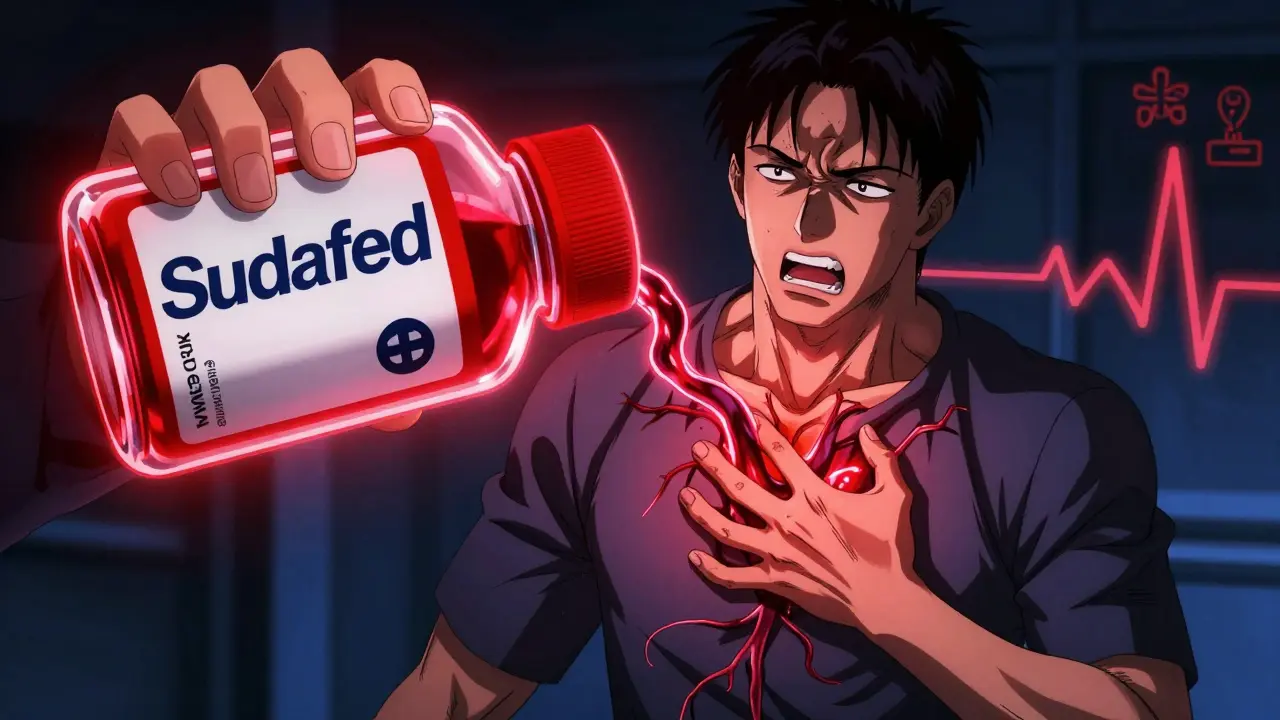
If you have heart disease or high blood pressure, taking a common cold medicine might be riskier than you think. Many people grab a bottle of Sudafed or Afrin without a second thought when they get congested. But for those with heart conditions, these over-the-counter decongestants can push blood pressure dangerously high, trigger irregular heartbeats, or even lead to heart failure. The problem isn’t just about taking too much-it’s about taking any at all, if your heart is already struggling.
How Decongestants Work-and Why They’re Dangerous for Your Heart
Decongestants like pseudoephedrine and phenylephrine work by narrowing blood vessels. That’s why your nose clears up: less swelling in the nasal passages means easier breathing. But that same effect doesn’t stay in your nose. These drugs travel through your bloodstream and tighten blood vessels everywhere-including those around your heart and brain. This vasoconstriction forces your heart to work harder. Blood pressure rises. Your heart rate can spike. For someone with healthy arteries and a strong heart, this might feel like nothing more than a slight jitteriness. But for someone with heart disease, this added strain can be deadly. Pseudoephedrine, the active ingredient in Sudafed, has been shown in multiple studies to cause a small but measurable increase in systolic blood pressure. In one 2005 analysis, even standard doses led to an average rise of 2 to 5 mm Hg in systolic pressure. That might not sound like much, but for someone with uncontrolled hypertension, that extra push can be the difference between stable and critical.Who’s at Highest Risk?
Not everyone with heart disease needs to avoid decongestants entirely-but some groups should never use them. Experts at Houston Methodist Hospital and the American Heart Association identify four high-risk categories:- Uncontrolled high blood pressure (hypertension)
- History of heart attack or stroke
- Heart failure
- Prinzmetal angina (spasms in the coronary arteries)
Topical vs. Oral: Which Is Safer?
Many assume that nasal sprays like Afrin (oxymetazoline) or Naphazoline are safer because they’re applied locally. But that’s not always true. A study of 100 patients using nasal decongestants for a week found their heart rates rose slightly-from 80.8 to 84.3 beats per minute-though blood pressure didn’t change much. That sounds minor, but for someone with arrhythmia or heart failure, even a small increase in heart rate can trigger dangerous rhythms. Worse, there are documented cases of life-threatening reactions from topical sprays. One 40-year-old man developed a malignant hypertensive crisis and acute heart failure after using excessive amounts of a nasal spray containing naphazoline and prednisolone. He didn’t overdose-he just used it longer than recommended. His body absorbed enough of the drug to cause systemic damage. This was the first reported case of heart failure directly linked to topical decongestant use. Bottom line: if you have heart disease, neither oral nor nasal decongestants are safe. The risk isn’t just about dosage-it’s about how your body reacts to the drug’s mechanism of action.
What the Labels Say-and Why You Should Read Them
Every decongestant bottle, whether it’s behind the counter or on the shelf, carries a warning: Do not use if you have high blood pressure, heart disease, or thyroid problems. That’s not a legal footnote-it’s a medical red flag. Pseudoephedrine products are kept behind the pharmacy counter because pharmacists are trained to screen customers. They ask about your medical history, your current medications, and whether you’ve had a heart attack or stroke. This isn’t bureaucracy-it’s a safety check. If you’re buying Sudafed and the pharmacist asks you questions, don’t get annoyed. They’re trying to protect you. Topical sprays often have smaller print warnings, but they’re just as serious. Many people assume, “It’s just a spray-I’m not swallowing it.” But your nasal lining absorbs drugs quickly. What stays local can still become systemic.What Can You Use Instead?
You don’t need decongestants to breathe better during a cold. There are safer, effective alternatives:- Saline nasal sprays-no drugs, just salt water. They moisten and flush out mucus without affecting your heart.
- Humidifiers-adding moisture to the air reduces nasal swelling naturally.
- Guaifenesin (Mucinex)-this expectorant helps thin mucus so you can clear it more easily. It doesn’t constrict blood vessels.
- Steam inhalation-breathe in warm, moist air from a bowl of hot water (with a towel over your head). It’s simple, free, and safe.
- Elevating your head-sleeping with an extra pillow helps reduce nighttime congestion without any medication.

When to Call Your Doctor
If you have heart disease and you’ve already taken a decongestant, watch for these warning signs:- Sudden, severe headache
- Blurred vision or dizziness
- Chest pain or pressure
- Shortness of breath that’s worse than your usual symptoms
- Heart palpitations or irregular heartbeat
The Bigger Picture: Why This Matters
Decongestants aren’t just risky for individuals-they’re a public health blind spot. Millions of people with undiagnosed or poorly controlled hypertension use them without knowing the danger. Many assume that because it’s sold over the counter, it’s safe. But “over the counter” doesn’t mean “risk-free.” The real solution isn’t better labeling or stricter sales-it’s better education. People need to understand that heart disease isn’t just about cholesterol or weight. It’s about every choice you make, even the ones that seem small: a cold medicine, a painkiller, a sleep aid. Your heart doesn’t care if you meant well. It only responds to what’s in your bloodstream. And when you have heart disease, some of the most common remedies can be the most dangerous.Final Takeaway
If you have heart disease or high blood pressure, avoid decongestants. Period. Whether it’s pseudoephedrine, phenylephrine, oxymetazoline, or naphazoline-they all carry the same risk. Your congestion will clear eventually, without drugs. Your heart won’t get a second chance if it’s damaged by a drug you thought was harmless. Stick to saline sprays, humidifiers, and rest. Talk to your pharmacist before buying anything labeled for colds. And if you’re unsure, call your doctor. It’s not overcautious-it’s essential.Can I take decongestants if my blood pressure is controlled?
Even if your blood pressure is well-managed, decongestants can still raise it unpredictably, especially when you’re sick. Illness itself stresses your cardiovascular system. Adding a decongestant increases the risk of dangerous spikes. Experts recommend avoiding them entirely if you have heart disease, regardless of how stable your numbers seem.
Are nasal sprays safer than pills?
Not necessarily. While nasal sprays act locally, your body still absorbs enough of the drug to affect your heart and blood pressure. Cases have been documented where excessive or prolonged use of topical sprays led to life-threatening heart failure. The risk is lower than with oral forms, but it’s still present-and not worth taking.
What’s the safest cold medicine for someone with heart disease?
The safest options are non-medicated: saline nasal sprays, humidifiers, steam inhalation, and elevating your head while sleeping. If you need medication, guaifenesin (Mucinex) is generally safe because it thins mucus without constricting blood vessels. Always check labels for hidden decongestants like pseudoephedrine or phenylephrine.
Why are decongestants behind the pharmacy counter?
Because they pose serious risks to people with heart disease, high blood pressure, or other conditions. The behind-the-counter rule lets pharmacists screen customers for contraindications before sale. They can ask about your medical history and warn you if it’s unsafe to take the drug. This isn’t about limiting access-it’s about preventing harm.
Can decongestants cause a heart attack?
Yes. In people with coronary artery disease or uncontrolled hypertension, decongestants can trigger coronary artery spasm, raise blood pressure to dangerous levels, or cause arrhythmias that lead to heart attack. There are documented cases of heart attacks occurring shortly after decongestant use in vulnerable individuals.
What should I do if I accidentally took a decongestant?
If you have heart disease and took a decongestant, monitor yourself closely for chest pain, rapid heartbeat, dizziness, or shortness of breath. If you feel any of these, seek medical help right away. Even if you feel fine, call your doctor to discuss whether you need monitoring. Don’t wait for symptoms to worsen.
Author

Nat Young
January 15, 2026 AT 08:14Iona Jane
January 16, 2026 AT 13:38Jaspreet Kaur Chana
January 18, 2026 AT 04:56Haley Graves
January 18, 2026 AT 19:03Nilesh Khedekar
January 19, 2026 AT 06:10Niki Van den Bossche
January 20, 2026 AT 04:56Jan Hess
January 20, 2026 AT 18:00Gloria Montero Puertas
January 22, 2026 AT 13:07Frank Geurts
January 23, 2026 AT 14:04