
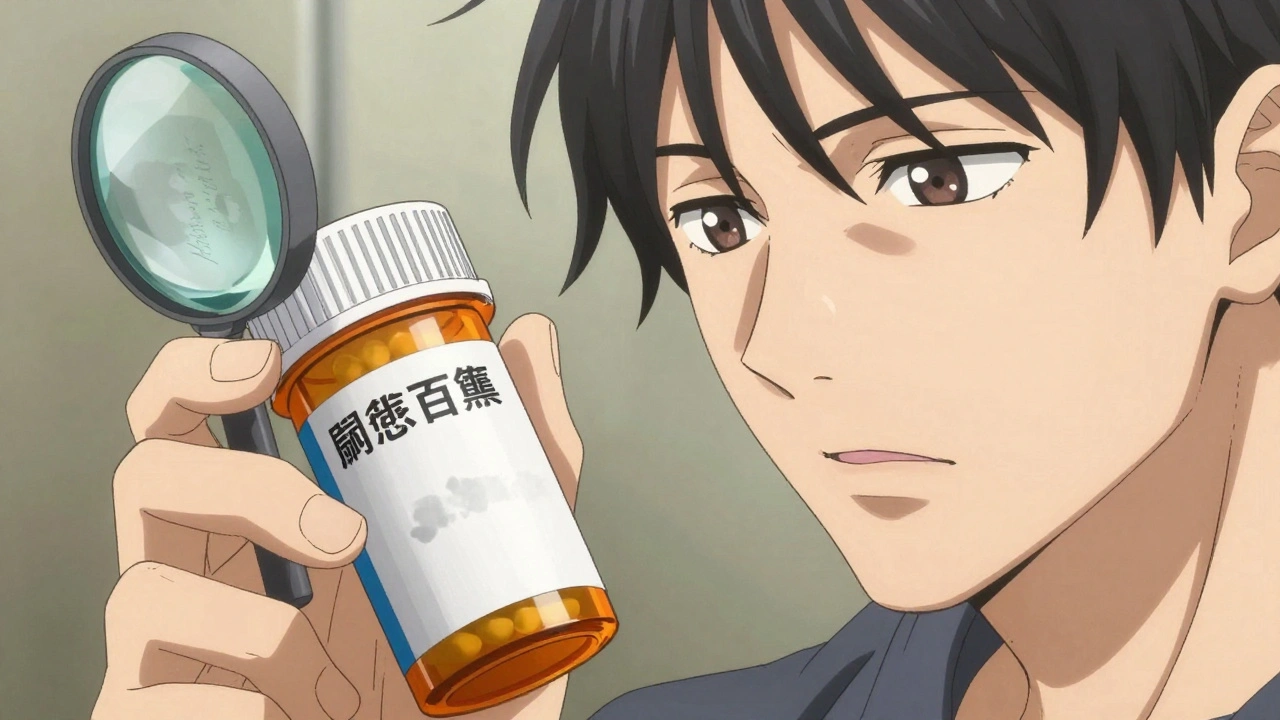
Every year, millions of people around the world take medication without ever checking if the package is real. That’s a dangerous habit. Counterfeit drugs aren’t just fake-they can be deadly. A pill that looks identical to your prescription might contain chalk, rat poison, or nothing at all. And the packaging? It’s often perfect. So how do you tell the difference when your life could depend on it?
Start with the basics: visual inspection
Before you reach for a spectrometer or a smartphone app, start with your eyes. Most counterfeit packages have tiny flaws that don’t show up in photos or videos. Hold the box under good lighting-natural daylight or a 60-watt bulb works best. Look at the font. Is the lettering sharp and even? Or does it look slightly blurry, like it was printed on a home printer? Genuine pharmaceutical packaging uses high-resolution printing. Even the smallest letters, like lot numbers or expiration dates, should be crisp. Check the color. A 2019 case in the U.S. found counterfeit Lipitor boxes using a shade of blue that hadn’t been used since 2002. The real product had switched to a different Pantone code. That’s not something you’d notice unless you’ve seen the real thing before. Compare the box to one you’ve bought before. If you’re using a new pharmacy or buying online, keep a photo of your last legitimate package. Side-by-side comparison is your best tool. Look at the seal. Is it intact? Does it look like it’s been resealed? Genuine blister packs have a foil backing that’s fused to the plastic with heat. If you can peel it back slightly without tearing, it’s fake. Also, check the alignment. The tablets inside should line up perfectly with the holes. If they’re crooked or the holes are unevenly spaced, walk away.Microscopic details you can’t ignore
Many fake drugs pass the naked-eye test. That’s why counterfeiters now use professional-grade printers. But even the best printers leave traces. A 10x loupe-like the kind pharmacists use-can reveal the truth. Look at the imprint on the tablet. Real Adderall tablets have an imprint depth of about 0.15mm. Counterfeits often measure 0.12mm or less. The edges are smoother, less defined. It’s a subtle difference, but it’s there. Check the barcode. Scan it with your phone. If it links to a website you’ve never heard of, or if the product name doesn’t match the label, it’s fake. Real pharmaceutical barcodes are registered in global databases. Counterfeiters often use random numbers or reuse old codes. In 2023, the FDA flagged 147 counterfeit Ozempic packages-all had barcodes that didn’t match the manufacturer’s database. Look for microtext. On genuine packaging, you’ll find tiny letters or numbers printed in lines too small to read with the naked eye. Under magnification, they should be clear and consistent. Fake packaging often has smudged or missing microtext. Pfizer’s packaging guide shows that 56% of counterfeit cases in 2022 involved missing or incorrect microtext.Security features that are meant to be checked
Most prescription medicines now come with security features designed to be verified. These aren’t just for show. They’re meant to be checked by patients and pharmacists. Holograms used to be the gold standard. But since 2018, counterfeiters have replicated 83% of them. So now, the best holograms are dynamic-change color or show hidden images when tilted. If the hologram on your box doesn’t shift when you move it, it’s fake. QR codes are now required on all prescription medicines in the EU and many U.S. states. Scan it. It should take you to the manufacturer’s official website-not a random landing page. If it says “Verify your medicine” and asks you to enter a code, that’s legitimate. If it just loads a generic ad, walk away. Some newer drugs have UV-reactive ink. Shine a cheap UV flashlight (available online for under $10) on the package. Genuine packaging will show hidden logos or text. Counterfeits often don’t react at all-or glow in the wrong color. In 2022, a Johns Hopkins survey found that 42% of counterfeit drugs failed UV tests.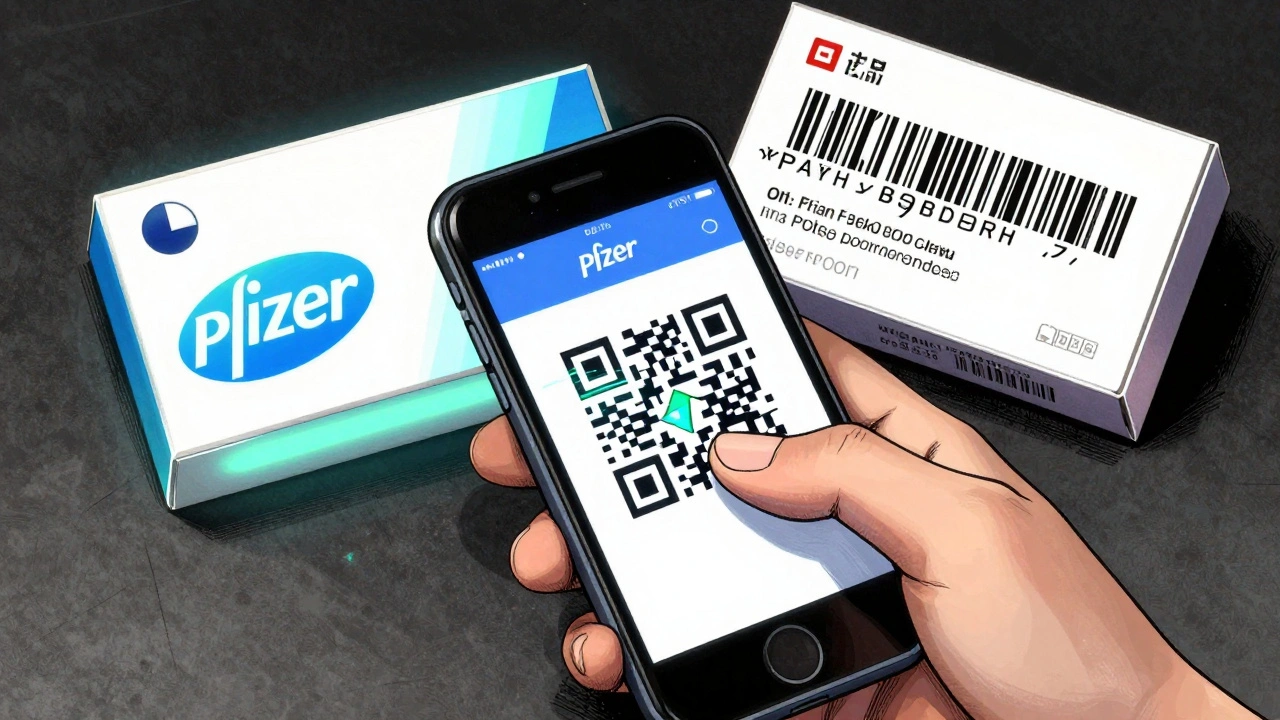
What to do if you suspect a fake
Don’t throw it away. Don’t take it. Don’t just report it to the pharmacy. Document it. Take clear photos: the box, the seal, the tablets, the barcode, the lot number. Write down where you bought it, the date, and the name of the pharmacist or website. If you bought it online, save the order confirmation and the website URL. Report it. In the U.S., use the FDA’s MedWatch program. Call 1-800-FDA-1088 or file online. In the UK, report to the MHRA via their Yellow Card system. In the EU, use your national authority’s portal. These agencies track patterns. One report might not stop a fake, but 50 reports from different places can trigger an investigation. If you’re a pharmacist or healthcare provider, isolate the package and notify your supervisor. Do not return it to the supplier. They may not know it’s fake either. Chain-of-custody matters.Why you can’t rely on just one method
The biggest mistake people make is trusting one check. A hologram might look real. A barcode might scan. But counterfeiters are copying everything. In 2023, a study showed that 73% of detection failures happened because people used only one verification method. Real protection comes from layers. Start with visual. Add magnification. Then check the QR code or UV feature. If you have access to a handheld Raman spectrometer-used by pharmacies and hospitals-it can identify the chemical makeup of the tablet in seconds. But you don’t need one. You just need to be thorough. The FDA says the most effective approach is a three-layer system: visual inspection, digital verification (QR or serial code), and chemical analysis if possible. For most people, the first two are enough.
Where counterfeits come from-and how to avoid them
Over 80% of counterfeit drugs sold to consumers come from online pharmacies that don’t require a prescription. Sites that offer “discounted” versions of expensive drugs like Ozempic, Viagra, or Xanax are almost always fake. Even if they look professional, they’re not regulated. Stick to licensed pharmacies. In the U.S., look for the VIPPS seal (Verified Internet Pharmacy Practice Sites). In the UK, check the GPhC register. In the EU, look for the EU common logo. If a website doesn’t show this, don’t buy from it. Avoid international shipping. Medications bought from outside the U.S., UK, or EU are not inspected. Even if they’re labeled “made in Germany,” they might have been repackaged in a warehouse in Nigeria or China.What’s being done to stop this
The system is improving. Since 2023, the U.S. Drug Supply Chain Security Act requires every prescription drug to have a unique digital identifier. That means every pill can be traced from manufacturer to pharmacy. In the EU, since 2019, every prescription box has a tamper-proof seal and a serial code linked to a central database. These systems have cut counterfeit infiltration to 0.001% in regulated markets. New technologies are emerging. Some companies are embedding plant DNA markers into pills. Others are using edible patterns-tiny, unique shapes printed on the tablet surface-that can be scanned with a smartphone. MIT tested a system called CandyCodes in 2022 that matched 99.8% of pills to their database. But tech alone won’t fix this. The real solution is awareness. If every patient learns to check their medicine, counterfeiters lose their advantage.What to do if you’ve already taken a fake
If you suspect you’ve taken a counterfeit drug, stop taking it immediately. Contact your doctor. Tell them exactly what you took, when, and where. Save the packaging. They may need to report it. Symptoms of counterfeit drugs vary. Some cause no reaction. Others cause seizures, liver failure, or sudden drops in blood pressure. If you feel worse after taking a pill-especially if it’s a medication you’ve taken before without issue-seek help right away. Don’t blame yourself. Counterfeiters are getting better. The goal isn’t to make you paranoid-it’s to make you informed.Can I trust online pharmacies that offer cheap medication?
No. Over 80% of counterfeit drugs are sold through websites that don’t require a prescription. Even if they look professional, they’re not regulated. Always use licensed pharmacies with visible credentials like VIPPS (U.S.) or GPhC (UK). If the price seems too good to be true, it is.
What should I do if my medication looks different from last time?
Don’t assume it’s a manufacturing change. Contact your pharmacist. Ask if the supplier changed. Compare the packaging to a previous bottle. Check for changes in color, font, seal, or tablet imprint. If anything seems off, do not take it. Report it to your national drug authority.
Is it safe to use a UV light to check my medicine at home?
Yes, if you use a simple UV flashlight (365nm wavelength). Many genuine packages have hidden text or logos that glow under UV light. Counterfeits often don’t react-or glow the wrong color. This is a quick, low-cost check. But don’t rely on it alone. Combine it with visual inspection and QR code verification.
Can counterfeit medicine be safe if it looks real?
No. Even if the packaging looks perfect, the contents may contain toxic substances, incorrect doses, or no active ingredient at all. In 2021, the FDA found counterfeit cancer drugs with 0% active ingredient. Others contained rat poison or industrial chemicals. Appearance doesn’t equal safety.
How do I report a counterfeit drug?
In the U.S., report to the FDA via MedWatch at 1-800-FDA-1088 or online. In the UK, use the MHRA Yellow Card system. In the EU, contact your national medicines agency. Take photos, save the packaging, and note where you bought it. Your report helps protect others.
Counterfeit drugs are a silent threat. They don’t announce themselves. They don’t come with warning labels. But you can stop them-by checking, questioning, and reporting. The next time you open a pill bottle, take 30 seconds to look. It could save your life.
Author

Ryan Brady
December 7, 2025 AT 12:18Bro, I just bought some Adderall off a shady site and it looked perfect. Now I’m paranoid I’m gonna drop dead mid-meeting. 😬
Raja Herbal
December 8, 2025 AT 06:07So let me get this straight - we’re supposed to carry a 10x loupe in our wallet next to our insulin? 😏 Maybe next they’ll make us scan our pills with a spectrometer before breakfast. The real counterfeit? The entire healthcare system.
Lola Bchoudi
December 10, 2025 AT 03:57Validated three-layer verification protocol: visual inspection + digital authentication + UV cross-check. This isn’t just due diligence - it’s pharmacovigilance hygiene. If you’re not auditing your meds, you’re not managing risk. Period. The FDA’s 2023 DSCSA framework mandates traceability for good reason. Don’t be a compliance liability.
Morgan Tait
December 11, 2025 AT 15:38They’re putting microchips in the pills now, you know. Not just UV ink or QR codes - nano-transmitters. The government’s tracking who takes what. And the pharma giants? They’re in bed with the surveillance state. I saw a guy in Oregon get fined $20k for buying cheap Viagra. He didn’t even know his pill had a GPS tracker. 🤫
Darcie Streeter-Oxland
December 12, 2025 AT 04:17It is, indeed, a matter of considerable public health concern that the average consumer lacks the requisite technical acumen to discern between legitimate pharmaceutical packaging and its counterfeit iterations. The absence of standardized consumer education constitutes a systemic failure.
Steve Sullivan
December 12, 2025 AT 19:34bro i just checked my blood pressure med with my phone flashlight and it glowed like a neon sign 😎 i think im alive but also kinda scared now. why do they make it so hard to just get healthy??
Arun Kumar Raut
December 14, 2025 AT 10:13My aunt in Delhi takes her diabetes pills from a local shop. She doesn’t know what a QR code is. But she knows the man who sells them. He’s been doing it for 20 years. Maybe the real problem isn’t the fake pills - it’s that we forgot how to trust each other.
precious amzy
December 15, 2025 AT 23:39One must wonder whether the proliferation of these ‘verification protocols’ is not merely a performative gesture - a comforting illusion of control in an age of epistemic collapse. The very act of scanning a QR code to validate authenticity is a surrender to algorithmic authority. Who, pray tell, verifies the verifier?
Carina M
December 17, 2025 AT 23:09It is unconscionable that the general populace is expected to assume the burden of pharmaceutical authentication. This is not a consumer responsibility - it is a regulatory failure of monumental proportions. One does not expect a layperson to authenticate a banknote; why should they authenticate a life-saving drug?
Ajit Kumar Singh
December 18, 2025 AT 01:44India makes 80% of the world’s generic drugs so you think we dont know fake pills? LOL we invented fake pills before you even knew what a barcode was. But we also know how to fix it. Just buy from a registered pharmacy. No drama. No UV lights. Just common sense.
Maria Elisha
December 18, 2025 AT 04:48i just opened my zoloft and the bottle looked weird so i threw it out. whatever. i’ll just get more next week.
Angela R. Cartes
December 19, 2025 AT 22:23How quaint. I suppose the next step is for us to all carry microscopes in our purses? How utterly gauche. The real tragedy is that the masses have been reduced to amateur forensic chemists because the system collapsed. How tragic. How… pedestrian.