
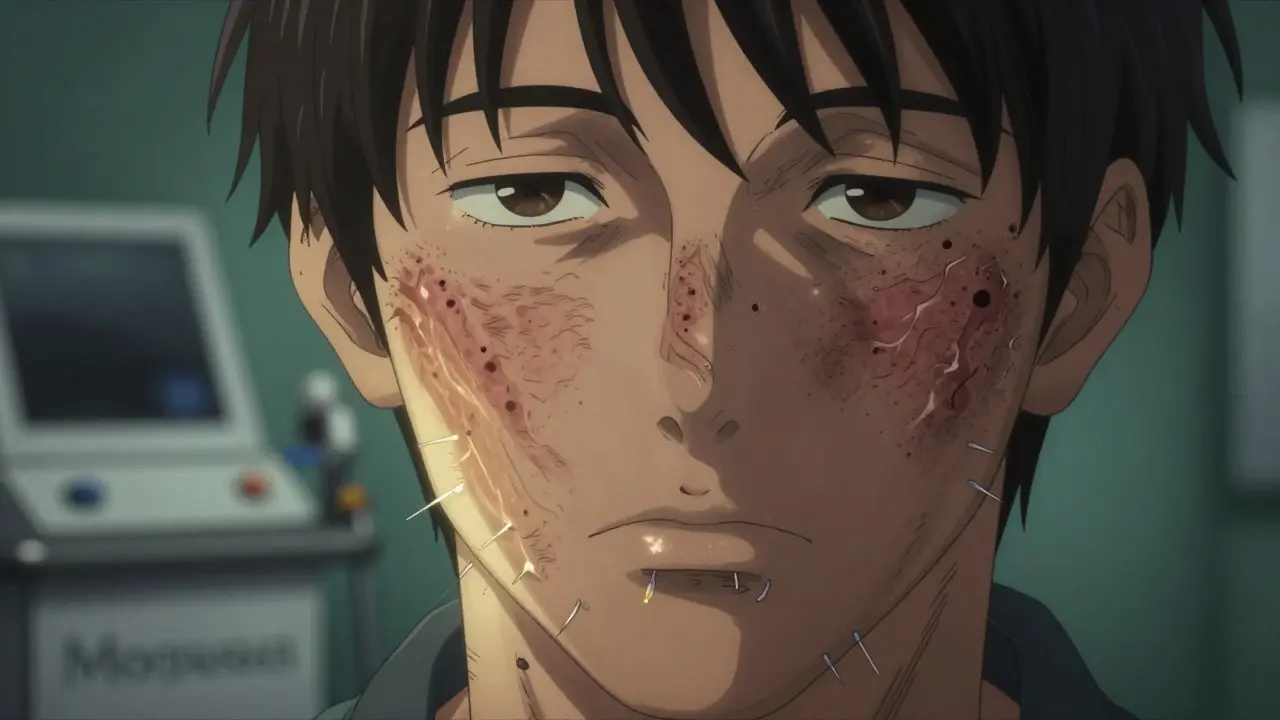
Acne scars don’t just linger-they change how you see yourself. If you’ve ever stared at your reflection and felt stuck, you’re not alone. Around 95% of people who’ve had severe acne end up with some kind of scar. These aren’t just blemishes. They’re permanent textural changes: deep pits, wide valleys, or raised bumps that won’t fade with regular cleansers or serums. The good news? You don’t have to live with them. Today’s treatments-microneedling, lasers, and smart topical routines-can actually reverse years of damage. But not all options are equal. Choosing the wrong one can waste time, money, and even make things worse.
What Kind of Acne Scar Do You Have?
Before jumping into treatments, you need to know what you’re dealing with. Acne scars fall into three main types, and each responds differently.Rolling scars look like waves under the skin-broad, shallow depressions with sloping edges. They’re caused by fibrous bands pulling the skin down. These respond best to both lasers and microneedling, with up to 75% improvement possible.
Boxcar scars are sharp, angular, and look like deep pores or craters. They’re wider than ice pick scars but not as smooth as rolling ones. They improve with treatment, but not as dramatically-typically 55-60% improvement.
Ice pick scars are the toughest. Narrow, deep, and V-shaped, they look like tiny punctures. These barely budge with most treatments. Even the best lasers or microneedling only get you 30-35% improvement. That’s why many dermatologists combine treatments or use punch grafts for these.
Knowing your scar type isn’t just helpful-it’s essential. A treatment that works wonders on rolling scars might barely touch ice pick scars. A good provider will examine your skin under magnification and map out your scar pattern before recommending anything.
Microneedling: The Gentle Powerhouse
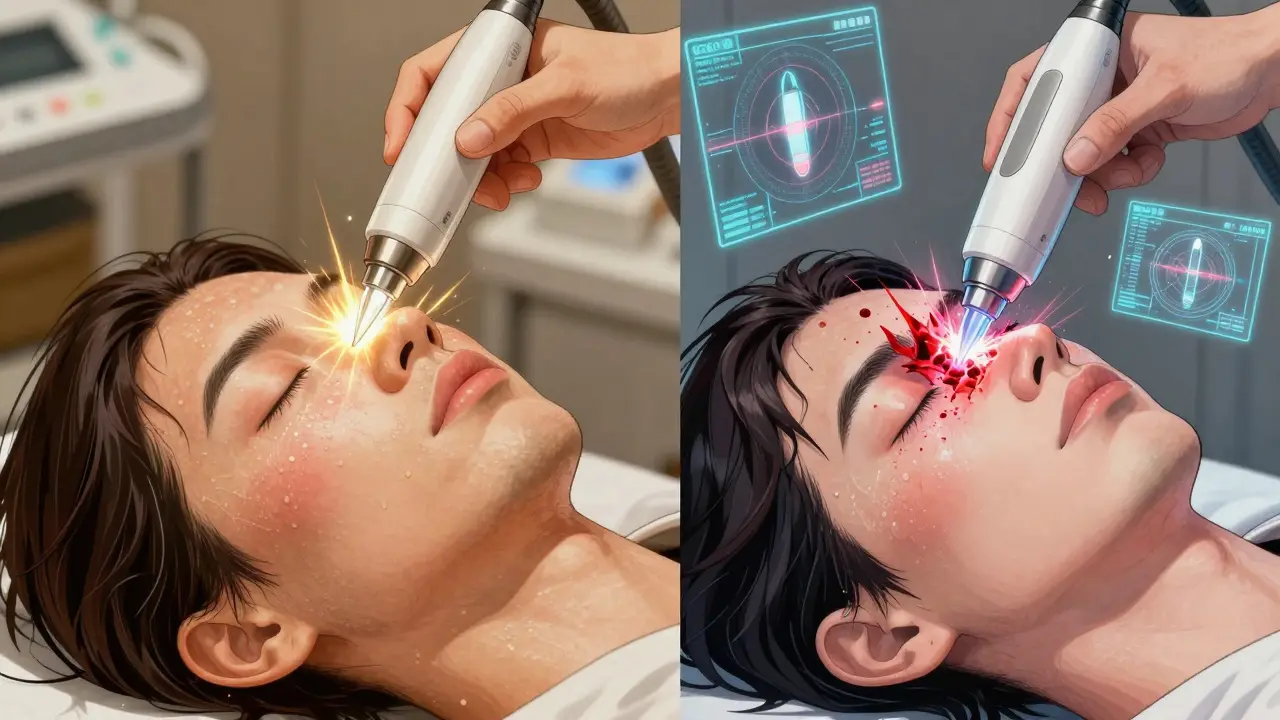
Microneedling isn’t new, but the tech has changed everything. Old-school manual rollers? Ineffective. Modern automated devices like the Dermaroller or Dermapen? Game-changers. These machines use fine needles to create hundreds of tiny punctures per second-100 to 200-triggering your skin’s natural healing response.Standard microneedling works by stimulating collagen. But the real breakthrough came with radiofrequency (RF) microneedling, like Morpheus8. These devices deliver heat energy directly into the deeper layers of skin through insulated needles. The heat tightens tissue and rebuilds collagen from within. Needle depth matters: 1.5 to 2.5mm is the sweet spot for acne scars. Too shallow? No effect. Too deep? Risk of damage.
Most people need 3 to 6 sessions, spaced 4 to 6 weeks apart. Each session takes about 30 to 45 minutes, including numbing cream. Downtime? Usually just 24 to 48 hours of redness and mild swelling. That’s why it’s so popular-people can go back to work or social events quickly.
It’s especially safe for darker skin tones. Lasers carry a higher risk of hyperpigmentation in Fitzpatrick skin types IV to VI. Microneedling? Only 5-8% risk. That’s why dermatologists like Dr. Whitney Bowe call it the go-to for people with melanin-rich skin.
Laser Treatments: Faster Results, Longer Recovery
Lasers are the heavy lifters. They use light energy to remove or remodel damaged skin. Different lasers work at different depths and with different effects.Fractional CO2 lasers (like CO2RE) are ablative-they vaporize thin layers of skin. They’re powerful. Studies show they can reduce scarring by 70% or more in just 1 to 3 sessions. But recovery? 7 to 14 days of redness, peeling, and oozing. You’ll need to keep the area covered with ointment and avoid sun completely.
Fractional erbium lasers (like Fraxel 1540nm or Er:YAG) are non-ablative or mildly ablative. They create micro-injuries without removing the top layer. Less aggressive, less downtime-3 to 5 days. They’re great for moderate scarring and have a lower risk of pigmentation changes. One study found 92% of patients saw over 50% improvement after six sessions.
Here’s the catch: lasers are more expensive and require more expertise. A 2023 study in Lasers in Surgery and Medicine found that while CO2 lasers gave better results than RF microneedling, they also caused significantly more pain and skin damage in the first few days. Patient reviews on RealSelf.com confirm this-65% of laser users say downtime was “moderate to severe.”
But if you’ve got deep rolling scars and can handle the recovery, lasers still deliver the most dramatic results. Many dermatologists now use a hybrid approach: start with microneedling to prep the skin, then follow up with one or two laser sessions to fine-tune.
Topical Strategies: The Secret Weapon
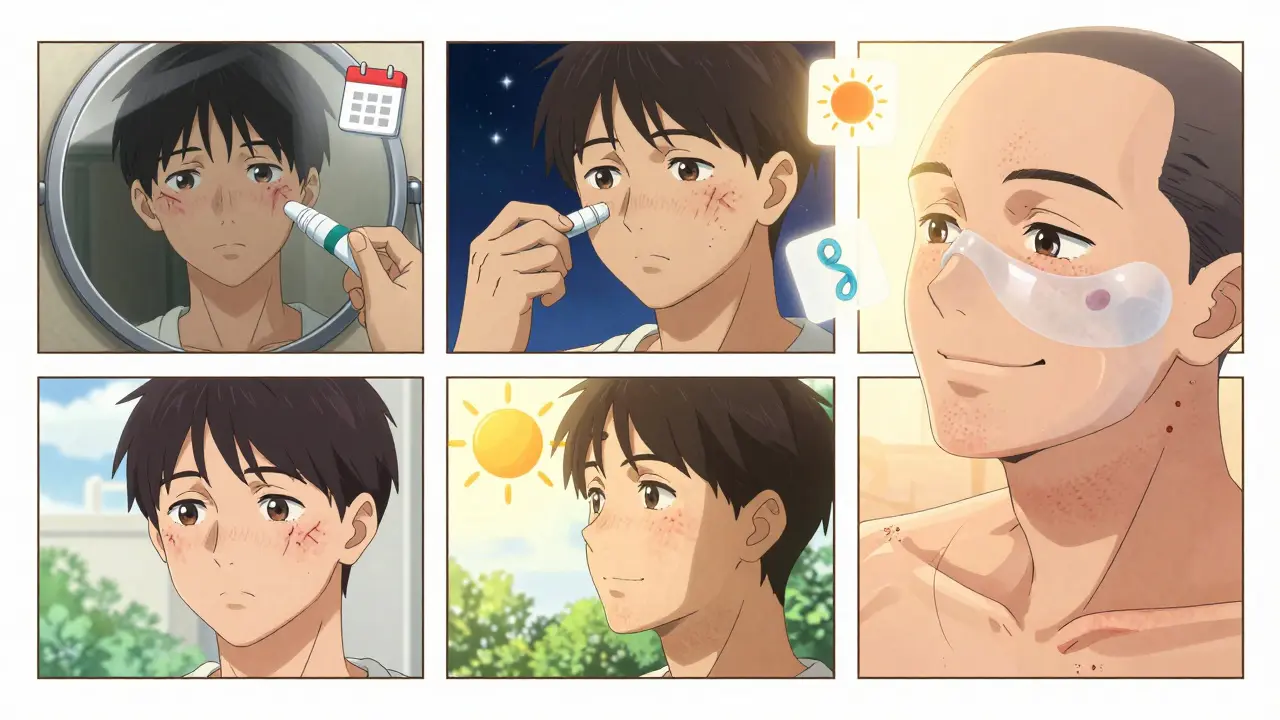
Most people think treatments are only about devices. They’re wrong. Topical skincare isn’t optional-it’s the foundation. Skipping it is like building a house without a foundation.Prescription tretinoin 0.05% is the gold standard. Used nightly for 12 weeks before any procedure, it increases treatment effectiveness by 22%. It thins the top layer of skin, boosts cell turnover, and makes collagen production more responsive. Many patients skip this because they think it’s just for acne. It’s not. It’s for scar repair.
After treatment, silicone gel is your best friend. Applied daily for 8 to 12 weeks, it reduces redness, flattens scars, and cuts hyperpigmentation risk by 35%. It’s cheap, simple, and backed by solid science.
Newer products are stepping up too. Skinbetter Science’s AlphaRet Scar Correcting Treatment combines retinaldehyde (a gentler form of retinol) with growth factors. In independent tests, it delivered 30% scar improvement in just 12 weeks-no needles, no lasers. It’s not a replacement for professional treatments, but it’s a powerful support tool.
And don’t forget sunscreen. Daily SPF 30+ is non-negotiable. UV exposure worsens pigmentation and slows healing. Even on cloudy days. For six months after treatment, sun protection is part of your routine-not a suggestion.
Which Treatment Is Right for You?
There’s no one-size-fits-all. Your choice depends on your scar type, skin tone, budget, and tolerance for downtime.Best for mild to moderate scarring, dark skin tones, or low downtime: RF microneedling (like Morpheus8). Three sessions, minimal recovery, low risk of pigmentation. Ideal if you’re working, parenting, or can’t afford weeks off.
Best for deep rolling or boxcar scars, lighter skin tones, and higher budget: Fractional CO2 laser. Fewer sessions, faster results, but 10+ days of recovery. Worth it if you want maximum improvement and can handle the wait.
Best for balanced results with less risk: Combination therapy. Start with 3 RF microneedling sessions, then one fractional Er:YAG laser session after 4 weeks. This approach, used by clinics like Creo Clinic, achieves 78% average scar reduction across 120 patients.
For ice pick scars? Don’t rely on lasers or microneedling alone. Ask about punch excision or subcision-procedures that physically lift or remove the deepest pits. Then follow up with microneedling to smooth the area.
What to Expect and How to Avoid Mistakes
Most people overestimate how fast results come. Don’t expect miracles after one session. Acne scars rebuild slowly. Collagen takes months to form. You’ll see gradual improvement over 3 to 6 months after your last treatment.Here’s what goes wrong:
- Skipping pre-treatment tretinoin-cuts results by nearly a quarter.
- Not using sunscreen-leads to dark spots that last for months.
- Doing too many sessions too fast-burns the skin, triggers inflammation, worsens scarring.
- Choosing an untrained provider-laser settings matter. Too high = burns. Too low = no effect. Ask how many procedures they’ve done. The American Board of Laser Surgery recommends at least 100 supervised sessions before going solo.
And don’t fall for the “one-and-done” marketing. No treatment erases scars forever. Maintenance matters. Keep using tretinoin and sunscreen. Consider a yearly touch-up session if scars start to reappear.
Real Results, Real Stories
One Reddit user, u/ScarredButHopeful, tried six Morpheus8 sessions over a year. “My boxcar scars went from obvious to barely noticeable. Two days of redness each time. I kept working.”Another, u/LaserLover, got a single CO2 treatment. “Seventy percent of my rolling scars vanished. But I was red for 10 days. My coworkers asked if I was sick.”
A case study from Creo Clinic followed a patient with mixed scars. Three RF microneedling sessions, then two Er:YAG laser treatments over nine months. Result? 85% improvement. No major side effects. No long downtime.
The pattern? Success isn’t about the tool. It’s about the plan. The right combo, the right timing, and the right aftercare.
What’s Next?
The future is personalized. Companies like Canfield Imaging are using AI to scan scars in 3D and recommend exact laser settings based on scar depth, skin tone, and collagen response. Stanford Dermatology is testing algorithms that predict outcomes before treatment even begins.For now, stick with what works. Microneedling for safety and consistency. Lasers for speed and power. Topicals for long-term results. And never underestimate the value of a skilled dermatologist who listens-not just pushes a machine.
Acne scars don’t define you. But how you treat them? That does.
Can microneedling remove acne scars completely?
No treatment removes acne scars completely. Microneedling improves texture and reduces depth-typically by 50-70% for rolling and boxcar scars. Ice pick scars respond less, around 30-35%. Results are gradual and require multiple sessions. It’s about significant improvement, not total elimination.
Is laser treatment better than microneedling for acne scars?
For severe scarring, lasers like fractional CO2 deliver faster and more dramatic results. But microneedling with RF is safer for darker skin and has far less downtime. A 2023 study found both equally effective for texture improvement, but lasers caused more side effects. The best choice depends on your skin type, scar depth, and tolerance for recovery time.
How many sessions do I need for acne scar treatment?
Microneedling usually requires 3 to 6 sessions spaced 4 to 6 weeks apart. Laser treatments vary: non-ablative lasers like Fraxel need 4 to 6 sessions, while ablative CO2 may only need 1 to 3. Combination protocols often use 3 microneedling sessions followed by 1-2 laser sessions. Results build over months, so patience is key.
Can I treat acne scars at home with over-the-counter products?
OTC products alone won’t fix deep scars. But they can support professional treatments. Prescription tretinoin (0.05%) used before and after procedures boosts results by 22%. Silicone gel reduces redness and pigmentation by 35%. Newer products like AlphaRet Scar Correcting Treatment show 30% improvement in 12 weeks. They’re supplements-not replacements-for medical treatments.
Do acne scar treatments hurt?
Most procedures use numbing cream, so pain is manageable. RF microneedling can feel like hot pinpricks (VAS 7/10). CO2 lasers feel like snapping rubber bands (VAS 5-6/10). Some patients report more pain with lasers due to heat buildup. Aftercare discomfort-redness, tightness-is common for both. Recovery pain fades within days to two weeks.
How long do results last?
Results are long-lasting because they rebuild your skin’s structure. Collagen remodeling continues for 6 to 12 months after your last session. Once healed, scars stay improved unless new acne triggers fresh scarring. Maintenance with tretinoin and sunscreen helps preserve results. A yearly touch-up may be needed for optimal appearance.
Can I get treated if I still get occasional breakouts?
It’s not recommended. Active acne can interfere with healing and increase the risk of new scars. Most dermatologists suggest getting your acne under control first-usually with oral or topical medications-for at least 2 to 3 months before starting scar treatments. Treating scars while acne is active often leads to poor outcomes.
What’s the risk of hyperpigmentation after treatment?
Hyperpigmentation is more common with lasers, especially in darker skin tones. Risk is 15-20% with CO2 lasers for Fitzpatrick IV-VI skin, but only 5-8% with RF microneedling. Pre-treatment with hydroquinone or kojic acid for 4-6 weeks can lower this risk. Sun protection is the most important factor-always use SPF 30+ daily for 3 months after treatment.
Author

beth cordell
January 13, 2026 AT 01:42Craig Wright
January 14, 2026 AT 05:34Lelia Battle
January 15, 2026 AT 00:32Rinky Tandon
January 16, 2026 AT 20:02Ben Kono
January 18, 2026 AT 16:51Windie Wilson
January 20, 2026 AT 08:34Daniel Pate
January 20, 2026 AT 12:41Amanda Eichstaedt
January 21, 2026 AT 14:57steve ker
January 22, 2026 AT 04:39Jennifer Phelps
January 22, 2026 AT 10:49Lauren Warner
January 23, 2026 AT 22:02Darryl Perry
January 24, 2026 AT 02:40Jose Mecanico
January 24, 2026 AT 04:54