
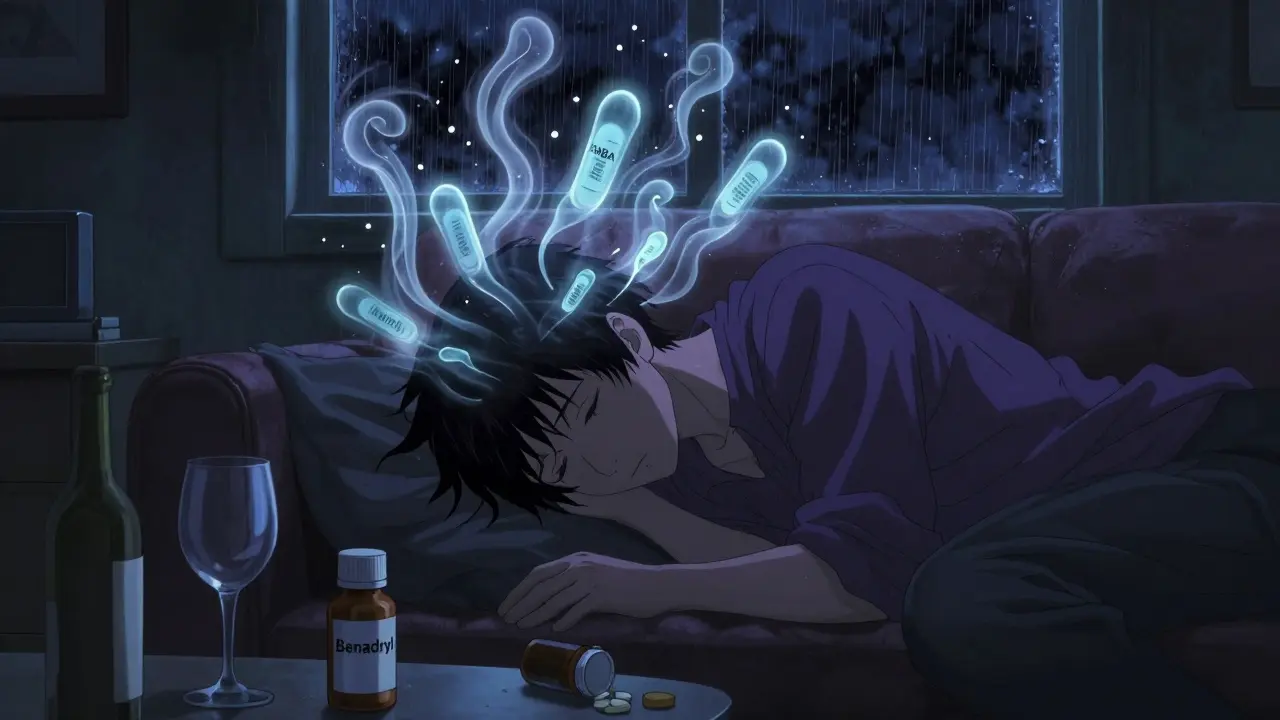
Antihistamine-Alcohol Risk Calculator
This calculator estimates your risk of dangerous drowsiness when mixing antihistamines with alcohol based on clinical studies. The National Institute on Alcohol Abuse and Alcoholism reports this combination can increase drowsiness by up to 300%.
Think it’s harmless to take a Benadryl after a drink? You’re not alone. But mixing antihistamines and alcohol isn’t just a bad idea-it’s a silent danger that lands thousands in emergency rooms every year. The problem isn’t just feeling sleepy. It’s losing control of your body, your reactions, even your breathing-without realizing it until it’s too late.
Why Drowsiness Isn’t Just an Annoyance
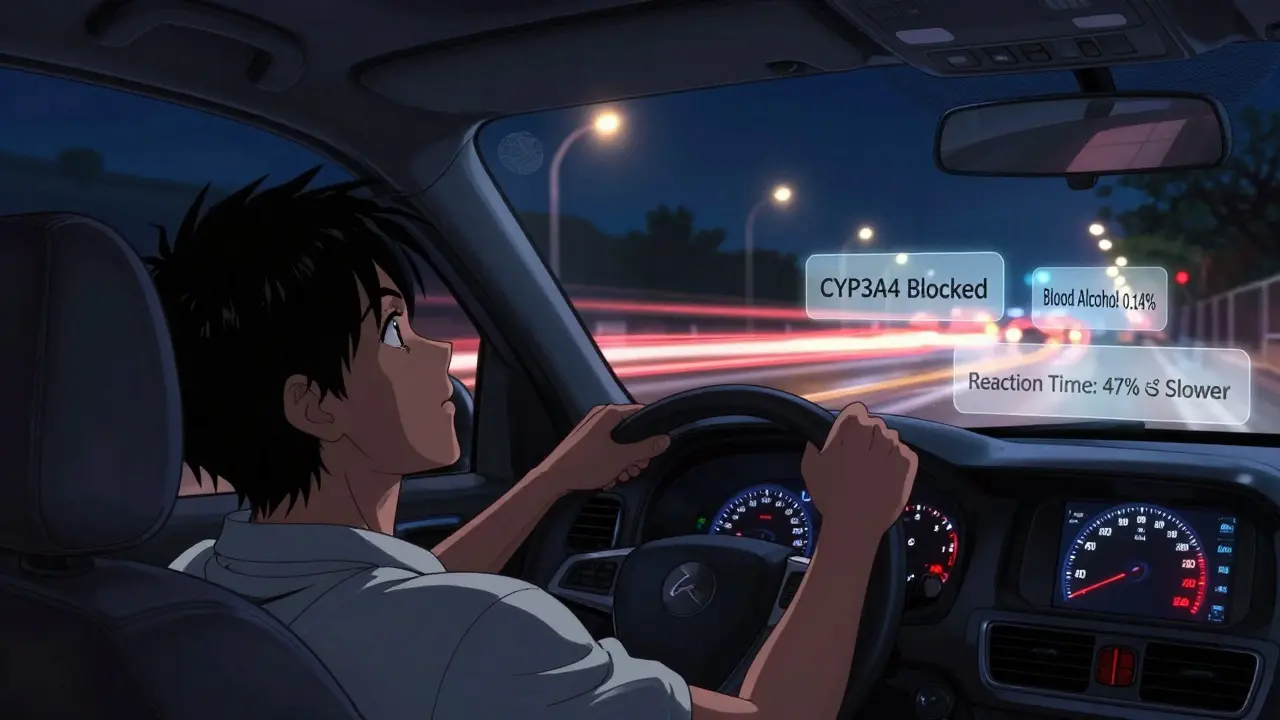
First-generation antihistamines like diphenhydramine (Benadryl) were designed to block histamine, the chemical that triggers allergies. But they don’t stop there. They also slip right through the blood-brain barrier and mess with your brain’s alertness system. About half of everyone who takes them feels drowsy. Add alcohol, and that drowsiness doesn’t just add up-it multiplies.Alcohol slows down your central nervous system by boosting GABA and blocking NMDA receptors. Antihistamines do something similar by shutting down histamine signals in the brain. Together, they create a double hit. Clinical studies show that mixing even one drink with a standard dose of Benadryl can reduce reaction time by 47% more than alcohol alone. That’s the difference between hitting the brake in time and not reacting at all.
The National Institute on Alcohol Abuse and Alcoholism says this combo can boost drowsiness by up to 300%. That’s not a typo. It means if you normally feel a little tired after a drink, you might feel like you’re underwater-slow, heavy, unable to think clearly.
Not All Antihistamines Are the Same
You might think switching to "non-drowsy" options like Claritin (loratadine) or Zyrtec (cetirizine) makes you safe. But that’s a myth. Second-generation antihistamines were built to avoid the brain, and yes-they cause less drowsiness on their own. Only 10-15% of people feel sleepy with Claritin alone. With Zyrtec, it’s 15-20%.But when alcohol enters the picture? Everything changes. With just one or two drinks, drowsiness jumps to 30-35% for Claritin users and 40-45% for Zyrtec users. That’s not "safe." That’s a red flag. Even if you don’t feel it, your reaction time, coordination, and judgment are still impaired.
And here’s the kicker: your liver can’t handle both at once. Both alcohol and antihistamines are broken down by the same enzymes-CYP3A4 and CYP2D6. Alcohol clogs those enzymes, so the antihistamine sticks around longer. Blood levels can stay 25-40% higher than normal. That means the drug hits harder and lasts longer than you expect.
How Bad Can It Get?
Take two Benadryl tablets (50mg) and four drinks. That’s not unusual at a party or after a long day. What happens? Your body behaves as if your blood alcohol level is 0.12-0.15%. That’s 50% over the legal driving limit in every U.S. state. You’re not just tired-you’re legally drunk, without ever touching a bottle of beer.And it’s not just driving. Falls, slips, memory blackouts, and even respiratory depression happen. Older adults are at the highest risk. People over 65 experience 2.3 times more CNS depression from this combo than younger people. One study found they’re 75% more likely to fall and break a hip after mixing these substances.
Emergency rooms see this all the time. The American Academy of Allergy, Asthma & Immunology found that 68% of ER visits linked to antihistamine-alcohol mix-ups involved first-generation drugs. Nearly half of those cases needed hospitalization because people stopped breathing properly.
What You Might Not Realize
Benadryl isn’t just in allergy pills. It’s in sleep aids, cold medicines, motion sickness tablets, and even some stomach remedies. There are 72 different over-the-counter products that contain diphenhydramine. You might take one for a cold, have a glass of wine, and have no idea you’re mixing two sedatives.And the labels? They don’t tell you the truth. Prescription antihistamines have black box warnings about alcohol. OTC products? Just a tiny "may cause drowsiness" note. No mention of alcohol. No warning about how much worse it gets. You’re left guessing.
Real People, Real Consequences
On Reddit’s r/Allergies, 78% of users who mixed antihistamines and alcohol said they felt way more drowsy than expected. One in three admitted falling asleep while driving home. On drug review sites, 65% of negative Benadryl reviews mention "passed out unexpectedly" or "couldn’t wake up the next morning." Even with "non-drowsy" options, people report trouble. Over 40% of Claritin and Zyrtec users who drank said they felt unusually sleepy, confused, or uncoordinated. Older adults were especially affected-over half reported memory lapses or disorientation after just one drink.
What Should You Do Instead?
If you need allergy relief and plan to drink, here’s what actually works:- Switch to nasal sprays like Flonase or Nasacort. They work locally in your nose-no brain effects, no alcohol interaction.
- Try leukotriene blockers like Singulair. These are taken daily and don’t cause drowsiness at all.
- Wait. If you took a first-generation antihistamine, wait at least 12-16 hours before drinking. For second-gen, wait 8-12 hours. But even then, your body might still be processing it.
- Read every label. If it says "diphenhydramine," "doxylamine," or "PM," avoid alcohol completely.
And if you’re having a serious allergic reaction-swelling, trouble breathing-take your antihistamine anyway. But call 911. Don’t wait. The risk of anaphylaxis is far greater than the risk of drowsiness.
The Bigger Picture
About 61.5 million Americans used antihistamines in 2022. A Consumer Reports survey found 63% of them drank alcohol within 12 hours of taking their meds. Only 28% knew it was dangerous. Emergency visits for this combo have jumped 37% since 2018. And the numbers are climbing fastest among people over 50 and women-groups who are more likely to use OTC meds regularly.Pharma companies are working on third-generation antihistamines like bilastine, which show almost no brain penetration even with alcohol. But they’re not available in the U.S. yet. For now, the only safe rule is this: antihistamines and alcohol don’t mix.
You don’t need to give up drinks or allergy relief. You just need to choose smarter options and know the real risks. Your brain, your reflexes, and maybe your life depend on it.
Author

Anjula Jyala
January 28, 2026 AT 10:32First-gen antihistamines cross the BBB and inhibit H1 receptors in the tuberomammillary nucleus suppressing histaminergic neurotransmission alcohol potentiates this via GABAergic enhancement and NMDA antagonism the additive CNS depression is pharmacokinetic AND pharmacodynamic not just additive but synergistic CYP3A4/2D6 inhibition prolongs half-life leading to supratherapeutic plasma concentrations
Kirstin Santiago
January 28, 2026 AT 15:36I get how scary this is but I also know so many people who just think 'it's just Benadryl' and have a glass of wine. It's not about fear-mongering - it's about awareness. I used to mix them until I passed out in the shower. No one talks about how normal it feels until it's not normal anymore.
There’s no shame in switching to Flonase. It’s not weak to choose safety.
Kathy McDaniel
January 30, 2026 AT 10:15ok but like… i took zyrtec and had one beer last night and i swear i felt like i was walking through peanut butter?? like my brain was foggy and i couldnt even remember what i was gonna say to my cat. i thought it was just me being tired but now i think… maybe not??
Patrick Merrell
January 31, 2026 AT 06:24This is why America is falling apart. People take pills like candy and then drink like it’s a sport. No one takes responsibility anymore. You want to be functional? Don’t mix poison with poison. Simple. No excuses. 🚫🍷💊
Conor Flannelly
January 31, 2026 AT 13:42It’s funny how we treat our bodies like machines you can tweak without consequences. We optimize for convenience - quick fix for allergies, quick fix for stress - but forget we’re biological systems wired over millennia. Alcohol and antihistamines? They’re both sedatives. One’s socially accepted. The other’s labeled 'over-the-counter.' Neither is harmless in combination.
Maybe the real issue isn’t the drugs. It’s the cultural blindness to cumulative harm.
Conor Murphy
February 1, 2026 AT 18:04My mom took Benadryl and wine every night for years. Said it helped her sleep. She fell three times in six months. Broke her hip. Didn’t realize the meds were the problem until the ER doc asked 'did you drink with your sleep pill?'
She’s fine now. But I wish someone had told her before it was too late.
Harry Henderson
February 2, 2026 AT 09:14STOP BEING SOFT. If you can’t handle one drink and one pill then don’t take the pill. Don’t act like you’re some fragile flower who needs a 12-hour buffer. Just don’t be dumb. This isn’t rocket science. Your life isn’t a Netflix special. Stop making excuses and take responsibility.
suhail ahmed
February 3, 2026 AT 00:57Man, I used to chow down on diphenhydramine like candy after a long day - then crack open a cold one. Felt like floating on a cloud. Then one night I woke up on the floor with my dog licking my face and no idea how I got there. That was the last time. Now I use Nasacort - no brain fog, no drama. Just clean, quiet relief. 🌿
Desaundrea Morton-Pusey
February 4, 2026 AT 00:29Why are we even talking about this? It’s 2025. We have apps that tell you if your coffee is bad. Why can’t a pill bottle just say 'DO NOT MIX WITH ALCOHOL' in neon lights? Pharma companies are laughing all the way to the bank while old people are breaking hips and teens are passing out in cars. This is negligence. Pure and simple.
Kegan Powell
February 5, 2026 AT 05:29Reading this made me realize I’ve been lucky. I used to mix Zyrtec and wine thinking 'it’s non-drowsy' - turns out my brain just didn’t notice how slow I was. I drove home once and didn’t remember the last 10 minutes. Scared the hell out of me.
Now I wait 12 hours. Use nasal spray. And I tell everyone I know. Not to scare them - to help them. We don’t need to be perfect. Just a little more aware.