
Black Box Warning Decoder
See a scary box on your pill bottle? Don't panic. Use this tool to understand common warning categories and prepare for a productive conversation with your doctor or pharmacist.
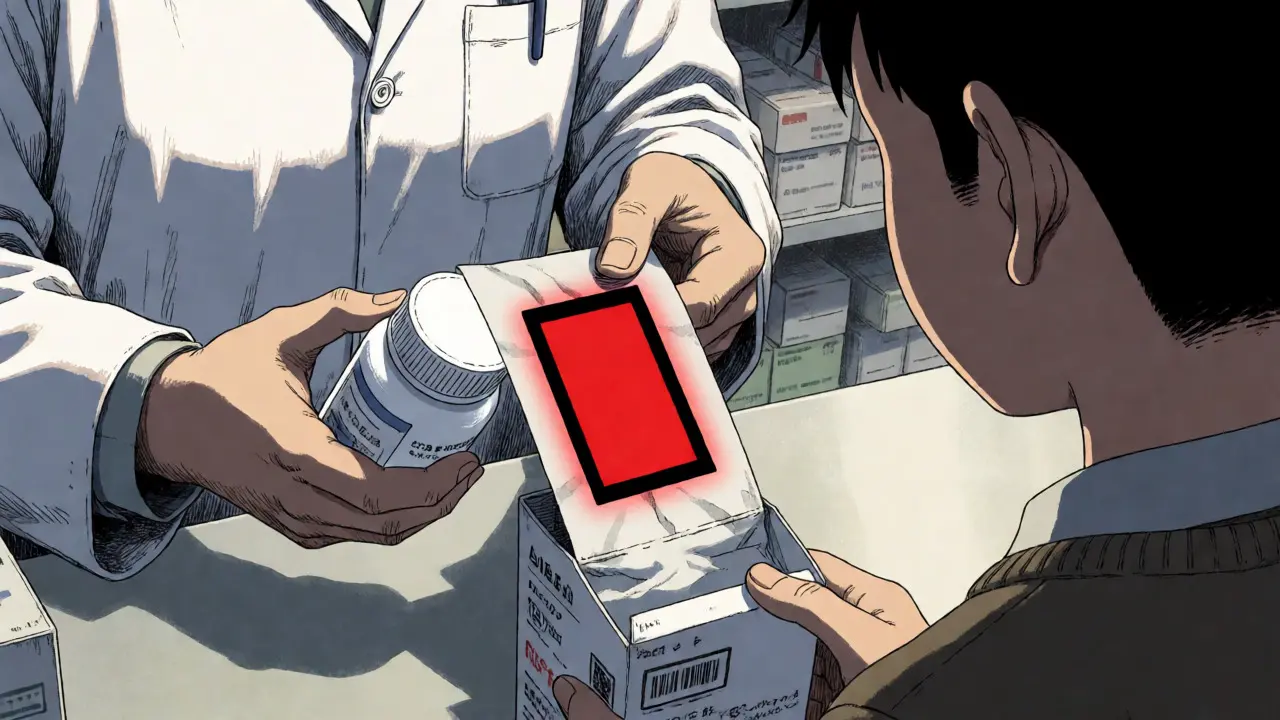
You’re at the pharmacy counter. The pharmacist hands you a bottle of pills. You glance at the paper insert tucked inside, and there it is: a stark rectangle with bold text screaming WARNING. It looks ominous, almost like a hazard sign on a construction site. Your stomach drops. Did you just pick up a dangerous pill? Should you be scared to swallow it?
This visual cue is officially known as a boxed warning, or more commonly, a black box warning. It represents the most stringent safety alert mandated by the U.S. Food and Drug Administration (FDA) for prescription medications. But here’s the twist: seeing one doesn’t necessarily mean you should stop taking your medicine. In fact, thousands of people take these drugs every day without incident. The key isn’t fear-it’s understanding what that box actually means for your specific health situation.
What Exactly Is a Black Box Warning?
Think of a black box warning as the red flag in a sea of yellow caution signs. While most prescription labels list common side effects like nausea or drowsiness, a boxed warning highlights risks that are serious, potentially life-threatening, or permanently disabling. According to the Cleveland Clinic, these alerts are designed to "call attention to potentially serious or life-threatening side effects" while providing critical instructions for safe use.
The name comes from the old days when these warnings were literally printed inside a black border on paper labels. Today, they appear as a bordered section on both the medication packaging and the patient information leaflet. As of recent data, over 400 medications carry these warnings. That might sound like a lot, but considering there are roughly 2,700 active prescription drug products in the U.S., it means only about 15% of drugs have this highest level of scrutiny.
Why do they exist? Because clinical trials before approval can’t catch everything. Trials involve limited groups of people for short periods. Once a drug hits the market and millions start using it, rare but severe reactions can emerge. The FDA uses post-marketing surveillance to spot these patterns. If the evidence shows a significant risk that could outweigh the benefits, or if the drug requires special handling, the agency mandates a boxed warning.
When Does the FDA Issue These Warnings?
The FDA doesn’t slap a black box on a drug just because something bad happened once. There’s a rigorous process. Before adding a warning, the agency needs concrete evidence gathered from real-world use, not just pre-approval studies. They contact the drug manufacturer, who then proposes language for the label. Only after FDA approval does the warning go live.
The agency typically issues these warnings in four specific scenarios:
- Serious Adverse Reactions: Evidence shows the drug causes severe harm where risks might outweigh benefits for some patients.
- Avoidable Risks: Serious side effects can be prevented through proper monitoring or dosage adjustments.
- Restricted Use: The drug was approved only for specific conditions or populations due to its potency or danger.
- Vulnerable Populations: The drug poses particular dangers to children, the elderly, or pregnant women.
It’s worth noting that the FDA rarely removes these warnings. Since 2000, only about 12 warnings have been completely removed. Why? Because proving a drug is safer than previously thought requires substantial new clinical evidence. It’s much easier to add a warning than to take one away.

Does a Warning Mean the Drug Is Unsafe?
This is the biggest misconception. A black box warning isn’t a verdict of "unsafe." It’s a marker of "high stakes." Many essential medications carry these warnings because their potential impact-both good and bad-is significant.
Take antidepressants, for example. Most SSRIs carry a boxed warning about increased suicidal thoughts in young adults during the first few weeks of treatment. This doesn’t mean the drug causes suicide; it means doctors need to watch closely during that initial period. Similarly, blood thinners often carry warnings about bleeding risks. Without them, patients with atrial fibrillation face a high risk of stroke. With them, they face a risk of internal bleeding. The doctor weighs these two risks against each other.
| Drug Category | Primary Risk Highlighted | Why It’s Still Prescribed |
|---|---|---|
| Antidepressants (SSRIs/SNRIs) | Suicidal ideation in youth | High efficacy for depression/anxiety; risk is manageable with monitoring |
| Blood Thinners (e.g., Warfarin) | Severe bleeding | Prevents strokes and clots which are often fatal |
| Opioids | Addiction, respiratory depression | Necessary for severe pain management when alternatives fail |
| Diabetes Meds (e.g., Pioglitazone) | Bladder cancer, heart failure | Effective glucose control; risk varies by individual history |
| Statins | Muscle damage, liver issues | Significant reduction in cardiovascular events |
Dr. Meghan Lehmann, a pharmacist at Cleveland Clinic, emphasizes that having a warning doesn’t mean you shouldn’t take the medication. It means the decision requires a careful risk-benefit analysis. For many patients, the benefit of treating a chronic condition far outweighs the statistical probability of a severe side effect.

How Do These Warnings Impact Real Life?
When a black box warning lands, it shakes up the medical community. Research shows that prescribing patterns shift dramatically. For instance, when the diabetes drug rosiglitazone received a boxed warning for heart risks, its usage dropped by 70%. Yet, 3.8 million people still took it. Why? Because for those patients, no other option worked as well.
For you, the patient, the impact is mostly about communication. Ideally, your doctor should discuss the warning before prescribing. However, surveys show a gap here. About 78% of patients want to know about boxed warnings, but only 42% recall their provider discussing them. This disconnect often leads to anxiety later, when patients read the insert themselves.
Pharmacists play a crucial role here too. They are trained to recognize these warnings and counsel patients. If you pick up a med with a boxed warning, ask the pharmacist: "What specifically should I watch out for?" Their answer will be tailored to your daily routine and other meds you take.
What Should You Do If Your Med Has One?
Don’t panic. Don’t stop taking your medication cold turkey unless told to do so by a doctor. Instead, treat the warning as a prompt for a conversation. Here is a practical checklist:
- Ask "Why me?": Ask your doctor why this specific drug was chosen despite the warning. Was it the best option for your condition?
- Clarify Monitoring Needs: Some drugs require regular blood tests or check-ups to catch issues early. Find out your schedule.
- Identify Red Flags: What symptoms signal trouble? Know the difference between a mild side effect and an emergency sign.
- Review Interactions: Ensure your pharmacist checks how this drug interacts with your other supplements or prescriptions.
- Report Changes: If you feel different, report it. Your feedback contributes to the FDA’s ongoing safety monitoring via programs like MedWatch.
Remember, the goal of the warning is informed consent. It ensures you aren’t blindsided by a rare event. Knowledge turns fear into empowerment. You aren’t just swallowing a pill; you’re managing a calculated risk for better health outcomes.
Are black box warnings permanent?
Not always, but rarely. Once added, they stay unless substantial new clinical evidence proves the risk is lower than initially thought. Since 2000, only about 12 warnings have been completely removed from drug labels.
Should I stop taking my medication if it has a black box warning?
No, do not stop abruptly. Many effective drugs carry these warnings. Stopping suddenly can cause withdrawal symptoms or worsen your condition. Always consult your doctor before changing your regimen.
Do over-the-counter drugs have black box warnings?
Yes, though less common. Some OTC drugs, particularly certain pain relievers or antihistamines used in specific contexts, may carry boxed warnings regarding serious side effects like liver damage or allergic reactions.
Who decides to add a black box warning?
The U.S. Food and Drug Administration (FDA). They analyze post-market data, adverse event reports, and new clinical studies. If the risk profile changes significantly, they mandate the update.
Is a black box warning worse than a regular side effect list?
Yes. Regular lists cover common or minor issues. A black box warning indicates a risk that is serious, potentially fatal, or requires strict monitoring to prevent permanent harm.
Author

Rebecca Makayla Crane
September 5, 2026 AT 22:31Oh, look at this! 🙄 Another attempt to explain basic medical literacy to the masses. I suppose it’s charming how we still need to be told that a warning label isn’t a death sentence. It is so exhausting watching people treat pharmaceutical inserts like horror novels instead of data sheets. The nuance here is completely lost on the average consumer, who just sees 'BLACK BOX' and thinks they’ve been handed poison. 🤷♀️
Louis Tarro
September 6, 2026 AT 02:37I appreciate the gentle tone here. It is indeed frightening when you first see that stark rectangle. My grandmother had a heart condition and was terrified of her blood thinners because of the bleeding risk. We sat down together and looked at the numbers. The risk of stroke without the med was far higher than the risk of a bleed with it. Once she understood that calculus, her anxiety dropped significantly. It is all about perspective and trust in your provider.
Rob Alderman
September 7, 2026 AT 04:16The article simplifies the regulatory process too much. The FDA's post-marketing surveillance is notoriously slow and often reactive rather than proactive. By the time a black box warning appears, thousands may have already suffered adverse events. It is not merely about "understanding"; it is about systemic failure in initial trial design which prioritizes speed over comprehensive safety profiling. This piece feels like a press release for Big Pharma more than critical analysis.
Eric Schultze
September 9, 2026 AT 00:49You are missing the point entirely. The warnings are there to cover their backsides. They know these drugs are dangerous but push them anyway for profit. When the side effects hit, they slap a label on it and call it a day. It is a calculated risk for them, not us. We are the guinea pigs in the real-world trials they refuse to run properly before approval. Don't buy into the narrative that it is just about "informed consent." It is about liability management.
Mary Tait
September 9, 2026 AT 00:49This is exactly right. People panic because they lack education, not because the drug is inherently evil. In America, we should be proud of our rigorous FDA standards. Other countries don't even have this level of scrutiny. Instead of complaining about the warnings, we should be grateful we live in a nation where safety is taken seriously enough to mandate such clear alerts. Stop being scared of your own government protecting you.
Shu Chowdhury
September 9, 2026 AT 20:44i think its important to remember that fear sells
but understanding heals
my mom stopped taking her meds bc of the box
and ended up in the er
communication is key
Adam Viruet
September 11, 2026 AT 06:20Wait... wait... hold on a second!! Are we really saying that a warning doesn't mean danger??? That sounds like gaslighting!!! If the risk outweighs the benefit, why take it?? Why not just eat kale?? Kale doesn't have a black box warning!! Kale won't stop my heart!! This logic is flawed... deeply flawed... and I am suspicious...
Kimberley Odish
September 12, 2026 AT 15:16The statistical probability argument is intellectually dishonest. A 1% chance of permanent liver damage is not "manageable" if you are the one in the hundred. Dismissing patient anxiety as ignorance is elitist. The warning exists because the outcome can be catastrophic. To suggest patients should simply "weigh risks" ignores the power imbalance between a frightened patient and a rushed doctor. It is arrogant to assume everyone has the same risk tolerance or access to monitoring resources.
Jim Bisesi
September 13, 2026 AT 13:38Ugh. Too long. Didn't read it all. Basically says: take the pill, don't die. Cool. Next.
Amy B
September 14, 2026 AT 20:17I love this breakdown! 🌟 It really helps demystify the scary jargon. I used to freeze up at the pharmacy counter, feeling like I was picking up a bomb. Now I ask the pharmacist specifically about the "red flags" mentioned in the checklist. It turns the interaction from a transaction into a partnership. Plus, knowing what symptoms to watch for makes me feel way less helpless. Knowledge really is power! 💪
Neil Martin
September 16, 2026 AT 01:44The efficacy-to-risk ratio is the only metric that matters, yet laypeople fixate on absolute risk. Statins, for instance, have a negligible risk of rhabdomyolysis compared to the massive reduction in LDL-driven cardiovascular mortality. Failing to grasp this relative risk concept leads to non-adherence, which is arguably the most significant public health crisis in chronic disease management today. The article touches on this but could delve deeper into the pharmacokinetic reasons for these specific warnings.
Jeremy Westcott
September 16, 2026 AT 16:11They hide the truth in the fine print. You think the FDA is independent? Ha! They are funded by the very companies they regulate. The black box is just a legal shield so they can sue you later if something goes wrong. It's all a big game of chess played with human lives. Wake up!
Jenn Bell
September 16, 2026 AT 22:03I think this is super helpful for anyone starting new meds. It takes the mystery out of the paperwork. Just remember to talk to your doc and not let the box scare you away from getting better. You've got this!
Evelyn Reed
September 17, 2026 AT 05:36pharmacovigilance is complex
the signal detection algorithms
used by fda
are not perfect
but they are necessary
for population level safety
individual variance remains
a challenge