
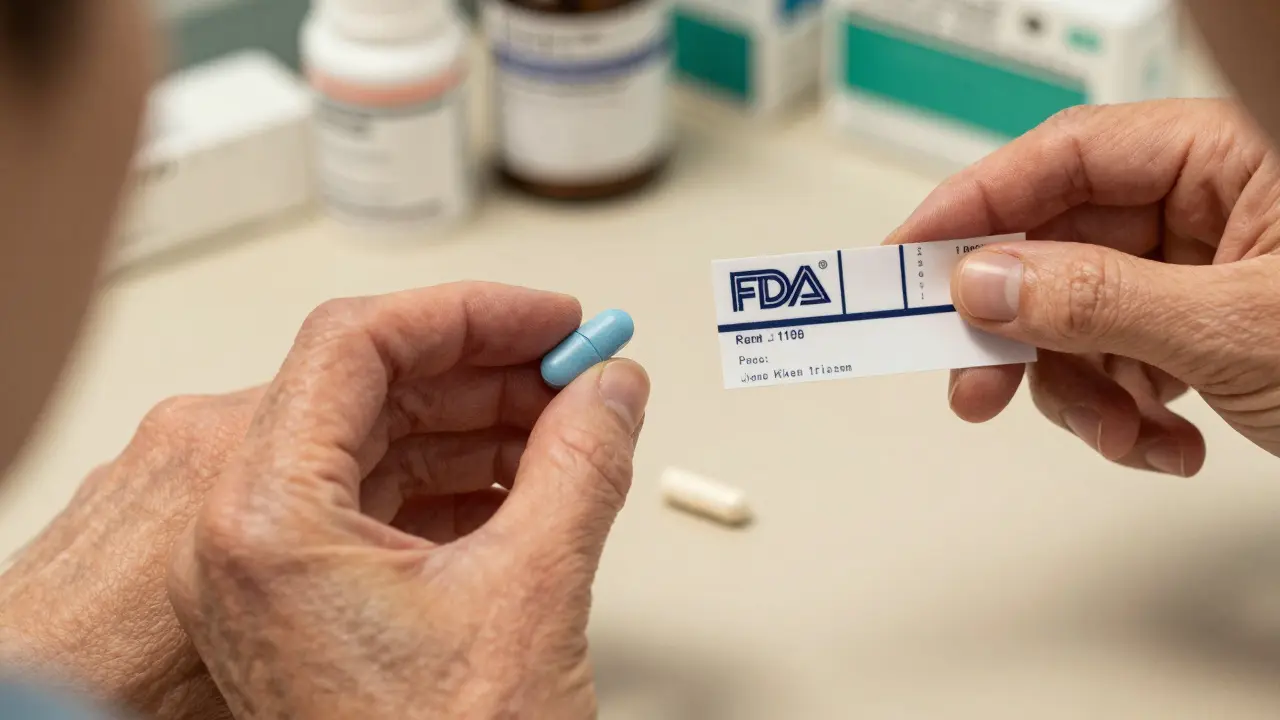
When you switch from a brand-name drug to a generic, you might think it’s just a simple swap. But for many people, this change can lead to missed doses or even stopping treatment altogether. Why? Because the pills look different, or they’re worried the generic won’t work as well. And the stakes are high: medication adherence issues during brand-to-generic transitions cost the U.S. healthcare system over $500 billion each year. This isn’t just about numbers-it’s about real people missing treatments that keep them healthy.
According to the FDA, generic drugs must meet the same strict standards as brand-name medications. They contain identical active ingredients, strength, dosage form, and route of administration. The FDA requires bioequivalence studies to prove the generic works the same way in the body. This means the drug’s absorption rate and peak concentration must fall within specific limits compared to the brand.
But here’s the catch: even when the science checks out, perception matters. A 2018 European Journal of Public Health study found that patients given generic-labeled pills (even placebos) reported 18.3% higher pain levels and were 31.6% more likely to skip doses. The pill’s color, shape, or packaging alone triggered these reactions-proving that the nocebo effect is a real barrier to adherence.
Why Adherence Matters During Transitions
Medication adherence isn’t just about taking pills-it’s about getting the full benefit of treatment. For chronic conditions like high blood pressure or diabetes, missing doses can lead to serious complications. A 2019 CDC analysis showed non-adherence costs the U.S. healthcare system $528 billion annually. When switching to generics, these risks don’t go away. In fact, certain drug classes see significant adherence drops. For example, hypertension medications had 47% adherence with generics versus 59% with brands, while statins saw a jump to 62% due to lower copays.
Why Patients Struggle with Generic Medications
Several factors make it harder to stick with generics. First, pill appearance changes. A University of Michigan study found 28.4% of elderly patients get confused by different pill shapes or colors. Second, inactive ingredients. Though rare, 3.7% of patients have allergic reactions to fillers in generics. Third, the nocebo effect. People who believe generics are 'less effective' often report side effects or skip doses-even when the drug is identical to the brand. This is especially true for antidepressants, where a 2020 study showed 19.4% higher discontinuation rates after switching.

Best Practices for Healthcare Providers
Healthcare providers play a crucial role in smoothing these transitions. Here’s what works:
- Explain bioequivalence clearly. Tell patients: 'The FDA requires generics to work exactly like the brand. Differences in pill appearance don’t affect effectiveness.'
- Address appearance changes upfront. Say: 'This pill looks different, but it’s the same medicine. Keep taking it as prescribed.'
- Discuss cost savings. For example: 'Your copay drops from $50 to $5 with the generic-this makes it easier to stay on track long-term.'
- Ask open-ended questions. 'What concerns do you have about switching?' This builds trust and uncovers hidden worries.
What Patients Can Do to Stay Adherent
Patients can take steps too. If you’re switching to a generic:
- Ask your pharmacist about pill changes. They can explain why the color or shape is different.
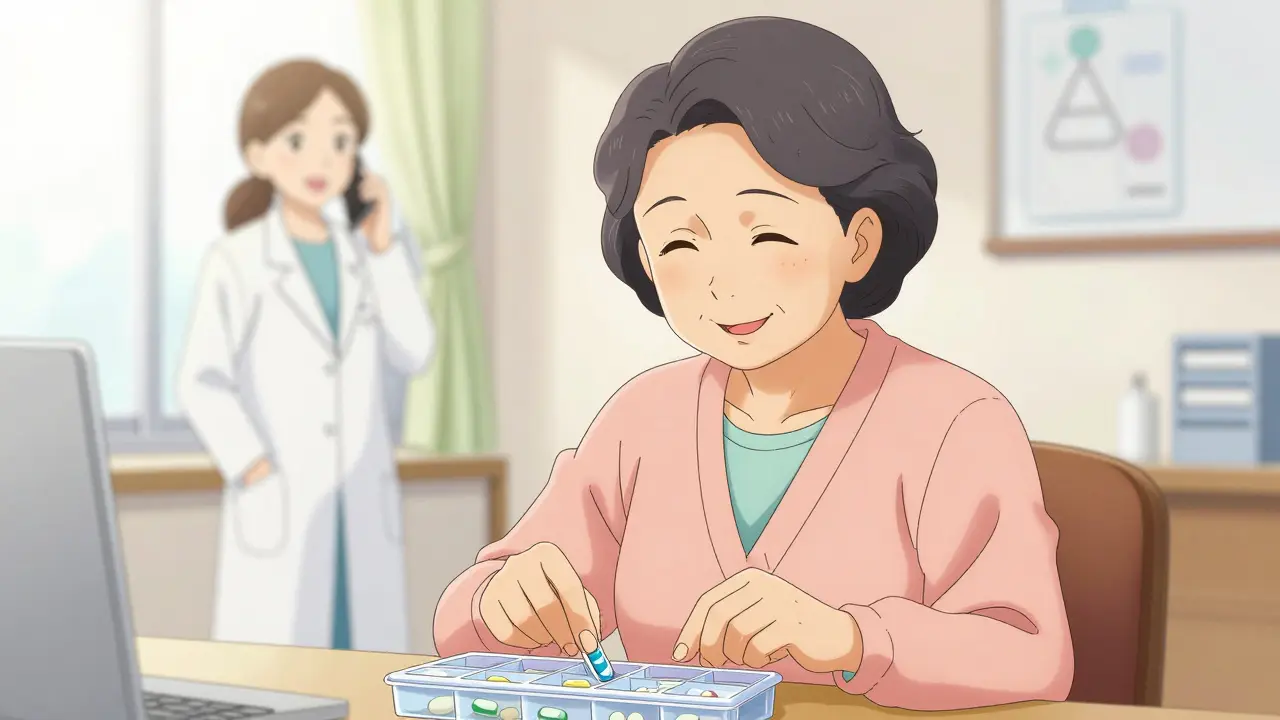
- Use a pill organizer. This is especially helpful for elderly patients or those on multiple medications.
- Don’t skip doses if you notice side effects. Talk to your doctor-most side effects are temporary or unrelated to the generic.
- Check your insurance copay. Lower costs often mean better adherence, so ask if the generic is cheaper.
The Role of Pharmacists and Technology
Pharmacists are your frontline defense. A 2022 meta-analysis found 31% higher adherence when pharmacists followed up within 72 hours of a generic switch. Technology also helps: e-prescribing systems that flag brand-to-generic switches for pharmacist counseling boost adherence by 22.4%. Tools like pill organizers or reminder apps can also make a difference-63% of positive Reddit reviews mentioned using them to overcome appearance confusion.
| Therapeutic Class | Adherence with Brand | Adherence with Generic | Key Issues |
|---|---|---|---|
| Antihypertensives | 59% | 47% | Higher discontinuation rates due to pill appearance |
| Statins | 53% | 62% | Better adherence due to lower copays |
| Antidepressants | 70% | 50.6% | 19.4% higher discontinuation from formulation changes |
| Levothyroxine | 85% | 78% | 0.8% higher hospitalization risk due to narrow therapeutic index |
Real-World Success Stories
Take the case of Maria, a 68-year-old on blood pressure meds. After switching to a generic, she kept missing doses because the pill looked different. Her pharmacist explained the change, showed her a pill organizer, and called her 3 days later. Within a month, her adherence jumped to 95%. Similarly, a 2022 GoodRx study found 67% of statin users stayed on generics because lower copays made it affordable-especially for Medicare beneficiaries in the 'donut hole'.
Are generic drugs as effective as brand-name drugs?
Yes, FDA-approved generic drugs must meet the same strict standards for quality, strength, purity, and stability as brand-name drugs. They contain the same active ingredients and work the same way in your body. However, differences in inactive ingredients or pill appearance can sometimes affect patient perception, leading to adherence issues even though the drug is equally effective.
Why do generic pills look different from brand-name pills?
Generic pills must look different by law to avoid trademark issues. The FDA requires different color, shape, or markings so patients know they’re taking a generic. This doesn’t affect effectiveness-it’s purely for legal reasons. If you’re confused by the appearance, ask your pharmacist to explain the changes.
What should I do if I experience side effects after switching to a generic?
First, don’t stop taking the medication without talking to your doctor. Many side effects are temporary or unrelated to the generic-sometimes they’re just the nocebo effect. Your pharmacist can check if the inactive ingredients might be causing a reaction. If symptoms persist, your doctor may switch you to a different generic or the brand-name version.
Can I request the brand-name version if I’m having issues with the generic?
Yes, but it depends on your insurance and doctor. For most medications, insurers cover generics first. If you have a medical reason to stay on brand (like narrow therapeutic index drugs), your doctor can write a 'dispense as written' prescription. However, this often means higher out-of-pocket costs. Always discuss options with your healthcare team before making changes.
How do narrow therapeutic index drugs affect generic switching?
Narrow therapeutic index drugs (like warfarin or levothyroxine) require very precise dosing. Even small differences in absorption can cause problems. While generics for these drugs are still FDA-approved, some patients may need to stick with one manufacturer’s version for consistency. Your doctor can monitor your blood levels closely if you switch generics to ensure safety.
Author

Amit Jain
February 7, 2026 AT 19:29Generics are a scam. FDA's 'bioequivalence' is a joke. I've seen people have side effects from generics that never happened with brands. They're just trying to save a buck. Trust me, it's not the same.
Jesse Lord
February 8, 2026 AT 14:25i've been a pharmacist for 15 years and i've seen firsthand how patients struggle with generic switches the key is communication explaining that the active ingredients are the same even if the pill looks different really helps many patients just need to know its safe its not about the pill its about trust
Ashley Hutchins
February 8, 2026 AT 15:41people just need to take their meds period. if they're worried about generics they should talk to their doctor. its not that hard. the FDA says theyre the same so why doubt it? stop being lazy and take your pills. 🤦♀️
Lakisha Sarbah
February 10, 2026 AT 07:39i've had patients switch to generics without issues. the key is explaining appearance differences don't affect the medicine. most people just need to know its safe. clear communication is everything. 😊
Eric Knobelspiesse
February 10, 2026 AT 14:09nocebo effect is fascinating. Its not the drug but the mind. But FDA standards too lenient. I've seen studies where generics vary. Trust me, scam.
Catherine Wybourne
February 10, 2026 AT 17:53As a Brit, I've seen the NHS handle generics well. The US system's lack of clear communication is the real issue. It's not rocket science to explain that a pill's color doesn't change its chemistry. Maybe if we stopped treating patients like children, adherence would improve. 😏
Mary Carroll Allen
February 11, 2026 AT 17:53Generics are totally fine! FDA requires them to be identical. People who say otherwise are paranoid. Take your meds and stop worrying. 😂
Niel Amstrong Stein
February 11, 2026 AT 19:54Different countries handle generics differently. In the US, better education is needed. Science says they're same but perception is reality. 🌍💊
Paula Sa
February 13, 2026 AT 08:28It's fascinating how the mind affects healing. If patients believe generics are less effective, their bodies react that way. But science says they're identical. We need to address both facts and feelings.
Joey Gianvincenzi
February 14, 2026 AT 14:31The Federal Drug Administration has established rigorous standards for generic medications. To claim otherwise is both scientifically inaccurate and irresponsible. Patients must be informed of the facts to ensure adherence.
Sarah B
February 16, 2026 AT 08:41America has best healthcare system. Generics safe effective. Stop complaining. Take meds.
AMIT JINDAL
February 17, 2026 AT 09:37Dear fellow healthcare professionals and patients, it is imperative to understand that the FDA's stringent bioequivalence requirements ensure that generics are indeed equivalent. However, the nocebo effect is a significant factor, as evidenced by the European Journal of Public Health study. Patients must be educated about this phenomenon to mitigate unnecessary concerns. Also, pill appearance can trigger psychological responses, hence the importance of clear communication. In my experience as a pharmacist, I've seen patients panic when the pill color changes, even though it's the same medicine. It's crucial to address these fears proactively. We should be providing detailed explanations during counseling sessions. Additionally, pharmacists should be trained to handle these situations. The FDA's standards are rigorous, but patient education is key. It's not just about the science; it's about trust. Without proper communication, even the best science can fail. Let's prioritize patient education to improve adherence. I've also noticed that patients who receive clear information about the equivalence are more likely to adhere. This is especially true for chronic conditions where consistent medication is vital. We need to do better as healthcare providers. Let's not underestimate the power of clear communication. It can make all the difference.
Ariel Edmisten
February 18, 2026 AT 23:30Generics are safe. Take them as prescribed.
Heather Burrows
February 20, 2026 AT 00:41I don't see why we're discussing this. Generics are fine. If people can't handle it, they should stick to brand. It's their own fault.