
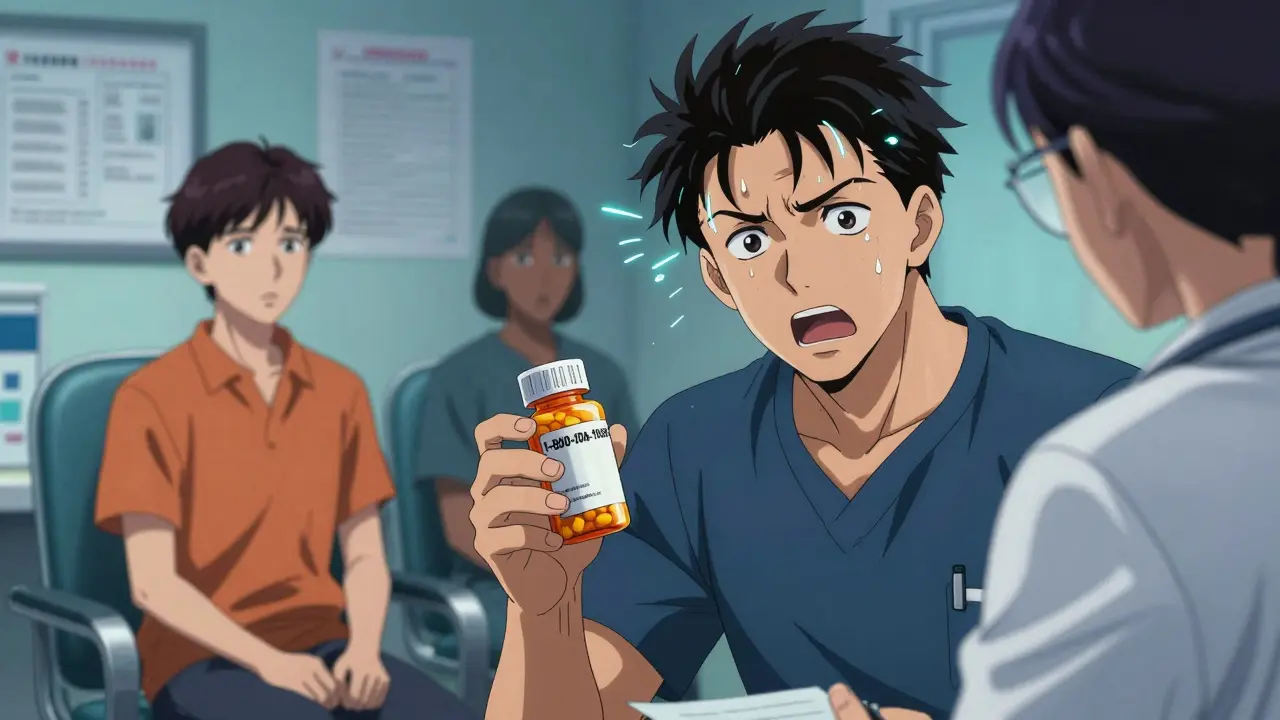
When you start a new medication, you’re told what to expect: maybe a headache, some nausea, or feeling a little drowsy. But what if the side effect isn’t on the list? What if it’s worse than expected? Or what if it’s something no one ever mentioned-like a metallic taste in your mouth, sudden swelling, or unexplained bruising? You might think, It’s probably nothing. Or My doctor knows this happens. But here’s the truth: medication side effects only get noticed when someone speaks up.
Why Your Voice Matters More Than You Think
Clinical trials test drugs on thousands of people. That sounds like a lot-until you realize that millions will take the same pill after it hits the market. Some side effects only show up in rare cases. Others take months or years to appear. The FDA’s MedWatch system, which tracks adverse reactions in the U.S., received over 2.2 million reports in 2022. That’s not just data-it’s real people, noticing something off, and choosing to report it. Here’s the catch: studies show that only 1% to 10% of serious side effects are ever reported by doctors or pharmacists. That means for every 100 people who experience a dangerous reaction, 90 to 99 stay silent. Why? Because they don’t know how. Or they think their doctor will handle it. Or they’re afraid they’ll sound like they’re complaining. But here’s what no one tells you: you don’t need to prove the drug caused it. You just need to describe what happened. The FDA doesn’t require certainty. They need signals. And those signals come from you.What Counts as a Side Effect Worth Reporting
Not every itch or stomach upset needs a report. But some things do. The FDA defines a serious adverse event as one that:- Causes death
- Is life-threatening
- Leads to hospitalization
- Results in permanent disability
- Causes birth defects
- Requires medical intervention to prevent harm
How to Report Side Effects-Step by Step
You don’t need to be a doctor. You don’t need to fill out a 20-page form. Here’s how to do it in under 15 minutes:- Call 1-800-FDA-1088. That number is now required on every prescription bottle and box in the U.S. since January 2022. It’s free, confidential, and staffed by real people who can walk you through it.
- Have your info ready: The name of the medication, dosage, when you started it, when the side effect began, how long it lasted, and what you were doing when it happened. You don’t need your medical records-just what you remember.
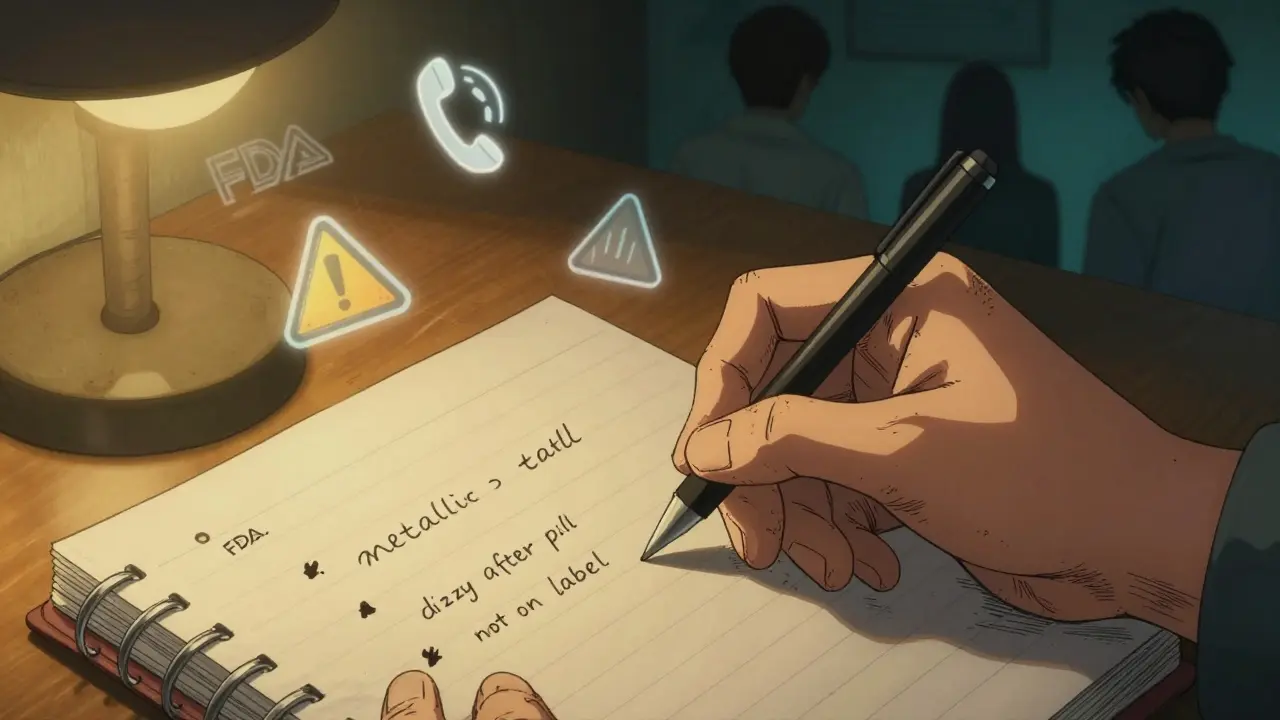
- Be specific. Don’t say “I felt weird.” Say “I got dizzy and my vision blurred 20 minutes after taking the pill.”
- Ask for a confirmation number. They’ll give you one. Keep it. You can follow up later if needed.
What Happens After You Report?
Some people worry: “Will this get me in trouble?” “Will my doctor be mad?” “Will my insurance drop me?” The answer is no. Reporting is anonymous if you want it to be. The FDA doesn’t share your name with your doctor or the drug company unless you say it’s okay. What happens next? The report goes into a database. Analysts look for patterns. If 10 people report the same odd symptom after taking the same drug, that’s a signal. That signal might lead to:- A warning added to the drug’s label
- A change in dosage recommendations
- A recall if the risk outweighs the benefit
- A new safety study
Why Doctors Don’t Always Report-And What You Can Do
Your doctor might not report your side effect. Not because they don’t care. But because:- They’re overwhelmed
- They don’t know how
- They assume you’ll report it
- They think it’s too common to matter
Barriers to Speaking Up-and How to Beat Them
You’re not alone if you’ve stayed quiet. Here’s what stops people-and how to push past it:- “It’s probably normal.” 65% of patients think side effects are just part of treatment. But if it’s new, worse than expected, or not listed, it’s worth reporting.
- “I don’t want to bother anyone.” You’re not bothering anyone. You’re helping future patients.
- “My doctor dismissed me.” If they brushed you off, write it down. Then report it anyway. Your voice still matters.
- “I don’t know how.” 68% of patients didn’t know they could report to the FDA. Now you do.

What You Can Do Right Now
Don’t wait for the next side effect. Take action today:- Check the label on your current meds. Look for the 1-800-FDA-1088 number.
- Write down any side effects you’ve had-even if they seemed minor.
- Text a friend or family member: “Did you know you can report side effects to the FDA? Here’s the number: 1-800-FDA-1088.”
- If you’ve had a side effect you didn’t report, go to fda.gov/medwatch and file it now. It takes 10 minutes. It could save someone’s life.
Frequently Asked Questions
Do I need to prove the medication caused my side effect to report it?
No. You don’t need to be certain. The FDA only needs to know what happened, when, and with what drug. Even if you’re unsure, report it. Experts say uncertainty is why these systems work-they collect patterns over time. If 10 people report the same odd symptom, that’s enough to trigger a safety review.
Can I report side effects for someone else, like an elderly parent?
Yes. Family members, caregivers, and even pharmacists can report on behalf of patients. You’ll need basic details like the patient’s age, the medication name, and a description of the reaction. You don’t need their full medical records. Just what you observed.
Will reporting a side effect affect my prescription or insurance?
No. Reporting is confidential and anonymous if you choose. The FDA does not share your name with your doctor, pharmacy, or insurer. Your prescription won’t be canceled. Your insurance won’t be changed. This system exists to protect you-not punish you.
What if I report and nothing happens?
You might not see a change right away. But that doesn’t mean your report didn’t matter. Many safety warnings come from dozens or hundreds of reports over months or years. One report might not trigger action-but 50 might. You’re adding to a collective safety net.
Are there other ways to report besides calling or going online?
Yes. If you’re taking a vaccine, you can report to VAERS at vaers.hhs.gov. If you’re in a hospital or clinic, ask if they have an internal adverse event reporting system. Some pharmacies also collect reports and forward them to the FDA. But the fastest, most direct way is still 1-800-FDA-1088 or the MedWatch website.
Final Thought: Your Voice Is Part of the System
Medication safety isn’t just about regulators, scientists, and drug companies. It’s about the person holding the pill bottle, noticing something strange, and deciding to speak up. That’s how the system works. That’s how lives are saved. You’re not just a patient. You’re a critical part of the safety net. Don’t wait for someone else to act. Call 1-800-FDA-1088. It’s simple. It’s safe. And it matters.Author

Jhoantan Moreira
February 2, 2026 AT 16:20Meenal Khurana
February 4, 2026 AT 00:35caroline hernandez
February 5, 2026 AT 06:20Justin Fauth
February 5, 2026 AT 22:04Joy Johnston
February 6, 2026 AT 05:05Sherman Lee
February 8, 2026 AT 02:15Amit Jain
February 9, 2026 AT 16:34Keith Harris
February 10, 2026 AT 16:30Nathan King
February 12, 2026 AT 08:54Harriot Rockey
February 13, 2026 AT 09:40Joseph Cooksey
February 15, 2026 AT 05:16