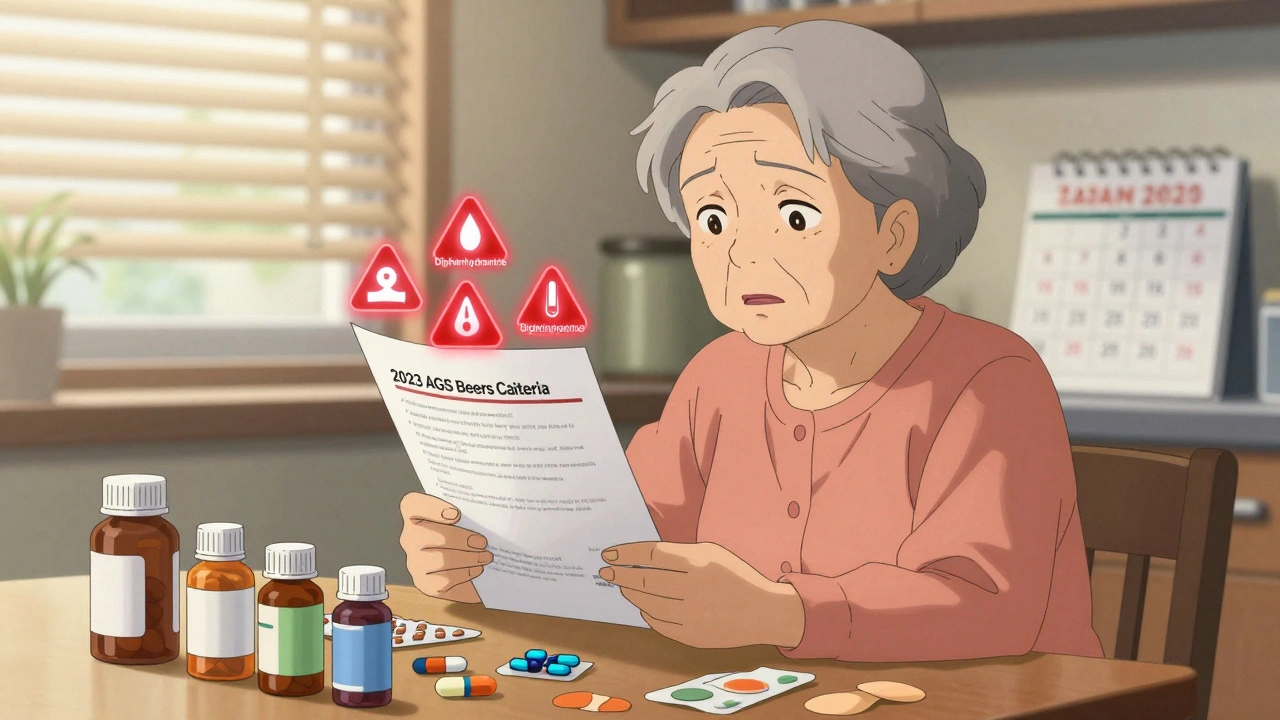
High-Risk Medications for Seniors: What You Need to Know to Stay Safe
When it comes to high-risk medications for seniors, drugs that can cause falls, confusion, organ damage, or even death in older adults. Also known as potentially inappropriate medications, these are not rare outliers—they’re common prescriptions that many seniors take without realizing the danger. The problem isn’t just the drugs themselves, but how they interact with aging bodies, other medications, and chronic conditions. A pill that’s safe for a 40-year-old can be life-threatening for someone over 65.
One of the biggest red flags is the Beers Criteria, a list of medications that healthcare professionals are warned to avoid in older adults. It includes everything from first-generation antihistamines like Benadryl, which cause brain fog and dizziness, to strong sedatives and certain painkillers. These drugs don’t just make you sleepy—they increase the chance of a fall, which is the leading cause of injury-related death in seniors. Another key system is REMS programs, FDA-mandated safety plans for drugs with serious side effects. These aren’t just paperwork—they’re real barriers designed to keep dangerous drugs from being misused, especially in vulnerable populations.
What makes this even trickier is that many of these medications are prescribed for common problems: trouble sleeping, joint pain, allergies, or anxiety. But the risks often outweigh the benefits. For example, a senior on a blood pressure pill might also be taking a muscle relaxant that drops their blood pressure even lower—leading to dizziness and a fall. Or they might be on an antidepressant that causes low sodium levels, resulting in confusion and hospitalization. These aren’t rare accidents. They’re predictable outcomes of poor medication management.
You don’t have to accept this as normal. Many of these risks can be avoided with a simple medication review—especially during your Medicare Annual Medication Review. Ask your doctor: Is this drug still necessary? Could it be replaced with something safer? Are there non-drug options like physical therapy or lifestyle changes? The goal isn’t to stop all meds—it’s to stop the ones that do more harm than good. And that’s exactly what the posts below cover: real stories, clear warnings, and practical steps to protect yourself or a loved one from the hidden dangers of common prescriptions.
9
Dec
Medications That Are High-Risk for Seniors: What to Review
Ken Ken
Learn which medications are most dangerous for seniors, why they’re risky, and what safer alternatives exist. Use the Beers Criteria to review prescriptions and reduce fall, confusion, and hospitalization risks.
More