
Statin Myopathy Risk & Action Guide
Answer a few questions to estimate your relative risk of statin-associated muscle symptoms and get tailored, evidence-based next steps.
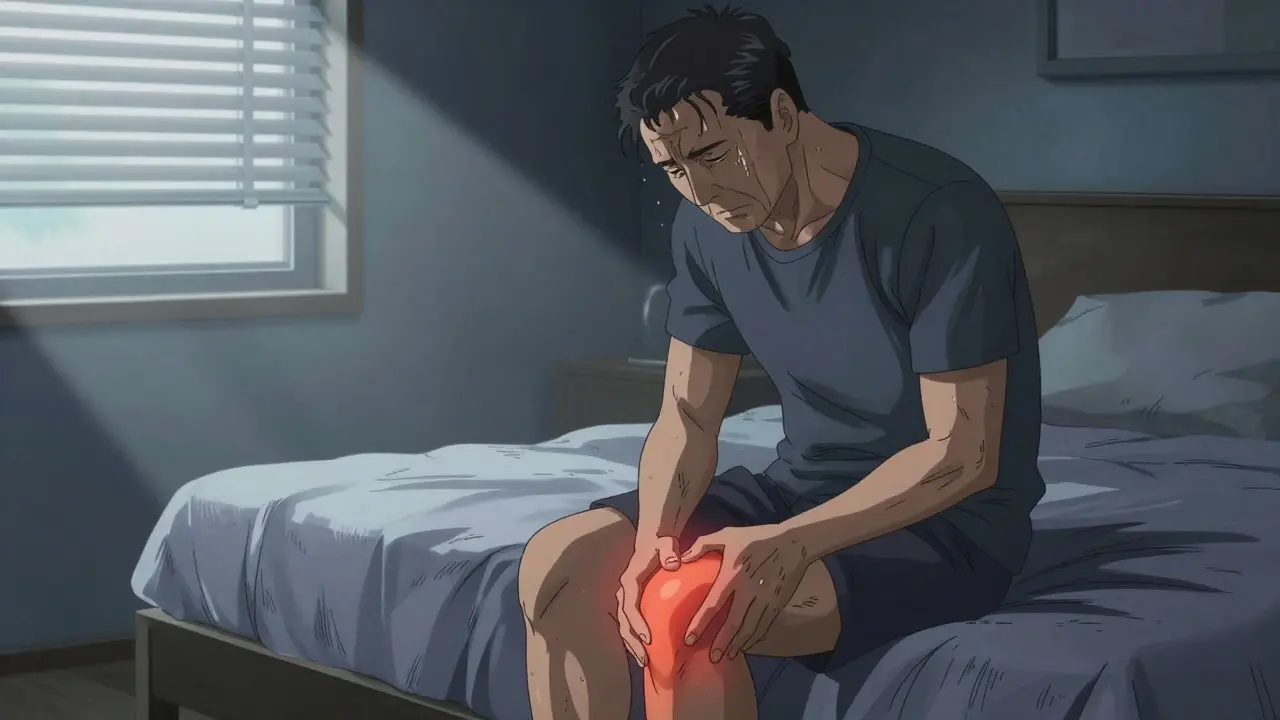
Imagine starting a new medication to protect your heart, only to feel like you ran a marathon every morning. For millions of people, this is the reality of statin myopathy. It’s not just a vague ache; it’s a specific clinical reaction where statins, the most prescribed drugs in the world for cholesterol, interact with your muscles in ways that can cause pain, weakness, or even severe damage. While many dismiss these symptoms as "just growing pains" or age-related issues, recent research shows a clear biological link between statin use and muscle stress.
You don’t need to be an expert in biochemistry to understand why this happens. Statins work by blocking an enzyme called HMG-CoA reductase. This blockage lowers cholesterol in the liver, but it also triggers a chain reaction in skeletal muscle cells. The result? A condition known as Statin-Associated Muscle Symptoms (SAMS), which affects up to 30% of users. But here’s the kicker: true myopathy, where muscle enzymes spike dangerously high, is rare-occurring in less than 1% of cases. So, how do you tell if you’re experiencing a harmless side effect or a sign of something more serious?
The Biology Behind the Pain
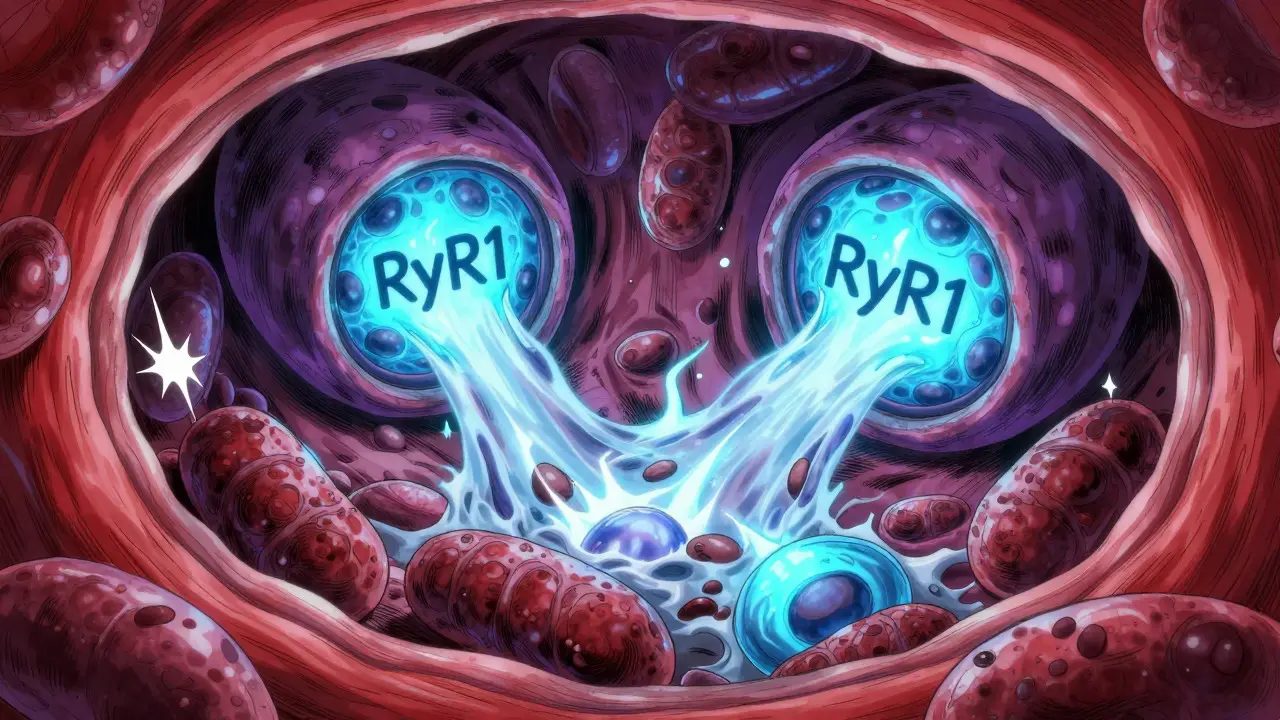
To fix the problem, you first have to understand the machine. Inside your muscle cells, there are tiny channels called ryanodine receptors (RyR1) that control calcium flow. Calcium is the signal that tells your muscles to contract. Normally, a protein called FKBP12 keeps these channels stable. However, statins can cause FKBP12 to detach from RyR1. When this happens, calcium leaks out of its storage area into the cell cytoplasm.
This leak isn't a small drip; it’s a flood. Studies show that statin treatment can increase spontaneous calcium sparks by 2.3 times in human muscle tissue. This excess calcium activates destructive enzymes like calpain and caspase-3, which start breaking down the muscle fiber itself. This process is called apoptosis, or programmed cell death. Interestingly, this mechanism is highly specific to skeletal muscle. Your heart muscle doesn’t suffer the same fate because cardiac cells handle calcium differently, which explains why statins are safe for the heart but tough on the legs and arms.
It’s not just about calcium, though. Statins also deplete other essential compounds. Isoprenoids, molecules needed for proper cellular signaling, drop by 60-80% in treated tissues. Then there’s Coenzyme Q10 (CoQ10), a vital component of your mitochondria’s energy production. After just four weeks of statin therapy, muscle CoQ10 levels can fall by 40%. Without enough CoQ10, your cells produce more reactive oxygen species (ROS)-essentially free radicals that damage tissue. This combination of calcium chaos and energy depletion creates a perfect storm for muscle fatigue and pain.
Recognizing the Signs: From Soreness to Severe Myopathy
Not all muscle discomfort is created equal. Doctors categorize statin-induced issues into three tiers, and knowing the difference helps you decide when to call your GP.
- Myalgia: This is the most common form. You feel sore, achy, or fatigued, but blood tests show normal creatine kinase (CK) levels. It feels like a bad workout that never goes away.
- Myopathy: Here, you have both muscle symptoms AND elevated CK levels. If your CK is more than 10 times the upper limit of normal, it’s a red flag. This indicates actual muscle fiber breakdown.
- Rhabdomyolysis: The rarest and most dangerous form. Massive muscle breakdown releases myoglobin into the blood, which can clog kidneys and lead to failure. This is a medical emergency.
Timing matters too. Symptoms usually appear within the first six months of starting a statin. If you’ve been taking them for years without issue, sudden onset of severe pain might point to a different cause, like a thyroid problem or vitamin D deficiency. However, if you recently switched brands or increased your dose, watch out. High-intensity statins like atorvastatin or rosuvastatin carry a higher risk of myopathy compared to low-intensity options like pravastatin.
Who Is at Higher Risk?
If you think you’re genetically predisposed to statin sensitivity, you might be right. Several factors amplify the risk of developing myopathy:
- Age and Gender: Women over 65 are statistically more likely to report muscle symptoms. Smaller body mass means higher relative drug exposure per kilogram of tissue.
- Genetics: Variations in genes like SLCO1B1 affect how well your liver clears statins from the bloodstream. Poor metabolizers retain higher levels of the drug, increasing muscle toxicity.
- Drug Interactions: Certain antibiotics (like clarithromycin), antifungals, and grapefruit juice inhibit the CYP3A4 enzyme, which breaks down statins. Mixing these can skyrocket your statin levels, triggering myopathy.
- Pre-existing Conditions: Low thyroid function (hypothyroidism) or kidney disease slows drug clearance, keeping statins in your system longer.
Understanding these risk factors allows for proactive management. If you fall into multiple categories, your doctor might start you on a lower dose or choose a statin that doesn’t rely heavily on CYP3A4 metabolism, such as rosuvastatin or pitavastatin.
Management Strategies That Actually Work
So, what do you do if the pain starts? Don’t just quit cold turkey unless advised. Stopping abruptly can leave your cardiovascular risk unmanaged. Instead, follow a structured approach recommended by the American College of Cardiology.
First, confirm the link. Stop the statin for 4 to 6 weeks. In 80% of cases, symptoms resolve completely during this washout period. If they do, the statin was likely the culprit. Next, try a rechallenge. This could mean switching to a different statin (which works in 40% of patients) or reducing the dose (successful in 65% of cases). Many people tolerate half-doses perfectly fine while still getting significant cholesterol benefits.
If switching statins fails, consider adjunctive therapies. CoQ10 supplementation at 200 mg per day has shown promise, with some studies reporting a 35% reduction in symptom severity. While not a cure-all, it supports mitochondrial function and may help bridge the gap for those who want to stay on their medication.
Exercise is another powerful tool. Contrary to popular belief, moderate activity doesn’t worsen statin myopathy-it helps. A 2021 Mayo Clinic study found that patients who exercised 150 minutes a week reported fewer symptoms than sedentary users. Exercise appears to stabilize the FKBP12-RyR1 interaction, reducing calcium leaks. Think of it as training your muscles to handle the metabolic stress better.

When to Look Beyond Statins
For the stubborn 10-20% who can’t tolerate any statin, alternatives exist. Ezetimibe is a non-statin drug that blocks cholesterol absorption in the gut. It’s gentle on muscles and reduces LDL by about 30%. For very high-risk patients, PCSK9 inhibitors like evolocumab offer potent cholesterol lowering with minimal muscle side effects. In the FOURIER trial, muscle-related adverse events were actually slightly lower in the evolocumab group than in the placebo group, debunking the myth that all lipid-lowering drugs hurt muscles.
There’s also the rare autoimmune form of statin myopathy, known as anti-HMGCR myositis. This affects about 0.02% of users. Unlike typical myalgia, this condition persists even after stopping the statin. It requires immunosuppressive therapy, often involving methotrexate and prednisone. If your muscle weakness progresses despite stopping the drug, ask your doctor about testing for anti-HMGCR antibodies.
Future Directions and Practical Tips
The field is moving fast. Newer statin formulations are being developed to target the liver specifically, reducing penetration into skeletal muscle. Early trials show candidates like STT-101 have 70% lower muscle concentrations than standard atorvastatin. Meanwhile, researchers are exploring RyR1 stabilizers-drugs that directly prevent the calcium leak. One phase II trial showed a 52% reduction in muscle symptoms using such an agent.
Until then, here are practical steps you can take today:
- Monitor your CK levels: If you have unexplained muscle pain, get a baseline creatine kinase test. It’s simple and informative.
- Check for interactions: Tell your pharmacist about all supplements and over-the-counter meds you take. Grapefruit juice is a silent killer for statin efficacy and safety.
- Stay active: Aim for 30 minutes of moderate exercise five days a week. It’s one of the best natural mitigators for statin-related discomfort.
- Consider CoQ10: Discuss adding 200 mg daily with your doctor, especially if you’re on a high-intensity statin.
Statin myopathy is real, but it’s manageable. By understanding the mechanics of calcium dysregulation and CoQ10 depletion, you can move from fear to informed action. Your heart health depends on consistent lipid management, so finding the right balance between efficacy and tolerance is key. With the right strategy, you can keep your cholesterol in check without living in constant muscle pain.
How long does it take for statin muscle pain to go away after stopping?
For most people, symptoms resolve within 1 to 4 weeks of discontinuing the statin. In about 80% of cases, a 4-week washout period leads to complete resolution, confirming the statin as the cause. If pain persists beyond this window, investigate other causes like thyroid issues or autoimmune myositis.
Is CoQ10 supplementation effective for statin myopathy?
Evidence is mixed but promising. Some randomized trials show a 35% reduction in symptom severity with 200 mg/day of CoQ10. It works by supporting mitochondrial energy production, which statins impair. While not a guaranteed cure, it is a low-risk adjunctive therapy worth trying under medical supervision.
Can I take statins if I have a history of muscle disorders?
Yes, but with caution. If you have pre-existing conditions like hypothyroidism or kidney disease, start with a low-dose statin and monitor creatine kinase levels closely. Genetic testing for SLCO1B1 variants can also help predict tolerance. Always discuss your full medical history with your cardiologist before initiating therapy.
What is the difference between myalgia and myopathy?
Myalgia refers to muscle pain without significant enzyme elevation. Myopathy involves both muscle symptoms and elevated creatine kinase (CK) levels, typically more than 10 times the upper limit of normal. Myopathy indicates actual muscle fiber damage and requires more aggressive management than simple myalgia.
Do all statins cause the same level of muscle pain?
No. Lipophilic statins like simvastatin and atorvastatin penetrate muscle tissue more easily and are associated with higher rates of myopathy. Hydrophilic statins like rosuvastatin and pravastatin have lower muscle penetration and are often better tolerated. Switching from a lipophilic to a hydrophilic statin is a common successful strategy for managing side effects.
Author
