
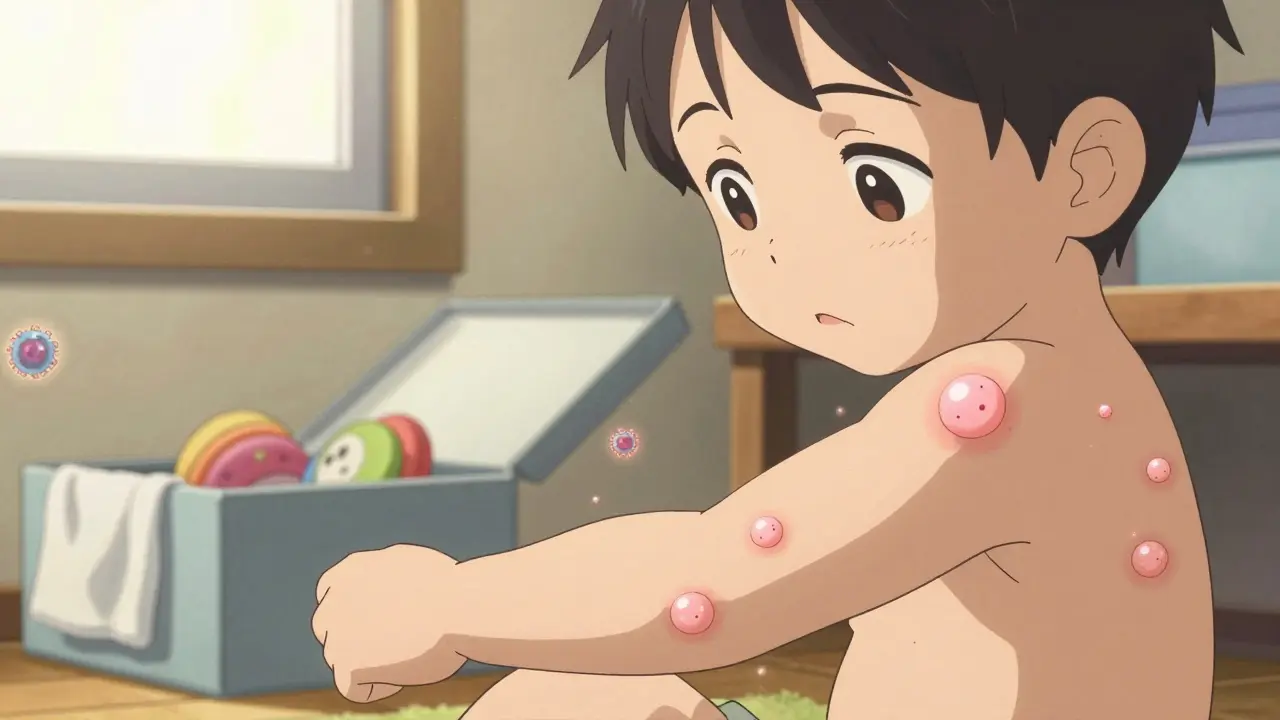
When your child starts showing tiny, pearly bumps on their arms, legs, or face, it’s natural to panic. Are these warts? Allergies? Something contagious? You’re not alone. Molluscum contagiosum is one of the most common viral skin infections in kids - and it’s way more widespread than most parents realize. The good news? It’s almost always harmless. The bad news? It’s super contagious, lasts for months, and doctors often disagree on what to do about it.
What Molluscum Contagiosum Actually Looks Like
These aren’t just any skin bumps. Molluscum lesions are small, round, and raised - usually between 2 and 6 millimeters across, about the size of a pencil eraser. They’re often white, pink, or skin-colored, with a shiny, pearly look. The most telling sign? A tiny dimple or dot right in the center. That’s called an umbilication, and it’s the signature of molluscum. You won’t see this on warts, chickenpox, or insect bites.They can show up anywhere except the palms and soles. In kids, they’re most common on the face, neck, armpits, and arms. In teens and adults, especially those who got it through sexual contact, they tend to cluster on the genitals, inner thighs, or lower abdomen. The bumps aren’t painful, but they can itch - especially if the person has eczema. And if they scratch, the virus spreads to nearby skin, making the outbreak worse.
How It Spreads - And Why It Won’t Go Away Quickly
Molluscum is caused by a poxvirus called MCV. It’s not dangerous, but it’s sneaky. You catch it through direct skin contact - like hugging, wrestling, or sharing towels. It also lives on surfaces: pool toys, gym equipment, bath sponges, even bedding. The virus can survive for days outside the body. That’s why outbreaks often hit entire families.After exposure, it takes 2 to 6 weeks before any bumps appear. That’s the incubation period. Once they show up, they can stick around for 6 to 24 months. In rare cases, they last up to 4 years. The body eventually fights it off - but until then, each bump can produce thousands of virus particles. Scratching or picking at them spreads the virus like wildfire. Studies show scratching can triple the number of lesions in just weeks.
Children with eczema are 30% more likely to get molluscum, and their outbreaks tend to be bigger and itchier. Warm, humid climates make it worse. Swimming pools? Not the main culprit, but shared towels and locker rooms? Definitely a risk. The CDC now says kids with molluscum should still go to school and swim - as long as lesions are covered. That’s a big shift from older advice.
How It’s Different From Other Skin Problems
It’s easy to confuse molluscum with other bumps. Here’s how to tell them apart:- Warts (HPV): Rough, hard, and grainy. No central dimple. Often on fingers or feet.
- Chickenpox: Lots of fluid-filled blisters all over the body, with fever and fatigue. Not just a few bumps.
- Herpes: Painful, burning blisters that burst and crust. Usually grouped in clusters.
- Impetigo: A bacterial infection with honey-colored crusts. Needs antibiotics.
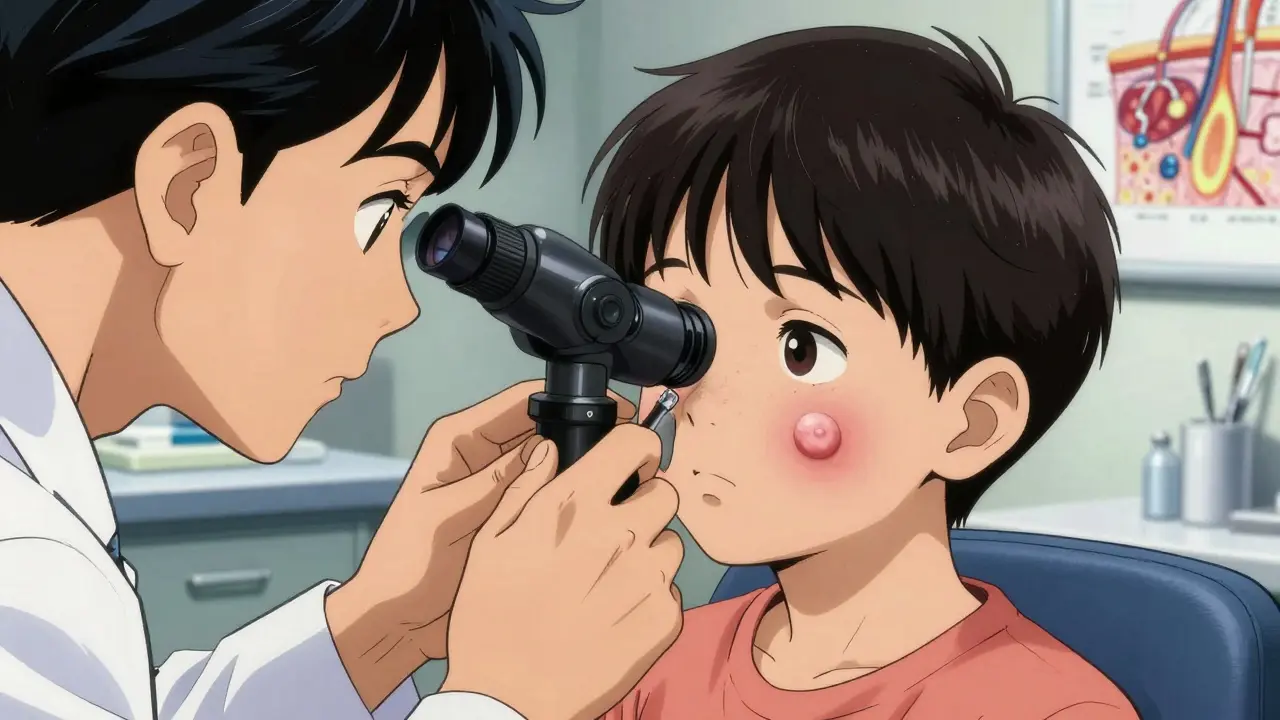
Only molluscum has that unmistakable central dot. Dermatologists sometimes use a dermatoscope - a tiny magnifying tool - to confirm the diagnosis, especially if the bumps look unusual. But in most cases, a trained eye is enough.
Why Most Doctors Say: Just Wait
The American Academy of Dermatology’s official stance? For healthy kids and adults, the best treatment is no treatment. Why? Because molluscum clears on its own in most cases - 92% of infections vanish within 18 months without scarring. Aggressive treatments like freezing, scraping, or lasers can cause pain, redness, and even permanent marks - especially on a child’s face.Dr. Adam Friedman, a top dermatologist at George Washington University, puts it bluntly: “Treating molluscum often causes more harm than the bumps themselves.”
Parents in the UK and Europe mostly follow this advice. In fact, 92% of pediatric cases in the UK are left alone. In the U.S., the number is lower - about 55% - because of cosmetic worries. But studies show that the emotional stress of treatment often outweighs the stress of the bumps.
When Treatment Might Make Sense
There are exceptions. If the bumps are on the face and your child is being teased at school, or if they’re spreading rapidly and causing discomfort, treatment can help. So can cases in adults with genital lesions - especially if they’re causing anxiety or affecting relationships.The most effective treatments, backed by clinical trials, include:
- Cantharidin: A blistering agent applied by a doctor. It causes a small blister to form over the bump, lifting the virus out. Clearance rate: 73% after 12 weeks. No scarring if done right.
- Topical potassium hydroxide (KOH): A solution you apply daily at home. Works by breaking down the skin’s outer layer. Many parents report success with 5-10% KOH creams. Amazon reviews for products like MolluDab show 63% of users saw full clearance in under 8 weeks.
- Cryotherapy (freezing): Liquid nitrogen is used to freeze the bumps. Effective, but painful for kids. Can leave white spots or scars, especially on darker skin. Avoid on the face.
- Immunomodulators: New drugs like imiquimod or topical cidofovir are being tested. One new compound in phase 2 trials cleared 82% of lesions in 12 weeks - much better than placebo.
Don’t waste money on “miracle” OTC creams or home remedies like tea tree oil or duct tape. There’s no solid evidence they work. And never try to pop the bumps yourself - you’ll spread the virus and risk infection.
What You Can Do at Home
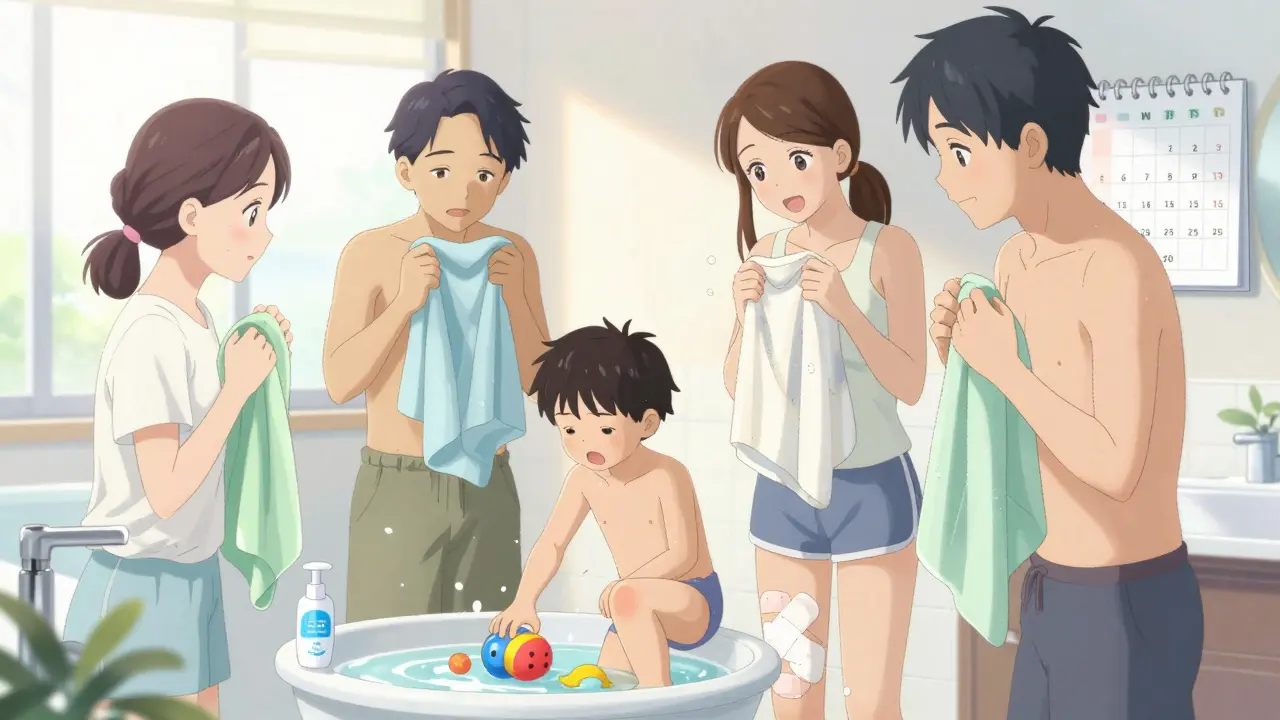
Even if you’re not treating the bumps, you can stop them from spreading:- Keep nails short and discourage scratching.
- Wash hands often - especially after touching the bumps.
- Don’t share towels, clothing, or bath toys.
- Cover lesions with waterproof bandages during swimming or contact sports.
- Use separate towels and wash bedding weekly in hot water.
- Apply a gentle moisturizer if the skin is itchy - especially if eczema is involved.
One study found that simply covering lesions during swimming reduced household transmission by 57%. That’s huge. And avoiding scratching? That cuts new bumps by 300%.
What Not to Do
There’s a lot of bad advice out there. Avoid:- Trying to cut or scrape off bumps at home.
- Using harsh chemicals like bleach or vinegar on the skin.
- Excluding your child from school or swimming - it’s not medically necessary.
- Believing “the sooner you treat it, the faster it goes.” That’s not true. Waiting doesn’t make it worse.
- Getting unnecessary cryotherapy on the face. Dermatologists who do this often cause scarring.
RateMDs reviews show 41% of parents felt their child’s doctor pushed too hard for treatment - and many ended up with scars they didn’t need.
Special Cases: Immune System Issues
If someone has HIV, eczema, or is on immunosuppressant drugs, molluscum can be a different beast. Lesions can grow huge - up to 30mm - and spread everywhere. They may not go away for years. In these cases, doctors don’t wait. They treat aggressively - often starting with antiretroviral therapy for HIV patients, since getting the immune system back on track is the real key.Studies show 68% of HIV-positive adults with CD4 counts under 200 develop progressive molluscum. For them, the bumps aren’t just a nuisance - they’re a sign the immune system is failing. Treating the virus isn’t optional.
What the Future Holds
New research is promising. A phase 2 trial of a topical immunomodulator showed 82% clearance in 12 weeks - nearly triple the success rate of older treatments. That drug could be available within the next 2-3 years.Climate change may also play a role. Experts predict a 22% rise in cases over the next decade as warmer, wetter conditions expand the virus’s range. But better hygiene and public awareness could balance that out.
For now, the message is clear: molluscum is annoying, but not dangerous. Most kids outgrow it without a trace. The goal isn’t to erase every bump - it’s to stop it from spreading and keep your child comfortable while their body does the healing.
Is molluscum contagiosum dangerous?
No, molluscum contagiosum is not dangerous. It’s a harmless viral infection that doesn’t cause fever, pain, or long-term health problems in healthy people. The main risks are spreading it to others or getting a secondary bacterial infection from scratching. In people with weakened immune systems, it can become more widespread, but even then, it’s treatable.
Can adults get molluscum contagiosum?
Yes. While it’s most common in children, adults can get it too - usually through sexual contact. In adults, the bumps often appear on the genitals, inner thighs, or lower abdomen. It’s considered a sexually transmitted infection in this context. Adults with eczema or weakened immune systems are also more vulnerable.
How long does molluscum last without treatment?
Without treatment, molluscum usually clears on its own in 6 to 24 months. Most cases resolve within 18 months. In some people - especially those with eczema or immune issues - it can last up to 4 years. But it almost never leaves scars in healthy individuals.
Should I take my child to the doctor for molluscum?
You don’t need to rush to the doctor. If the bumps look typical - small, round, with a central dimple - and your child is otherwise healthy, watchful waiting is fine. But see a doctor if: the bumps are bleeding, oozing, or very itchy; if they’re spreading rapidly; if your child has eczema or a weakened immune system; or if you’re unsure whether it’s molluscum.
Can molluscum come back after it clears?
Yes, but it’s rare. Once your body clears the virus, you usually develop immunity. However, since there are different strains of the virus, it’s possible - though uncommon - to get infected again. The bigger risk is spreading it to other parts of your body or to others before it fully clears.
Are there any home remedies that actually work?
Some home remedies have anecdotal support, but very little science behind them. Tea tree oil, iodine, and duct tape haven’t been proven effective in clinical trials. The only topical treatment with solid evidence is potassium hydroxide (KOH) at 5-10% concentration. Even then, it works slowly and requires daily use for weeks. Don’t waste money on unproven products.
What to Do Next
If you’re dealing with molluscum, start with observation. Take photos of the bumps every two weeks to track changes. Keep a journal: Are they spreading? Is your child scratching? Are they on the face? Use the American Academy of Dermatology’s free “Molluscum Manager” app - it’s downloaded over 140,000 times and helps you track progress and avoid common mistakes.Focus on hygiene, not panic. Don’t rush to treatment unless there’s a clear reason - like social distress or rapid spread. And remember: this isn’t a reflection of cleanliness or parenting. It’s a common virus that millions of kids get every year. Your child’s immune system will handle it. Your job is to support them - not stress over every bump.
Author

Joe Bartlett
December 17, 2025 AT 10:13Been there, done that. My lad had it for 18 months. Didn’t touch it. Just kept his nails short and didn’t let him share towels. Gone now. No scars. No drama. UK doctors know best.
Marie Mee
December 18, 2025 AT 10:00They’re hiding the truth about this. I read somewhere the CDC is pushing this ‘just wait’ thing because pharmaceutical companies are lobbying to keep treatments off the market. They don’t want you to know about the real cure - it’s in the water supply, but they’re poisoning it with fluoride to keep you sick. My cousin’s kid got it after swimming at the YMCA - same place they test the water for chemicals. Coincidence? I think not.
Naomi Lopez
December 18, 2025 AT 19:04It’s fascinating how the medical establishment continues to perpetuate the myth of ‘watchful waiting’ as some kind of moral imperative, when in reality, it’s a failure of clinical imagination. The psychological toll on children - particularly those with visible facial lesions in social settings - is grossly underappreciated. And let’s not pretend that topical potassium hydroxide is some kind of ‘evidence-based miracle’; its efficacy is statistically marginal, and the attrition rate due to parental noncompliance is upwards of 70%. We’re romanticizing neglect as wisdom.
Salome Perez
December 19, 2025 AT 08:28As someone who has worked with pediatric dermatology teams across five countries, I can say with confidence: molluscum is a beautiful example of the body’s quiet resilience. The virus doesn’t discriminate - it touches every culture, every climate, every child. But what truly matters is not the bump, but the burden we place on ourselves. In Japan, families treat it with gentle observation and quiet patience. In Brazil, they use calendula oil - not because it’s proven, but because it’s soothing. The real treatment? Love, hygiene, and trust in nature’s timeline. No laser. No fear. Just presence.
Martin Spedding
December 19, 2025 AT 19:50LOL at the ‘don’t scratch’ advice. My kid scratched till they bled. Now it’s a full-blown infection. Doctor said it was ‘preventable.’ So yeah, thanks for the ‘no treatment’ dogma. I’m the dumb parent now.
Raven C
December 21, 2025 AT 17:35...and yet... the fact remains... that the American Academy of Dermatology... has, in its infinite wisdom... chosen to prioritize... ‘cosmetic concerns’... over... actual... clinical outcomes... which... is... frankly... a disgrace... and... a reflection... of... our... societal... obsession... with... perfection... rather... than... health...
Donna Packard
December 21, 2025 AT 22:51My daughter had it last year. We just kept her skin moisturized and didn’t panic. It faded slowly, like a sunset. Now she doesn’t even remember it. Sometimes the best thing we can do is just breathe.
Patrick A. Ck. Trip
December 22, 2025 AT 11:09Interesting data on the Molluscum Manager app - I downloaded it after reading this. Tracke d the bumps weekly. Noticed a pattern: they cleared faster when we used cotton pajamas instead of polyester. Maybe less friction? Or just placebo? Either way, no new lesions after 10 weeks. Still waiting on the full clearance, but feeling hopeful.
Jessica Salgado
December 22, 2025 AT 23:52Wait - so you’re telling me that the central dimple is the ONLY reliable visual marker? What if it’s not visible? What if the bump is flat? What if it’s on a dark skin tone and looks like a tiny mole? I’ve seen dermatologists miss it. I’ve seen pediatricians misdiagnose it as eczema. And then the parents are left wondering why the ‘treatment’ for eczema made it worse. This isn’t just a skin issue - it’s a diagnostic crisis. We need better training. We need better tools. We need to stop assuming every parent can spot a ‘pearly’ bump with a naked eye. This isn’t a quiz. It’s a child’s skin.