
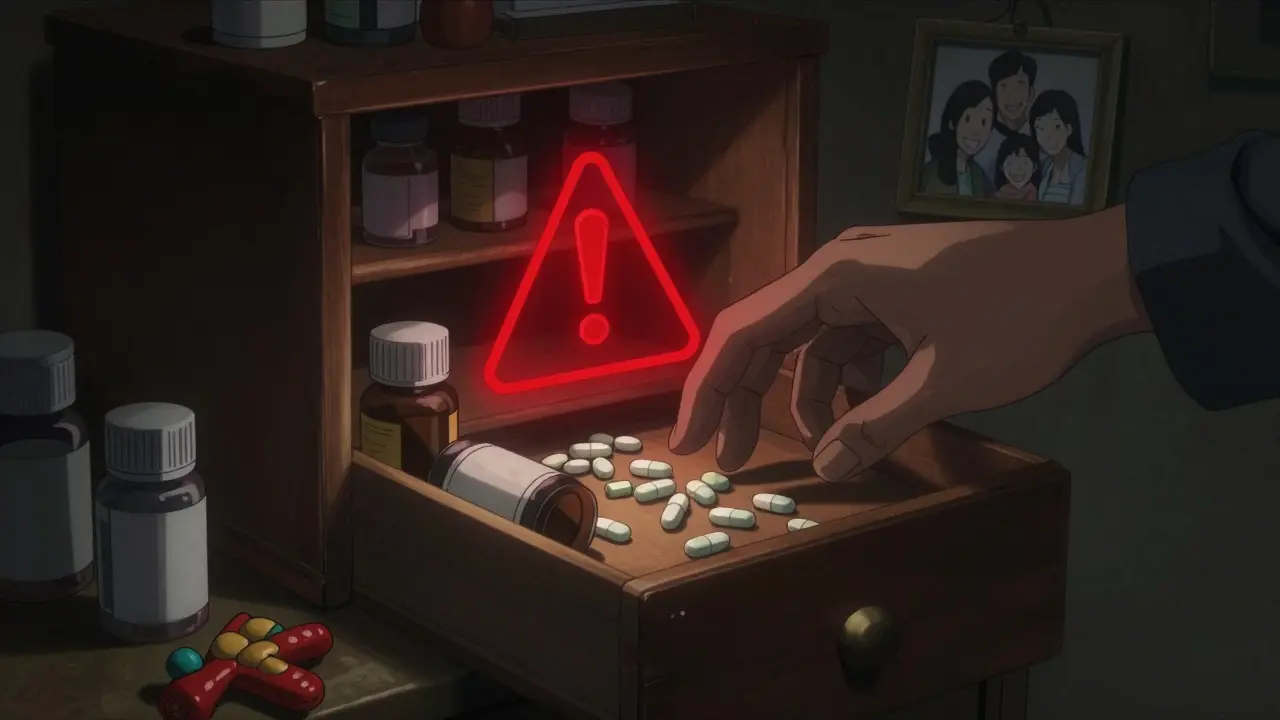
Every year, thousands of opioid pills sit untouched in medicine cabinets across the UK and beyond - pills that could end up in the hands of teens, relatives, or strangers. These unused medications aren’t just clutter. They’re a silent threat. In 2021, over 107,000 people in the U.S. died from drug overdoses, and nearly 70% of those opioids came from someone’s own home - a friend’s leftover painkillers, a parent’s old prescription, or a child who found them by accident. The good news? You can stop this before it starts. Properly disposing of unused opioids isn’t complicated, and it’s one of the most effective ways to protect your family and community.
Why Disposing of Opioids Matters
| Source | Percentage of Misused Opioids | Risk |
|---|---|---|
| Friends or family medicine cabinets | 70% | Easy access for teens, visitors, or pets |
| Thrown in trash (unsecured) | 25% | Can be dug up and used |
| Flushed improperly | 15% | Contaminates water supply |
| Stored long-term | 59.7% | Accidental overdose in elderly or children |
Most people don’t realize that keeping unused opioids at home is like leaving a loaded gun in the drawer. The risk isn’t just about addiction - it’s about accidental overdose. Children, older adults, and even pets have died after finding pills they didn’t understand. And for someone struggling with substance use, an unused pill can be the first step toward dependence. The CDC calls safe disposal a Tier 1 prevention strategy - meaning it’s one of the most powerful tools we have to stop overdoses before they happen.
Four Safe Ways to Dispose of Unused Opioids
There are four proven methods to get rid of opioids safely. Not all are equally accessible, but one will work for you.
1. Use a Drug Take-Back Program
This is the gold standard. Take-back programs collect unused medications and destroy them in high-temperature incinerators - completely eliminating any chance of misuse. In the U.S., there are over 16,900 official collection sites: pharmacies, hospitals, police stations, and even some fire departments. You don’t need to be a patient there - anyone can drop off unused pills, patches, or liquids. No questions asked.
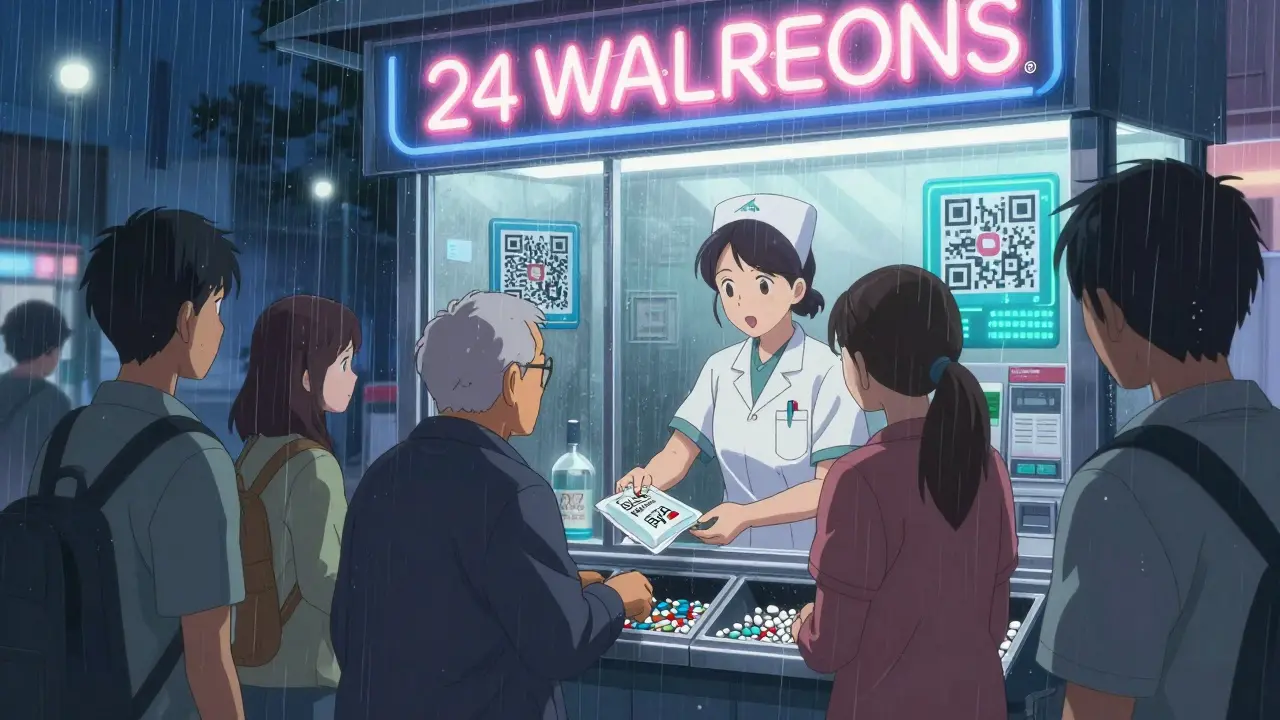
Walmart and Walgreens alone have over 13,000 kiosks where you can drop off opioids 24/7. Just remove the pills from their original bottle (you can keep the bottle for recycling), put them in a sealed plastic bag, and toss them in the bin. Your name and prescription info stay private.
If you’re not sure where to go, use the DEA’s online locator tool. Type in your ZIP code, and it shows you the nearest drop-off point - usually within 10 miles in cities, sometimes farther in rural areas. In 2022, over 2.3 million people used this tool.
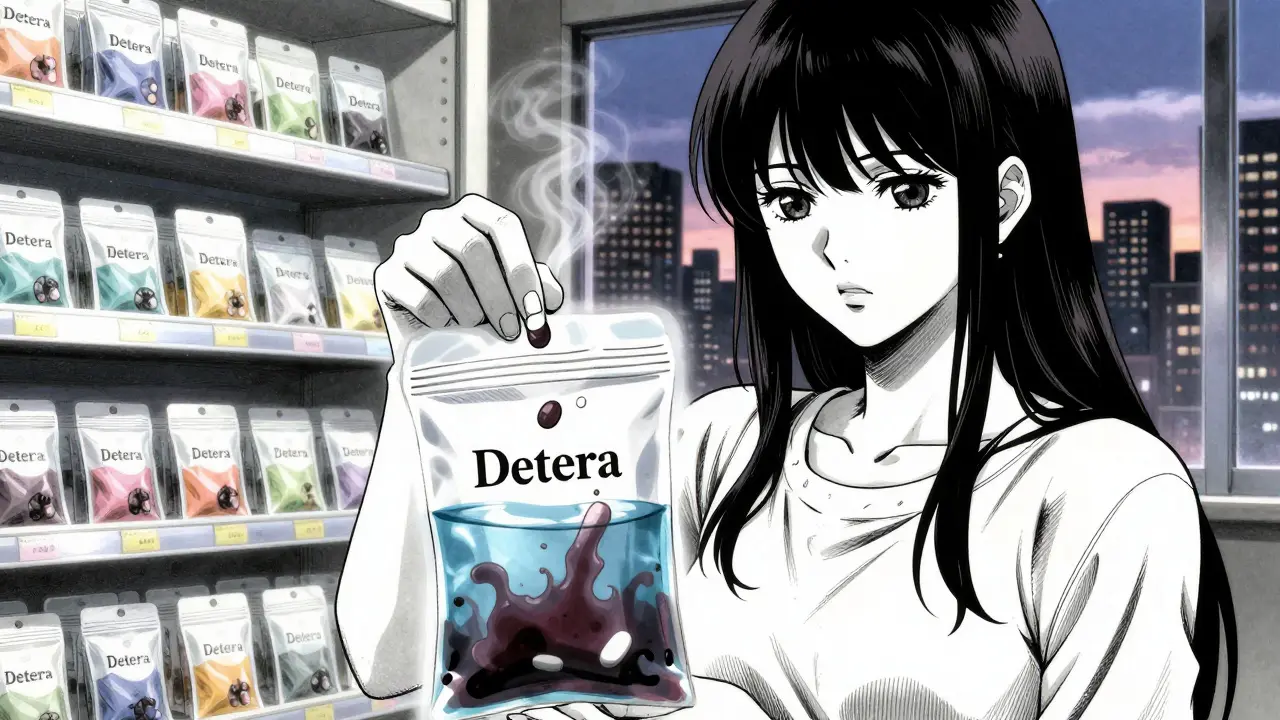
2. Use a Deactivation Pouch (Like Deterra or SUDS)
These are small, biodegradable pouches you can buy at pharmacies. They contain activated carbon and special chemicals that destroy opioids within 30 minutes. Here’s how to use them:
- Place unused pills or patches into the pouch.
- Add warm water (not hot, not cold) up to the fill line.
- Seal the pouch and shake it for 10 seconds.
- Throw the pouch in the regular trash.
Lab tests show these pouches deactivate 99.9% of opioids. They’re especially useful if you live far from a take-back site or need to dispose of medication right after surgery. A single pouch costs between $2.50 and $5.00 - cheaper than a coffee. Many pharmacies now stock them next to pain relievers. If you don’t see them, ask the pharmacist. They’re often kept behind the counter.
3. Household Disposal (When Nothing Else Is Available)
If you can’t get to a take-back site and don’t have a pouch, this method works - but only if you do it right. The FDA recommends mixing opioids with something unappetizing and sealing them tightly.
- Take out the pills or patches.
- Crush them (if solid) or leave patches whole.
- Mix them with ½ cup of used coffee grounds, cat litter, or dirt.
- Put the mixture in a sealed plastic container - like an old yogurt tub or a ziplock bag.
- Cover or scratch out your name and prescription info on the bottle with a permanent marker.
- Throw the container in the trash.
This method reduces the chance of someone using the pills by 82%. But here’s the catch: if you skip any step - like not crushing the pills or using a flimsy bag - the risk stays high. Don’t use paper towels or empty cereal boxes. They’re too easy to rip open.
4. Flush Only If It’s on the FDA’s List
Flushing is usually a bad idea - it pollutes water supplies. But for a few high-risk opioids, the FDA says flushing is safer than leaving them in the house. Why? Because these drugs can kill someone with just one pill.
Only flush these if no other option exists:
- Fentanyl patches
- Oxycodone (OxyContin, Percocet)
- Morphine sulfate
- Hydromorphone (Dilaudid)
- Tapentadol (Nucynta)
- Other opioids on the FDA’s official flush list
That’s only about 12% of all prescribed opioids. If your medication isn’t on the list, don’t flush it. Ever. The EPA has found traces of pharmaceuticals in 80% of U.S. rivers and lakes. But for these high-risk drugs, the risk of accidental overdose outweighs the environmental concern.
What Not to Do
Don’t be tempted by shortcuts. Here are the most common mistakes:
- Don’t throw pills in the trash without mixing them. Someone can dig through your bin.
- Don’t flush non-listed opioids. It harms wildlife and drinking water.
- Don’t try to deactivate pills in their original bottle. The bottle isn’t designed to neutralize drugs - and it’s still childproof, so someone might open it.
- Don’t give them to someone else. Even if they’re in pain, sharing prescriptions is illegal and dangerous.
- Don’t wait. The longer they sit, the higher the risk.
What If You’re a Caregiver or Doctor?
If you’re giving opioids to someone else - a parent, a child, a patient - your role is critical. Studies show that patients who get clear disposal instructions are 3.8 times more likely to dispose of their meds safely. So:
- Always include disposal instructions when writing a prescription.
- Give a printed guide or show a video on your phone.
- Offer a deactivation pouch at discharge - many hospitals now do this for free.
- Ask: “Do you know what to do with the leftover pills?”
One hospital in Texas saw disposal rates jump from 22% to 67% just by adding a simple instruction sheet to discharge paperwork. That’s 45 more people per 100 who won’t risk overdose.
How to Talk to Family About This
It’s awkward to say, “Hey, let’s go through your medicine cabinet.” But you’re not being nosy - you’re being protective.
Try this:
- “I read that most overdoses happen from pills people already have at home. I want to make sure we’re safe.”
- “Let’s check your cabinet together. I’ll help you dispose of anything old.”
- “We can drop these off at the pharmacy - it’s free and anonymous.”
Don’t shame. Don’t lecture. Just offer help. Many people feel guilty keeping unused pills - they just didn’t know what to do.
What’s Changing in 2026?
Things are getting better. In 2022, the U.S. government allocated $50 million to expand take-back access - especially in rural areas. By 2025, hospitals will be required to report how well they’re helping patients dispose of opioids. New digital systems are being tested - like QR codes on disposal pouches that track usage without names - and early results show disposal rates rising by 45% in pilot areas.
States like Wyoming and California are now giving away free deactivation pouches to anyone who asks. And in Bristol, where I live, the local pharmacy chain has started offering monthly take-back events - no appointment needed.
Final Thought: One Action Can Save a Life
You don’t need to be a doctor, a policymaker, or a hero to make a difference. You just need to act. Take five minutes. Check your cabinet. Find the unused opioids. Use one of these four methods. Don’t wait for someone else to do it.
That one pill you throw away today could be the one that stops a teenager from trying it, a grandparent from accidentally overdosing, or a friend from slipping into addiction. Safe disposal isn’t just a chore - it’s a quiet act of care. And it works.
Can I flush any opioid if I don’t have a take-back option?
No. Only 15 specific opioids are approved for flushing by the FDA - including fentanyl patches, oxycodone, and morphine sulfate. Flushing others pollutes water and is not safe. If your medication isn’t on the official FDA flush list, use a take-back program, deactivation pouch, or household disposal method instead.
Do I need to remove pills from their original bottle?
Yes. Always remove pills from their prescription bottle before disposal. The bottle can be recycled, but the pills must be mixed with coffee grounds, cat litter, or placed in a deactivation pouch. Leaving pills in the bottle makes them easier to find and use - even if the label is scratched off.
Are deactivation pouches really effective?
Yes. Independent lab tests show that pouches like Deterra deactivate 99.9% of opioids within 30 minutes. They’re more effective than household disposal and just as safe as take-back programs. They’re also easier to use - no mixing, no waiting, just add water and toss.
What if I live in a rural area with no take-back sites nearby?
You’re not alone. About 14 million Americans live more than 50 miles from a disposal site. In these cases, deactivation pouches are your best option. They’re sold at major pharmacies like CVS, Walgreens, and Walmart. If you can’t find them, call your pharmacy - they can order them for you. Household disposal works too, as long as you follow the steps exactly.
Is it illegal to keep unused opioids?
It’s not illegal to keep them, but it’s strongly discouraged. The DEA and CDC consider it a public health risk. Many states now require doctors to give disposal instructions with every opioid prescription. While you won’t be arrested for keeping them, you’re increasing the chance someone else - a child, a guest, a neighbor - could be harmed.
Can I donate unused opioids to someone else?
No. It’s illegal and dangerous to give or sell prescription opioids to anyone else, even if they’re in pain. Medications are prescribed for specific people based on their weight, medical history, and other factors. What helps one person could kill another. Always dispose of unused opioids properly instead.
Author

Jenna Allison
January 25, 2026 AT 03:10Just saw this and had to share - I’m a pharmacist in rural Ohio, and we’ve been handing out Deterra pouches for free since last year. The drop-off rate at our take-back kiosk jumped 60% after we started pairing the pouches with the prescription. People don’t know what to do - but when you hand them a simple solution, they take it. No drama, no judgment. Just safety.
siva lingam
January 26, 2026 AT 13:03lol so now we’re supposed to carry little magic bags in our pockets like fairy dust? next they’ll make us sign a waiver before sneezing.
Alexandra Enns
January 28, 2026 AT 04:12Oh please. You people act like this is some revolutionary public health breakthrough. We’ve had take-back programs since the 90s and zero change. It’s not about disposal - it’s about stopping the damn prescriptions in the first place. Stop giving people pills like candy and then act surprised when they don’t throw them away. This whole post is a distraction. The real problem is Big Pharma and lazy doctors. Fix that. Not the trash.
Marie-Pier D.
January 28, 2026 AT 22:32Thank you for writing this ❤️ I just cleared out my mom’s cabinet last week - found three bottles of oxycodone from her knee surgery in 2019. She didn’t even remember they were there. We used a Deterra pouch. So simple. So important. If you’re reading this and have old meds? Don’t wait. Just do it. You’re not being nosy - you’re being love.
Marlon Mentolaroc
January 30, 2026 AT 04:42Look, I get the sentiment, but let’s be real - 70% of misuse comes from family? That’s not a disposal problem. That’s a trust problem. If your kid is stealing from your cabinet, you’ve got bigger issues than pill bottles. Maybe don’t keep opioids around if you’ve got a 16-year-old with a history of sneaking into your meds. Or maybe, just maybe, parent better.
Gina Beard
February 1, 2026 AT 03:57Disposal is performative. The real crisis is systemic. The pills exist because pain was commodified. The pouches exist because capitalism needed a Band-Aid. We are not fixing the wound. We are polishing the cast.
Don Foster
February 1, 2026 AT 09:19Why are we even talking about this like it’s a new idea? The DEA’s been pushing take-backs since 2010. People just don’t care. You think a pouch is gonna stop a junkie? Nah. They’ll dig through your trash. They’ll steal from the elderly. You can’t legislate morality. You can’t pouch your way out of human decay.
Phil Maxwell
February 2, 2026 AT 08:32My dad passed last year. We found 11 unused fentanyl patches in his drawer. We flushed them. I know it’s not ideal, but I didn’t know what else to do. This post made me feel less alone. Thanks for saying what needed to be said.
Shelby Marcel
February 4, 2026 AT 00:34wait so i can just mix em with coffee grounds?? like… the stuff i drink?? that seems kinda messed up but also kinda genius??
Patrick Gornik
February 5, 2026 AT 00:18Here’s the uncomfortable truth: we’ve turned medicine into a ritual of control. We dispense opioids like sacraments and then act shocked when people treat them like relics. Disposal programs are the church’s attempt to absolve us of guilt without confronting the sin - prescribing painkillers like they’re candy at a Halloween party. The real sin isn’t keeping the pills. It’s giving them out in the first place. And until we stop worshipping at the altar of chemical numbness, no pouch, no kiosk, no flush will matter. We are not saving lives. We are just rearranging the deck chairs on the Titanic.
Tommy Sandri
February 5, 2026 AT 08:30While the initiative is commendable, the cultural context of pharmaceutical disposal varies significantly across jurisdictions. In many developing nations, the infrastructure for take-back programs remains underdeveloped. A one-size-fits-all approach, while well-intentioned, may inadvertently marginalize populations lacking access to centralized disposal mechanisms. A more equitable framework requires localized adaptation and resource allocation.
Luke Davidson
February 6, 2026 AT 23:35My cousin OD’d on a leftover Vicodin from her grandma’s cabinet. She was 19. I didn’t know until it was too late. This post? It’s not just info. It’s a lifeline. I’m going to my mom’s house this weekend and cleaning out her cabinet. No excuses. If one person reads this and does the same - that’s enough.
asa MNG
February 8, 2026 AT 10:45so like… i just threw my ex’s leftover painkillers in the toilet after we broke up 😈 i mean… why not?? he was a jerk anyway and now his meds are floating in the ocean 🌊💀
Juan Reibelo
February 9, 2026 AT 06:46I live in a small town in Alberta - no take-back site within 80 miles. I called my pharmacy, asked for a Deterra pouch, and they mailed me one for free. No questions. No charge. Just kindness. If you think you’re too far away - you’re not. Just ask. Someone will help.
Luke Davidson
February 10, 2026 AT 02:58Just read your comment about flushing fentanyl patches. That’s the one thing I didn’t know. I’ve been holding onto mine because I thought flushing was always bad. Thank you for clarifying. I’m going to do it tonight. This is the kind of info that saves lives - not just the advice, but the specificity.