
You might think you're safe just because a doctor wrote the prescription, but mistakes happen. In the US alone, adverse drug events lead to about 1.3 million emergency room visits every year. Whether it's a clash between two prescriptions, a hidden ingredient in an over-the-counter cough syrup, or a herbal supplement that cancels out your blood pressure meds, the risks are real. For the millions of people managing drug interaction checkers and multiple prescriptions, knowing how to spot these red flags at home can be a lifesaver.
What Exactly Are Drug Interaction Checkers?
Think of a drug interaction checker as a digital safety net. It is a Drug Interaction Checker is a digital tool that compares a list of medications, supplements, and foods against a massive database of known chemical reactions to identify potential adverse effects. These tools aren't just guessing; they rely on clinical pharmacology databases that track tens of thousands of substances. For example, some top-tier checkers monitor over 24,000 prescription drugs and 3,000 herbal supplements to see if they'll fight each other in your system.
Interactions aren't always just "pill vs. pill." They usually fall into three buckets: drug-drug (the most common), drug-food (like grapefruit juice messing with statins), and drug-condition (where a medicine for your skin might actually make your diabetes worse). Most tools will flag these as major, moderate, or minor, giving you a quick sense of whether you need to call your doctor immediately or just keep an eye on a few side effects.
The Best Tools to Use at Home
Not all checkers are created equal. Depending on whether you want a simple "yes/no" or a deep dive into the chemistry, you'll want different tools. While most identify about 95% of critical interactions, some are better at spotting the subtle "moderate" ones.
| Tool | Best For | Key Strength | Main Drawback |
|---|---|---|---|
| Drugs.com | Detailed Research | Largest database (24k+ drugs) | Technical language |
| WebMD | Quick Checks | Easy-to-read visual alerts | Higher false-positive rate |
| Medscape | Medical Pros | Advanced filtering | Steep learning curve |
| Medisafe | Daily Management | App-based tracking & reminders | Less depth than web tools |
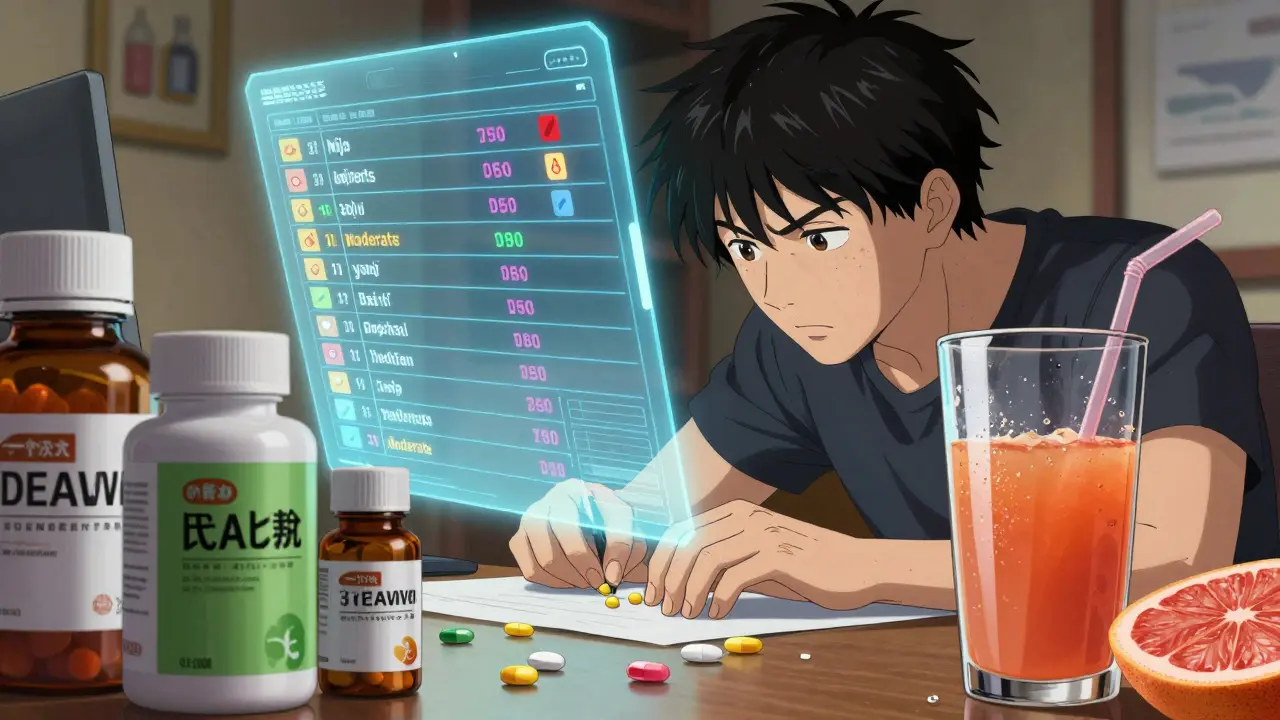
How to Check Your Meds: A 4-Step Process
Checking your meds shouldn't be a guessing game. To get the most accurate results and avoid "false alarms," follow this workflow:
- Build a Master List: Don't just list your prescriptions. Include every vitamin, herbal tea, and over-the-counter (OTC) pill you take. Many people forget that St. John's Wort or a daily multivitamin can interact with heavy-duty meds. Note the exact dose and how often you take them.
- Input Everything: Enter your list into your chosen checker. If you're using a mobile app like Medisafe, you can often scan barcodes to ensure you're getting the exact generic or brand-name version.
- Analyze the Results: Look at the severity. A "Major" alert usually means the combination is dangerous and needs a professional's eye. A "Moderate" alert might just mean you need to adjust the timing of your doses. Spend a few minutes reading the specific reason for the flag.
- The Final Verification: This is the most important step. Never stop a prescribed medication based solely on a website. Use the report as a talking point. Tell your pharmacist, "I saw a moderate interaction between my Lisinopril and this supplement; is that a concern for me?"
The Risks of "Going Solo" With Digital Tools
While these tools are great, they aren't perfect. There is a known issue with false positives-some tools flag interactions that rarely happen in real people. Even worse is the risk of "over-caution." About 15% of patients have stopped taking essential meds because a checker gave them a scary alert, even when the benefit of the drug outweighed the risk.
Furthermore, digital tools can't see your whole medical history. They don't know your kidney function, your weight, or your genetic makeup. For people dealing with polypharmacy-taking five or more medications-the chemistry gets too complex for a basic algorithm. In these cases, a pharmacist's expertise is non-negotiable. According to research in the Journal of the American Pharmacists Association, combining digital checks with professional consultation can slash interaction-related hospitalizations by 42%.
Pro Tips for Maximum Safety
If you're managing a complex health routine, a few habits can significantly lower your risk of a bad reaction:
- Stick to One Pharmacy: Using a single pharmacy for all your prescriptions reduces interaction risks by about 31%. The pharmacist's software automatically flags clashes across your entire history.
- Update Every 30 Days: Your body changes, and so do your prescriptions. Refresh your list monthly or whenever a doctor changes a dose.
- Learn the Generics: Some checkers work better with generic names (like Acetaminophen) than brand names (like Tylenol). Check your bottle for the active ingredient.
- Watch for Symptoms: No tool is 100% foolproof. If you start a new med and suddenly feel dizzy, nauseous, or unusually tired, document it and call your provider immediately.
Are online drug interaction checkers accurate?
They are highly accurate for identifying known interactions in a database, catching about 70-80% of potentially dangerous combinations. However, they can produce false positives (flagging things that aren't actually dangerous) and may miss rare or brand-new interactions. They should be used as a screening tool, not a final diagnosis.
What should I do if a checker says there is a "Major" interaction?
Do not stop taking your medication immediately, as some abrupt withdrawals can be dangerous. Instead, contact your doctor or pharmacist right away. Provide them with the name of the interacting drugs and the specific warning you found online so they can decide if a dose adjustment or a different medication is necessary.
Do herbal supplements and vitamins count as drugs?
Yes, absolutely. Many supplements contain active chemical compounds that can either block a medication's effect or make it dangerously strong. For example, St. John's Wort can interfere with antidepressants and birth control. Always enter every supplement into your interaction checker.
Can food or drinks cause drug interactions?
Yes. Roughly 27% of interactions are drug-food or drug-drink related. Common examples include grapefruit juice interfering with certain cholesterol meds or alcohol reacting poorly with sedatives. Many high-quality checkers allow you to input dietary habits to flag these risks.
What is polypharmacy and why is it risky?
Polypharmacy is the simultaneous use of multiple medications by a single patient, usually five or more. It is risky because the more drugs you take, the higher the mathematical probability of an interaction. It also increases the chance of "prescribing cascades," where a new drug is prescribed specifically to treat a side effect of another drug.
Author
