

Gene Therapy Interaction Risk Analyzer
Step 1: Select Vector Type
Step 2: Patient Medication Profile
Imagine a treatment that fixes the root cause of your disease by rewriting your DNA. That is the promise of gene therapy, a medical breakthrough that moves beyond treating symptoms to correcting genetic errors. But this power comes with a hidden complexity. Unlike traditional pills or injections, gene therapies interact with your body in ways we are only beginning to understand. When you combine these powerful treatments with other medications, the results can be unpredictable, dangerous, or even life-threatening.
The stakes are incredibly high. We are not just talking about a headache or an upset stomach. We are talking about systemic immune reactions, altered drug metabolism, and long-term risks that might not show up for years. If you are considering gene therapy, or if you care for someone who is, understanding these unique safety challenges is not optional-it is essential.
The Historical Context: Lessons from Tragedy
To understand why gene therapy requires such strict safety protocols, we have to look back at where things went wrong. The field has evolved significantly since the early 1990s, but it was shaped by heartbreaking failures that taught us hard lessons about biological unpredictability.
In 1999, an 18-year-old patient named Jesse Gelsinger died four days after receiving gene therapy for ornithine transcarbamylase (OTC) deficiency. He was part of a clinical trial using a recombinant adenoviral vector to deliver a healthy OTC gene to his liver. The virus triggered a massive, exaggerated immune response that led to multiple organ failure. This wasn't an isolated incident; preclinical studies had already shown that two out of six rhesus monkeys treated with the same therapy suffered fatal liver necrosis. This case proved that viral vectors, while effective delivery tools, carry inherent immunogenicity risks that can escalate unpredictably based on individual patient factors.
Between 1999 and 2002, trials for severe combined immunodeficiency (SCID) using gamma-retroviral vectors resulted in leukemia developing in five patients, with one death. The therapeutic gene had inserted itself into the LMO2 proto-oncogene locus, triggering cancer. These events revealed that some vector systems have a higher frequency of insertional mutagenesis-essentially, they can accidentally break healthy genes while trying to fix broken ones. These tragedies forced a complete reevaluation of informed consent and safety parameters in human gene therapy experimentation.
Why Gene Therapy Interacts Differently with Drugs
Traditional drugs work by interacting with proteins or receptors on the surface of cells. They are metabolized, cleared from the body, and their effects wear off. Gene therapy is fundamentally different. It introduces new genetic material into your cells, instructing them to produce specific proteins continuously. This creates a permanent or long-acting change in your biology, which alters how your body processes other medications.
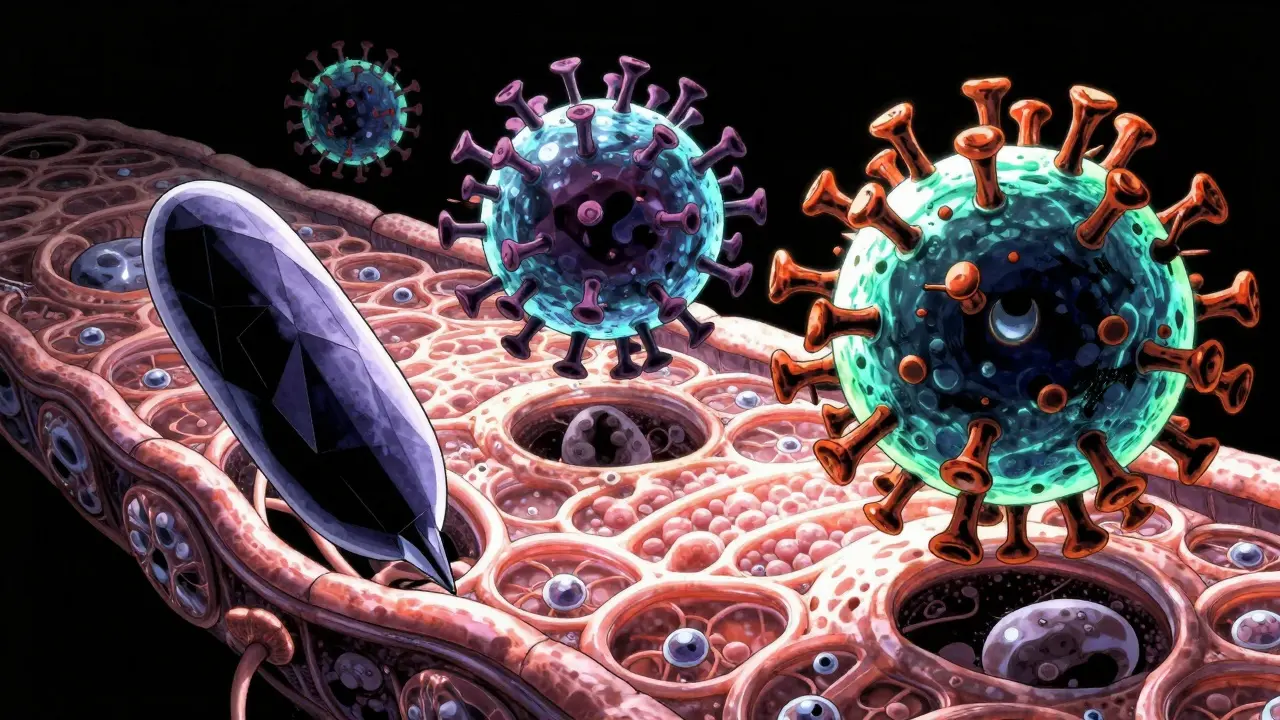
The primary mechanism for delivering this genetic material is through viral vectors, modified viruses engineered to carry therapeutic genes without causing infection. The most common types include adeno-associated viruses (AAV), lentiviruses, and adenoviruses. Each has distinct properties that influence drug interaction risks.
| Vector Type | Integration Risk | Immune Response | Primary Use Case |
|---|---|---|---|
| Adeno-associated virus (AAV) | Low (mostly episomal) | Moderate to High | Non-dividing cells (e.g., muscle, eye) |
| Lentivirus | High (integrates into genome) | Low (in vivo) | Dividing cells (e.g., blood stem cells) |
| Adenovirus | Very Low | Very High | Vaccines, transient expression |
The key issue is that these vectors must retain enough viral properties to enter cells effectively, but they must also be safe. Your immune system may still recognize them as pathogens, triggering inflammation that affects how other drugs are absorbed and metabolized.
The Immune System and Drug Metabolism
One of the most significant drug interaction pathways involves the immune system. When viral vectors enter the body, they trigger innate immune responses involving toll-like receptors, inflammatory cytokine production, and complement activation. This isn't just a local reaction; it can become systemic.
Systemic inflammation directly impacts the cytochrome P450 (CYP450) enzymes in your liver. These enzymes are responsible for metabolizing a substantial portion of all pharmaceutical drugs. When your body is fighting off a perceived viral threat from a gene therapy vector, it can either induce or suppress these CYP450 enzymes. This means that the levels of other medications in your blood can become wildly unpredictable. A dose of painkiller, blood thinner, or antidepressant that was previously safe could suddenly become toxic or ineffective.
For example, if a patient is taking warfarin (a blood thinner) and undergoes gene therapy that triggers a strong inflammatory response, the suppression of CYP450 enzymes could cause warfarin levels to spike, leading to dangerous bleeding. Conversely, induction of these enzymes could render the drug useless, increasing clotting risk. Because the magnitude and duration of immune activation vary substantially between patients, predicting these interactions is extremely difficult.
Off-Target Effects and Ectopic Tissue
Another unique challenge is the possibility of off-target effects. Ideally, a gene therapy vector targets only the diseased cells. In reality, it can affect multiple cell types beyond the intended targets. If a vector modifies cells in the liver or kidneys-organs critical for drug metabolism-it can alter the entire pharmacokinetic profile of co-administered drugs.
In cell therapies involving transplanted cells, there is a risk that transplanted cells could transform or migrate to unintended locations. This could create ectopic tissue with altered drug metabolism properties. Imagine a scenario where gene-modified cells migrate to the brain and begin producing a protein that interacts with neurological medications. These scenarios create fundamentally novel drug interaction profiles that are not yet fully characterized in clinical populations.
Long-Term Monitoring and Regulatory Requirements
Because gene therapy products can introduce permanent changes, the window for adverse events is extended. Standard drug trials typically monitor patients for 30 days post-administration. For gene therapy, this is insufficient. The FDA has established mandatory long-term follow-up requirements. For vectors with integrating properties or latency characteristics, sponsors must conduct 15-year patient monitoring to identify late safety complications.
This requirement applies especially to non-dividing cell targets, which may not manifest problems until years after treatment. If the transgene encodes a growth factor or transcription factor capable of altering cell cycling, patients face a predisposition to cancer that requires long-term observation rather than acute monitoring. This means that drug interactions could emerge decades after the initial treatment, making historical data collection and longitudinal studies critical.

Transmission Risks and Uncontrolled Exposure
A unique safety challenge extending beyond the treated patient is the potential for viral vector transmission. For gene therapies employing transmissible viral vectors, the FDA requires sponsors to generate data confirming no transmission of gene medicine from study subjects to close contacts or household members. Should transmission occur, inadvertent gene therapy administration to family members or healthcare providers would create uncontrolled drug exposure without informed consent or clinical monitoring. This is a safety scenario without parallel in traditional pharmacology, raising ethical and practical concerns about community health.
Navigating Clinical Trials and Concomitant Medications
If you are participating in a gene therapy clinical trial, standardization is critical. Controlled protocols must carefully monitor for unexpected interactions when gene therapy is administered alongside other medications. The complexity increases because genetic variation between patients influences both gene therapy efficacy and drug response profiles. Genetic variability and diversity must be considered in predicting interaction patterns.
Currently, the field lacks comprehensive pharmacokinetic and pharmacodynamic characterization of how gene therapy products alter drug metabolism in real patient populations. Future developments will likely require multi-institutional longitudinal studies examining drug interaction patterns across diverse genetic backgrounds. Until then, patients and providers must proceed with extreme caution, maintaining open communication about all medications being taken.
Can gene therapy make my current medications ineffective?
Yes. Gene therapy can trigger immune responses that alter the activity of liver enzymes (CYP450) responsible for metabolizing drugs. This can cause drug levels to rise to toxic levels or drop below therapeutic thresholds, rendering medications ineffective or dangerous.
How long do I need to be monitored after receiving gene therapy?
For many gene therapies, particularly those using integrating vectors like lentiviruses, the FDA requires up to 15 years of follow-up monitoring. This is to detect late-onset adverse events, including cancer or delayed drug interactions, that may not appear immediately.
What are the biggest risks associated with viral vectors?
The primary risks include severe immune reactions (cytokine storms), insertional mutagenesis (where the vector disrupts a healthy gene, potentially causing cancer), and off-target effects that alter how your body processes other drugs.
Is it safe to take over-the-counter drugs during gene therapy?
You should always consult your healthcare provider before taking any new medication, including over-the-counter drugs, during gene therapy treatment. Even common drugs like ibuprofen or acetaminophen can interact with the immune response triggered by the therapy.
Can gene therapy be transmitted to others?
While rare, there is a theoretical risk of transmission for certain transmissible viral vectors. Regulatory agencies require rigorous testing to ensure that gene therapy does not spread to close contacts or healthcare workers, preventing uncontrolled exposure.
Author

Elizabeth Holden
May 4, 2026 AT 03:57you people really think this is safe?? the history of gene therapy is littered with dead kids and cancer cases. jesse gelsinger died because they rushed it. now they are just trying to make money off your dna. do not trust the big pharma lies. they know exactly what they are doing to you but they dont care about the side effects. its all about profit margins for them. stop letting them experiment on humans like lab rats. we need stricter regulations or no trials at all. this is reckless endangerment disguised as science.
Jenny X
May 6, 2026 AT 03:08the vector integration protocols are clearly designed to bypass standard immunological surveillance mechanisms, suggesting a deliberate attempt to induce chronic inflammatory states that would otherwise be detected by routine hematological panels. the suppression of CYP450 enzymes is not an accidental byproduct but rather a calculated pharmacokinetic manipulation intended to create dependency on proprietary antidotes. consider the implications of ectopic tissue formation in relation to neurodegenerative pathways; the data suggests a correlation between AAV serotypes and accelerated neuronal apoptosis that is being systematically omitted from public disclosures. we must question the integrity of the regulatory bodies overseeing these trials, given their historical complicity in covering up adverse events during the early SCID trials. the lack of transparency regarding long-term genomic stability is indicative of a broader conspiracy to monopolize genetic healthcare infrastructure.
bharat films
May 6, 2026 AT 09:11lol this article is so basic 😂 everyone knows gene therapy is risky but nobody talks about the real danger which is the immune system going haywire 🤯 i mean sure they say its safe but have you seen what happens when your body thinks its fighting a virus while taking blood thinners? 💀 its literally a recipe for disaster. also why do they use viruses to deliver genes? isnt that kinda counterintuitive? 🤔 anyway just my two cents but i think we should wait until they figure out how to do it without killing monkeys first 🐒💉
Mikaela -anonymous 😏
May 7, 2026 AT 18:07Oh, wow! Another day, another miracle cure that supposedly fixes everything but actually breaks something else entirely!!! Isn't it just *fascinating* how every time we try to play god, the universe laughs in our face with a side of leukemia??? I suppose we should all just sit back and enjoy the show while our liver enzymes decide whether to metabolize our antidepressants or turn into toxic sludge!!! It's almost poetic, in a tragic, 'who-did-this-to-us' kind of way!!!
kelvin villa saab
May 9, 2026 AT 12:25look i am not saying this is bad but the way they explain it makes me want to throw up. its too complicated and scary. why cant they just give us a pill that works without messing with our dna? this feels like they are hiding something. the part about the monkeys dying was really disturbing. i dont trust any of this stuff. it seems like they are just guessing and hoping for the best. if they were sure it was safe they wouldnt need all these warnings. its obvious they are worried about lawsuits more than patients.
Spencer Farrell
May 9, 2026 AT 15:26It is imperative to recognize that the fundamental premise of gene therapy rests upon the precarious assumption that biological systems can be engineered with the same precision as mechanical ones. This philosophical error ignores the chaotic nature of cellular environments where stochastic events dictate outcomes far beyond our control. The insertion of foreign genetic material into the human genome is not merely a medical intervention but an existential gamble with consequences that may extend across generations. We must therefore approach these therapies with a degree of skepticism that reflects the profound uncertainty inherent in manipulating life at its most basic level. The historical precedents cited herein serve not only as cautionary tales but as testament to the hubris of believing we can fully comprehend the complexity of human biology.
Kartik Agarwal
May 10, 2026 AT 23:29Let's unpack the pharmacokinetic implications here together, shall we? The modulation of cytochrome P450 isoforms via systemic cytokine release represents a critical juncture where traditional drug metabolism paradigms intersect with novel gene therapy vectors. It is essential for stakeholders to understand that the episomal nature of AAV vectors does not preclude significant immunogenicity, which in turn can drastically alter the half-life of concomitant medications. Furthermore, the potential for insertional mutagenesis in lentiviral systems necessitates rigorous longitudinal monitoring to detect any aberrant clonal expansion. By fostering a collaborative dialogue around these risks, we can better equip clinicians and patients to navigate the complex landscape of personalized medicine.
Kelly Feehely
May 11, 2026 AT 14:26You are all naive if you think this is safe. They are experimenting on you and calling it medicine. The fact that they had to kill monkeys to test this shows how dangerous it is. Do you really want a virus rewriting your DNA? No. You want to stay healthy naturally. These companies are greedy and don't care about your health. They will sell you anything if it makes them rich. Don't fall for it. Wake up and realize that this is just another scam to keep you dependent on their treatments. Your body knows how to heal itself without this garbage.
princess lovearies
May 13, 2026 AT 13:11i get that this sounds scary but maybe we should look at the bigger picture. yes there are risks but imagine if this could cure diseases that have no other options. it is hard to balance safety with progress though. i think we need more open conversations about what we are willing to accept. lets support each other through this uncertain time and ask questions instead of spreading fear. we are all learning together.