
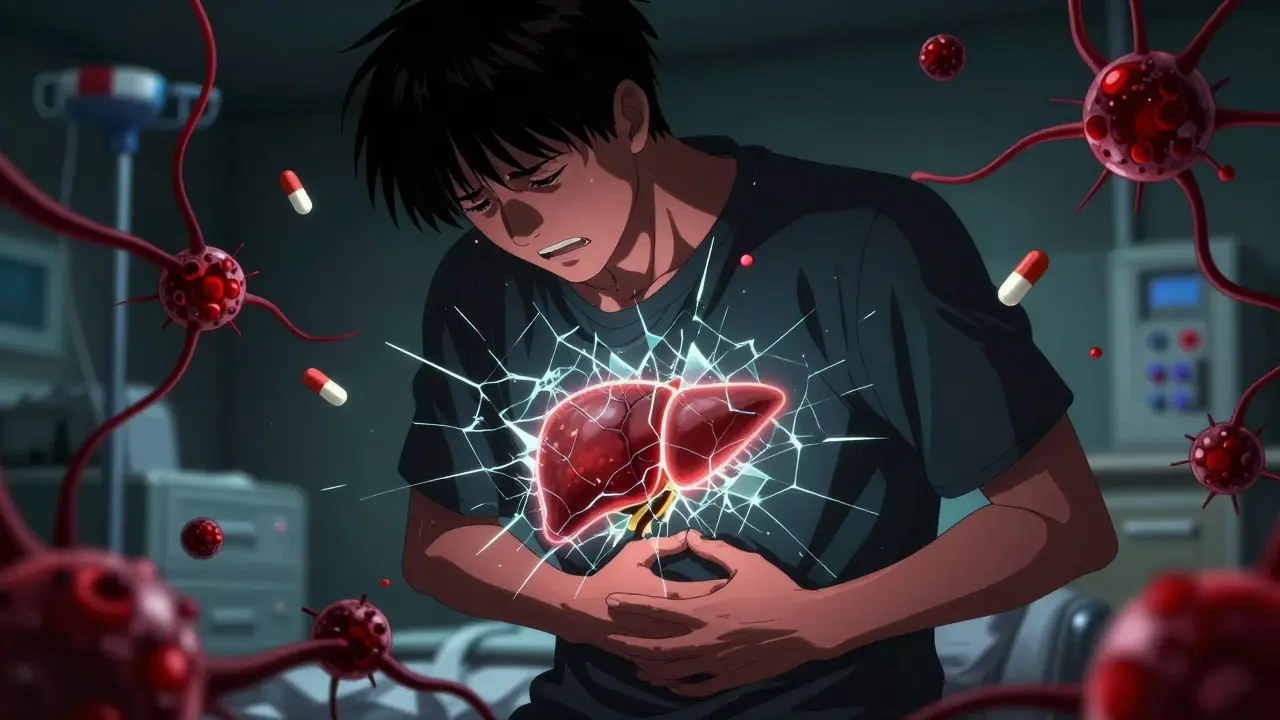
Every year, tens of thousands of people end up in emergency rooms because they took too much acetaminophen - the painkiller in Tylenol and hundreds of other medicines. Many don’t even realize they’ve overdosed until it’s too late. That’s because the first signs aren’t dramatic. No screaming. No seizures. Just a quiet, creeping damage to the liver that can kill you in days if no one catches it.
What Happens When You Take Too Much Acetaminophen?
Acetaminophen is safe when used as directed. But your liver has a limit. For most adults, that limit is 4,000 milligrams in 24 hours - about eight 500 mg pills. Go over that, and your liver starts to struggle. It breaks down the drug into a toxic byproduct called NAPQI. Normally, your body neutralizes this with a natural antioxidant called glutathione. But when you overdose, glutathione runs out. NAPQI starts attacking liver cells. Cells die. Inflammation spreads. The liver swells. And if you don’t get help, it can fail.
This isn’t rare. In the U.S., acetaminophen overdose causes more than half of all cases of sudden liver failure. It’s the #1 reason people need liver transplants because of drug poisoning. And the worst part? Most people don’t mean to overdose. They’re just taking more than they think.
The Four Stages of Acetaminophen Toxicity
The damage doesn’t happen all at once. It follows a clear, predictable pattern - four stages - that doctors use to decide what to do. Knowing these stages could save your life or someone else’s.
Stage 1: 0 to 24 hours after taking too much
You might feel fine. Or you might feel a little off. Nausea. Vomiting. Loss of appetite. These symptoms are so mild, most people brush them off as a stomach bug. About 30% to 40% of people feel nothing at all. That’s why so many delay getting help. But even if you feel okay, damage is already starting inside your liver.
Stage 2: 24 to 72 hours
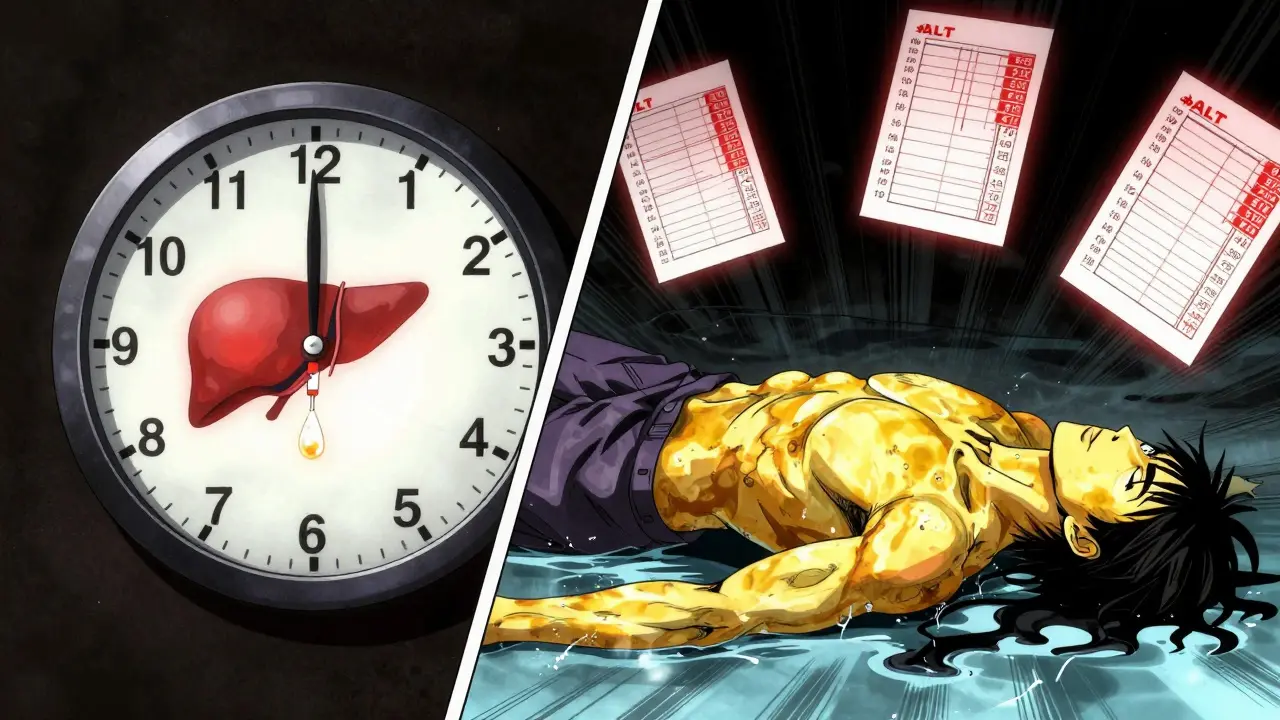
This is when the real warning signs show up. Pain in the right side of your belly - right under your ribs. That’s your liver. Nausea and vomiting come back, worse than before. Blood tests start showing trouble: liver enzymes like ALT begin to climb. Normal ALT? 7 to 56 IU/L. In overdose, it can hit 10,000 IU/L or higher. This is your body screaming. If you’re still not in the hospital, you’re playing Russian roulette.
Stage 3: 72 to 96 hours
This is the peak. The liver is failing. Your skin and eyes turn yellow - jaundice. You feel confused. Your blood doesn’t clot right - you bruise easily or bleed for no reason. Your kidneys start to shut down. Your blood gets too acidic. You might have pancreatitis. This is critical care territory. Without treatment, death is likely.
Stage 4: After 5 days
Either you recover - and most people do if treated early - or you don’t. About 85% to 90% of people who get the right treatment survive. Without it? Up to 40% die. Those who recover usually have their liver fully back to normal in three months. But 8% keep having slightly elevated liver enzymes - a quiet reminder of what happened.
Who’s at Highest Risk?
Not everyone who takes too much acetaminophen gets severe liver damage. Some people are much more vulnerable.
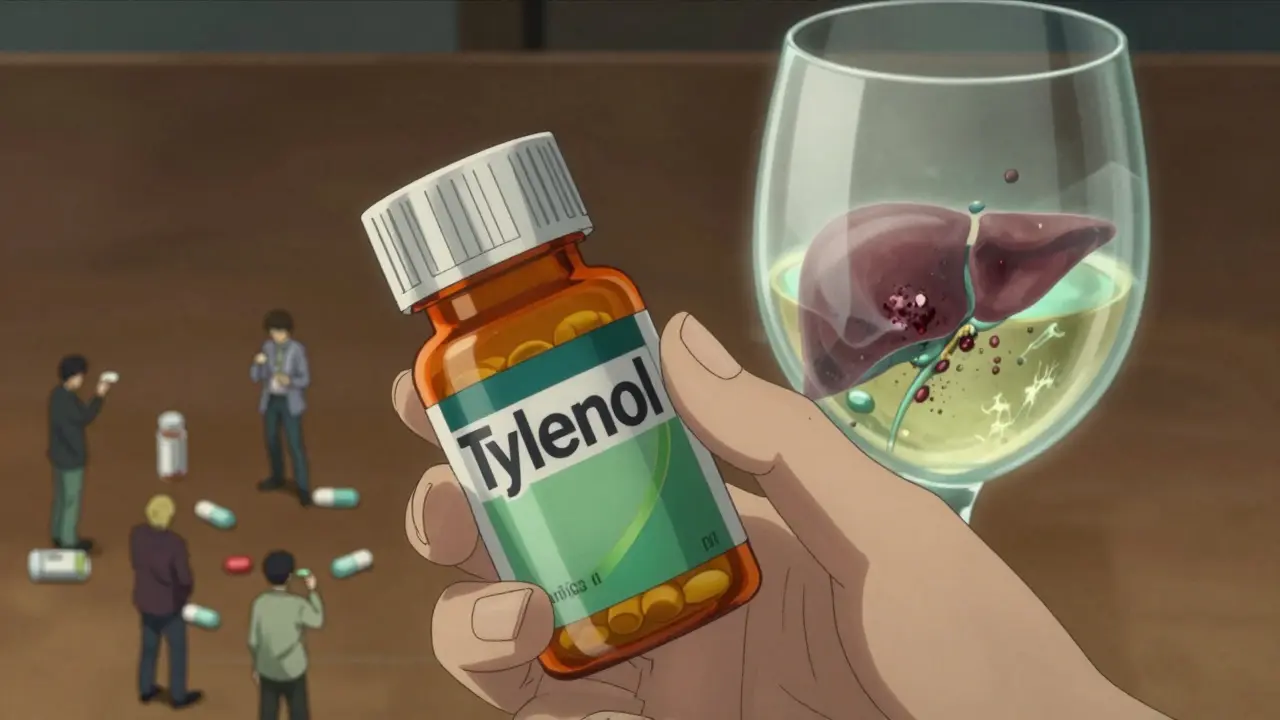
Chronic alcohol use? That triples or quadruples your risk. Alcohol burns through your liver’s glutathione supply. Even if you don’t drink every day, having a few drinks with your painkiller makes it dangerous.
Pre-existing liver disease? If you have hepatitis B or C, your liver is already weakened. Overdose hits harder - up to 65% more likely to cause serious harm.
Are you on seizure meds like carbamazepine or phenytoin? Those drugs speed up how your liver processes acetaminophen, making more toxic NAPQI faster. Your risk goes up by 40%.
Malnutrition? If you’re not eating enough protein, your body can’t make enough glutathione. That’s common in people with eating disorders, the elderly, or those on very low-calorie diets. Even a few days of poor nutrition can lower your safety margin.
And here’s the sneaky one: prescription painkillers. Many opioids like Vicodin, Percocet, and Norco contain acetaminophen - 300 to 650 mg per pill. People take one for back pain, then grab a Tylenol for a headache. Two pills here, three there. Before they know it, they’ve hit 6,000 mg in a day. A 2023 survey found 68% of users didn’t realize this. That’s why you must read every pill label - even the ones your doctor gave you.
The Only Antidote: N-Acetylcysteine (NAC)
There’s only one drug that can reverse acetaminophen poisoning: N-acetylcysteine, or NAC. It works in two ways. First, it rebuilds your glutathione. Second, it grabs NAPQI and neutralizes it before it destroys more liver cells.
But timing is everything. If you get NAC within 8 hours of overdosing, your chance of survival is over 98%. After 8 hours? It drops to 75%. After 15 hours? It’s down to 55%. Every hour you wait increases your risk of death by 8.5%.
The standard treatment is a 21-hour IV drip:
- 150 mg per kg of body weight, given over 1 hour
- 50 mg per kg over the next 4 hours
- 100 mg per kg over the final 16 hours
If you can’t get IV NAC - maybe you’re in a rural area - oral NAC is an option. But it takes 72 hours of pills, and it’s harder to keep down if you’re vomiting. It’s also less effective.
Even if you show up 24 hours after taking the overdose, NAC still helps. Studies show it can reduce liver damage and improve survival up to 48 hours after ingestion. Don’t assume it’s too late. Get to a hospital.
What Happens in the ER?
When you arrive, they’ll check your acetaminophen level. A blood test taken 4 hours after ingestion is the gold standard. They’ll plot that number on the Rumack-Matthew nomogram - a chart that tells doctors if you need NAC. If your level is above 150 µg/mL at 4 hours, you get treatment - no questions asked.
If you came in within 1 to 2 hours of taking the pills, they may give you activated charcoal. It traps the drug in your gut before it gets absorbed. But after 2 hours, it’s mostly useless.
They’ll also give you fluids. Anti-nausea meds like ondansetron. Vitamin K if your blood won’t clot. And they’ll monitor your liver enzymes, kidney function, and blood pH. If your pH drops below 7.3, your INR goes above 6.5, and your creatinine hits 3.4 mg/dL - you’ve hit the King’s College Criteria. That means you’re likely to die without a liver transplant.
About 1% to 2% of severe cases need a transplant. Those who get one? 85% survive at least five years.
What About New Treatments?
Researchers are looking for better ways to treat this. One promising area is nitric oxide. Early studies in animals show it helps the liver regenerate on its own - even after the damage is done. That could mean NAC isn’t the only option in the future. Another breakthrough is a blood test for microRNA-122. It rises within 2 hours of overdose and is 94% accurate at detecting liver injury. Right now, it’s still in trials, but it could one day let doctors know someone’s in danger before they even feel sick.
How to Prevent It
Prevention is simple - but people forget.
- Never take more than 4,000 mg of acetaminophen in 24 hours. Many experts now say 3,000 mg is safer.
- Never take more than one product with acetaminophen at a time. Check every pill label - cold meds, sleep aids, migraine pills, and prescription painkillers often have it.
- Avoid alcohol while taking acetaminophen. Even one drink increases risk.
- If you have liver disease, talk to your doctor before using it. You may need to avoid it entirely.
- Keep pills locked up if kids or teens live in your home. Accidental overdoses in children are common.
Since 2011, the FDA forced drugmakers to lower the max single dose in prescription pills from 750 mg to 500 mg. That cut acetaminophen-related liver failure by 21% in just over a decade. Education works.
What If You’re Not Sure You Overdosed?
Here’s the truth: if you took more than 7 or 8 pills in a day, or if you took any pills with acetaminophen and drank alcohol, you should get checked - even if you feel fine. Don’t wait for vomiting. Don’t wait for yellow skin. Don’t wait for pain. By then, it might be too late.
Emergency rooms treat acetaminophen overdose like a time bomb. The clock starts ticking the moment you swallow it. The sooner you get NAC, the better your chance. And NAC is safe. Even if you didn’t overdose, they’ll give it to you and you’ll walk out fine. But if you did - and you didn’t come in - you might not wake up.
Don’t be the person who thought, ‘I’ll just wait and see.’ You won’t see anything. Your liver will be gone before you feel it.
Can you survive an acetaminophen overdose without treatment?
Yes, but it’s rare and extremely risky. Without treatment, up to 40% of people with severe overdose die. With timely NAC, survival jumps to 85-90%. Many who survive without treatment suffer permanent liver damage or require transplant. Never rely on luck.
Is it safe to take acetaminophen every day for chronic pain?
For most people, taking 3,000 mg or less per day is safe for months or even years - if you don’t drink alcohol, have no liver disease, and aren’t on other liver-affecting drugs. But long-term daily use should always be supervised by a doctor. Many people unknowingly build up to dangerous levels by combining multiple products.
Do herbal supplements interact with acetaminophen?
Yes. Some herbs like kava, comfrey, and skullcap can damage the liver on their own. Others, like St. John’s wort, speed up how your liver breaks down acetaminophen - increasing toxic NAPQI production. Always tell your doctor or pharmacist about every supplement you take.
Can children overdose on acetaminophen too?
Absolutely. Children are especially vulnerable because dosing is based on weight. Giving a child an adult tablet, or giving too much liquid medicine because you misread the dropper, can cause fatal liver damage. Always use the measuring tool that comes with the medicine - never a kitchen spoon.
How long does it take for liver damage to show up on blood tests?
Liver enzymes like ALT usually start rising within 12 to 24 hours after overdose. But the most reliable marker - the acetaminophen blood level - is best measured at 4 hours. By 72 hours, liver damage is clearly visible in blood tests, often with ALT over 10,000 IU/L. Early testing is critical.
Is NAC available over the counter?
No. N-acetylcysteine is a prescription medication in the U.S. and U.K. It’s not sold in pharmacies as a pill you can buy for home use. If you suspect an overdose, call emergency services immediately. Do not try to treat it yourself.
If you or someone you know has taken too much acetaminophen, don’t wait. Don’t hope it’ll pass. Call emergency services or go to the nearest ER. The difference between life and death is often just a few hours.
Author

Tim Goodfellow
December 20, 2025 AT 05:07Man, this is one of those posts that makes you wanna hug your liver. I never realized how sneaky acetaminophen is - it’s like the quiet assassin of painkillers. I used to toss a Tylenol with my whiskey like it was candy. Now I keep a little note on my fridge: ‘No booze + no Tylenol = still alive.’ Thanks for the wake-up call.
Adrienne Dagg
December 21, 2025 AT 01:03OMG I just checked my medicine cabinet and found 4 different things with acetaminophen 😱 I thought I was being smart taking ‘different’ meds for my headache, back pain, and cold… turns out I was just slowly cooking my liver. 🤯 I’m throwing all of them out. #NACislife
Gloria Parraz
December 21, 2025 AT 09:51This is the kind of information that should be mandatory in high school health class. I’ve seen too many people dismiss ‘just one extra pill’ - until it’s too late. You did an incredible job breaking this down. Seriously, if you’re reading this and you’ve ever taken Tylenol with alcohol, please go get a blood test. Your future self will thank you.
Ryan van Leent
December 22, 2025 AT 21:29Connie Zehner
December 24, 2025 AT 16:21Wait… so if I took 3 Advil Cold & Sinus last week and had a glass of wine… am I gonna die? I’ve been feeling tired and my eyes are kinda yellowish? Oh god I think I’m dying. I need to go to the ER right now. I’m scared. I didn’t know. I swear I didn’t know. Can someone call 911 for me? I’m alone. Please.
Vicki Belcher
December 25, 2025 AT 15:34Thank you for sharing this. I’m a nurse and I see this every single month - someone comes in thinking they’re fine because they ‘only took a few extra pills.’ You’re not fine. You’re one hour away from needing a transplant. Please, if you’re reading this and you’re even a little unsure - GO TO THE ER. NAC is free if you’re admitted. It’s not a gamble. It’s your life.
mark shortus
December 26, 2025 AT 19:18THIS IS A TRAP. A PHARMA TRAP. THEY PUT IT IN EVERYTHING. EVERYTHING. THEY WANT YOU TO THINK IT’S SAFE. THEY WANT YOU TO THINK YOU CAN JUST ‘TAKE A LITTLE EXTRA.’ BUT THE TRUTH? THEY’RE MAKING BILLIONS OFF THE LIVER TRANSPLANTS. I’VE SEEN THE PAPERWORK. THEY KNOW. THEY KNOW. AND THEY DON’T CARE. I’M NOT TAKING ANYTHING WITH ACETAMINOPHEN EVER AGAIN. NOT EVEN IF I’M DYING. I’D RATHER DIE FAST THAN BE TORTURED BY A HOSPITAL THAT PROFITS OFF MY LIVER.
mary lizardo
December 28, 2025 AT 06:56While the clinical information presented is largely accurate, the rhetorical framing is alarmist and lacks nuance. The notion that ‘any deviation from 4,000 mg constitutes a death sentence’ is statistically indefensible. The Rumack-Matthew nomogram, while useful, has well-documented limitations in polypharmacy contexts. Furthermore, the conflation of recreational alcohol use with chronic consumption obfuscates the actual risk stratification. One must also consider the pharmacokinetic variability among CYP2E1 metabolizers - a factor entirely omitted here. The piece reads less like medical guidance and more like a fear-driven marketing pamphlet.
Kelly Mulder
December 29, 2025 AT 03:17Y’all are missing the bigger picture. The FDA forced manufacturers to reduce dosage because they were caught lying about safety data. They knew. They knew for DECADES. And they didn’t tell you. This isn’t an accident. It’s corporate negligence wrapped in a Band-Aid labeled ‘4000mg max.’ They don’t care if you die - they care if you stop buying. Read the lawsuits. Look up the internal emails. This is a cover-up. And now you’re all just… grateful for a pamphlet? Pathetic.
jessica .
December 30, 2025 AT 03:37