
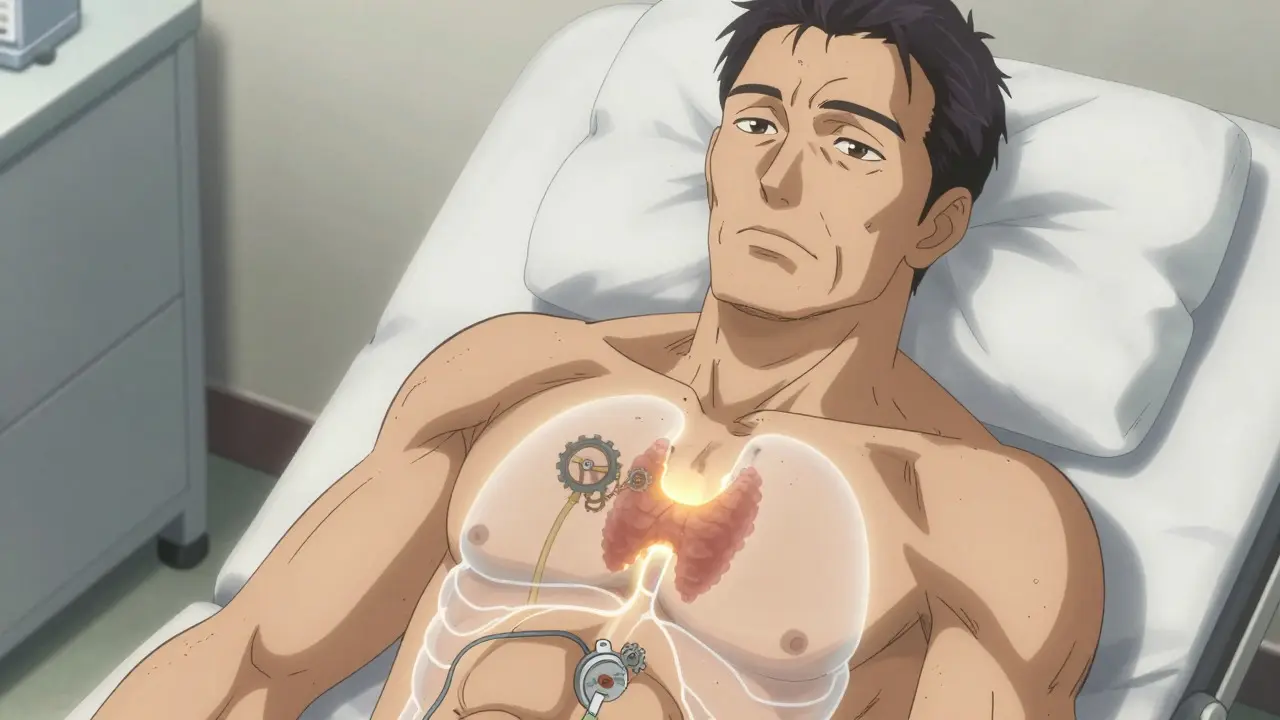
You might feel perfectly fine. Your energy is good, your weight is stable, and you have no tremors or anxiety. Yet, a routine blood test reveals something odd: your Thyroid-Stimulating Hormone (TSH) is suppressed, while your actual thyroid hormones remain normal. This is subclinical hyperthyroidism, a condition that flies under the radar but carries serious implications for your heart. It’s not just a lab anomaly; it’s a silent driver of cardiovascular strain, particularly as we age.
Why does this matter? Because unlike overt hyperthyroidism, where symptoms scream for attention, subclinical cases whisper. And if you ignore those whispers, the consequences can be loud-think irregular heartbeats, weakened heart muscle, and even fractures. The debate among doctors isn’t whether to worry, but who needs treatment and when. Let’s break down what’s happening inside your body, why your heart cares about that tiny TSH number, and how to navigate the tricky decision of treating versus watching.
What Exactly Is Subclinical Hyperthyroidism?
To understand the risk, you need to understand the mechanism. Your pituitary gland acts as the thermostat for your thyroid. When thyroid hormone levels rise, the pituitary drops TSH production to tell the thyroid to slow down. In subclinical hyperthyroidism, the TSH is low (usually below 0.45 mIU/L), but the actual hormones-free thyroxine (T4) and free triiodothyronine (T3)-are still within the normal range.
This state is more common than you’d think. Prevalence spikes with age. While it affects roughly 4-8% of the general population, studies show it hits up to 15.4% of people over 75. It’s also frequent in those with nodular goiters. The key distinction here is "subclinical." You don’t have the classic symptoms of an overactive thyroid like rapid weight loss or heat intolerance. But just because you don’t feel it doesn’t mean your tissues aren’t reacting to the subtle excess of thyroid activity.
| Condition | TSH Level | Free T4 / T3 Levels | Symptoms |
|---|---|---|---|
| Euthyroid (Normal) | 0.45 - 4.5 mIU/L | Normal | None |
| Subclinical Hyperthyroidism | < 0.45 mIU/L | Normal | Often None |
| Overt Hyperthyroidism | < 0.1 mIU/L (often undetectable) | High | Prominent |
The Silent Threat to Your Heart
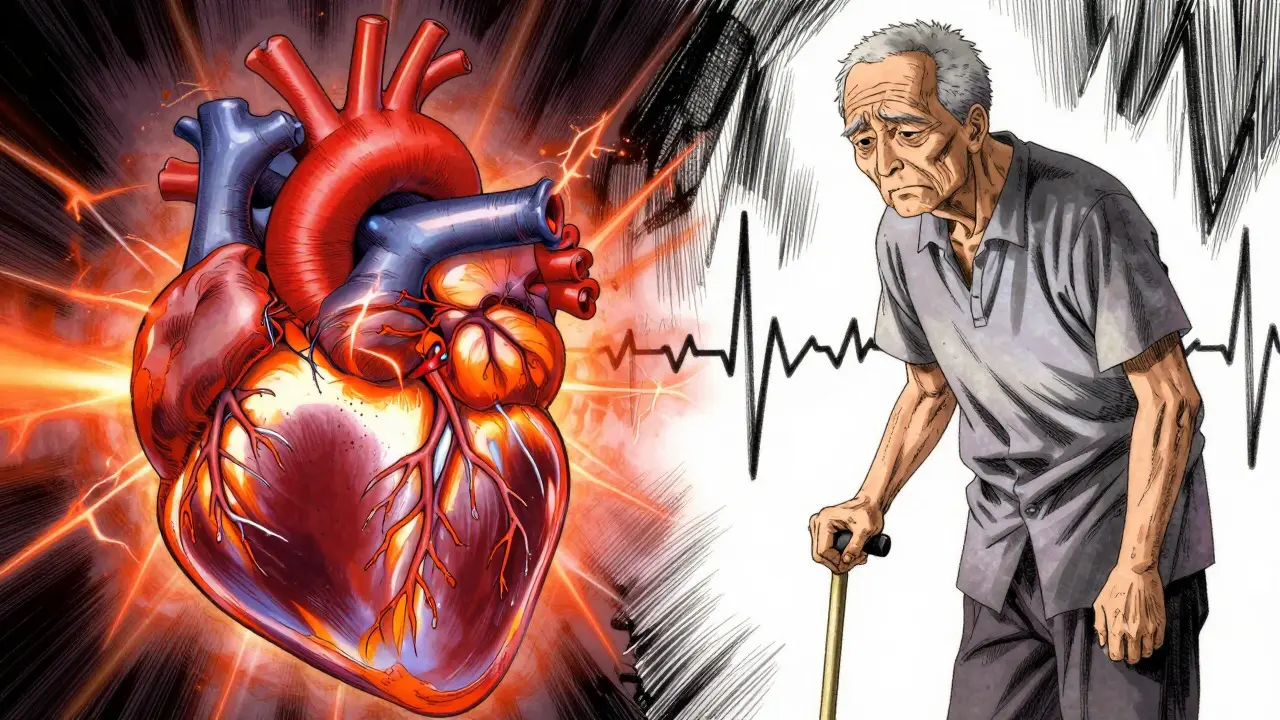
If you take one thing away from this article, let it be this: your heart hates suppressed TSH. Even without high circulating thyroid hormones, the cardiac tissue seems sensitive to the slight imbalance. Large-scale research has linked low TSH directly to two major cardiac issues: atrial fibrillation (AFib) and heart failure.
A meta-analysis involving nearly 9,000 participants found that those with TSH levels below 0.1 mIU/L had a 2.5 times higher risk of developing atrial fibrillation compared to people with normal thyroid function. For those with TSH between 0.1 and 0.44 mIU/L, the risk was still elevated by about 60%. AFib isn’t just an annoying flutter; it significantly increases the risk of stroke. If you’re over 60, this risk essentially triples over a ten-year period according to data reviewed by the Cardiovascular Research journal.
Heart failure is another concern. A pooled analysis of over 25,000 people showed that severe TSH suppression (<0.1 mIU/L) was associated with a nearly double the risk of heart failure. Why? The subtle hormonal shift increases sympathetic tone (your fight-or-flight system) and decreases vagal tone (the rest-and-digest brake). This imbalance leads to a faster resting heart rate, increased left ventricular mass, and diastolic dysfunction-where the heart becomes stiff and doesn’t fill properly. These are structural changes that happen quietly, year after year.
Beyond the Heart: Bones and Brain
While the heart takes the headline, other systems pay the price too. Thyroid hormones regulate bone turnover. When they are slightly elevated, bone breakdown outpaces formation. Studies indicate that patients with TSH below 0.1 mIU/L face a hazard ratio of 2.3 for fractures compared to healthy controls. This is especially critical for post-menopausal women or men over 65 who already have lower bone density.
Cognitive health is murkier but concerning. Some research suggests subtle declines in executive function-the brain’s ability to plan, focus, and multitask-in elderly patients with persistent subclinical hyperthyroidism. It’s not dementia, but it’s a noticeable dip in mental sharpness that often gets blamed on "just getting old," when it might actually be treatable thyroid physiology.
To Treat or Not to Treat? The Decision Matrix
This is where medicine gets personal. There is no one-size-fits-all answer. Guidelines from the American Thyroid Association (ATA) and European counterparts differ slightly, but they agree on one core principle: risk stratification.
Doctors generally look at three factors:
- TSH Severity: Is it mildly suppressed (0.1-0.44 mIU/L) or severely suppressed (<0.1 mIU/L)?
- Age: Are you under 65 or over 65?
- Comorbidities: Do you have existing heart disease, osteoporosis, or symptoms?
For younger adults (<65) with mild suppression and no symptoms, many endocrinologists adopt a "watchful waiting" approach. They’ll retest every 6-12 months. However, for anyone over 65, or anyone with TSH <0.1 mIU/L, the threshold for treatment drops significantly. Dr. Anne R. Cappola, a leading researcher in this field, advocates for treating older patients with severe suppression regardless of symptoms because the cardiovascular payoff outweighs the risks of intervention.
| Patient Profile | TSH Level | Typical Approach |
|---|---|---|
| Young Adult (<65), No Symptoms | 0.1 - 0.44 mIU/L | Monitor annually; investigate cause |
| Older Adult (>65) or Cardiac History | 0.1 - 0.44 mIU/L | Consider treatment if symptomatic or progressing |
| Any Age with Severe Suppression | < 0.1 mIU/L | Treatment usually recommended |
| Exogenous Cause (Over-medicated) | Any | Adjust medication dose immediately |
Treatment Options and Their Trade-offs
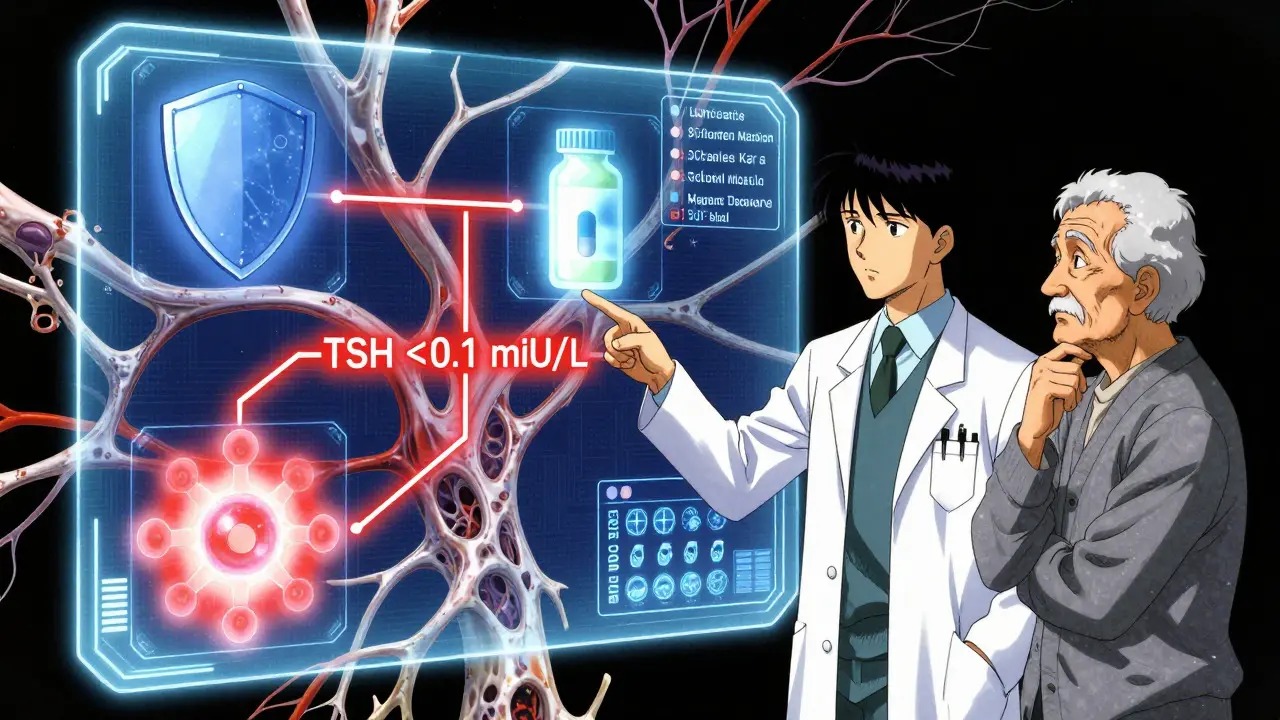
If you and your doctor decide to intervene, the goal is to normalize TSH without swinging to the opposite extreme: hypothyroidism. Overtreating creates its own set of problems, including fatigue, weight gain, and ironically, different types of cardiovascular risk.
For exogenous causes-meaning you’re taking too much levothyroxine for hypothyroidism-the fix is simple: lower the dose. This resolves the issue in weeks.
For endogenous causes, such as toxic nodules or early Graves’ disease, options include:
- Beta-blockers: These don’t fix the thyroid but protect the heart by lowering heart rate and reducing arrhythmia risk. They are often the first step while deciding on long-term care.
- Radioactive Iodine (RAI): This shrinks overactive thyroid tissue. It’s effective but often results in permanent hypothyroidism, requiring lifelong hormone replacement.
- Antithyroid Medications: Drugs like methimazole block hormone production. They require daily adherence and monitoring for side effects like liver toxicity or low white blood cell counts.
- Surgery: Removing part of the thyroid is reserved for large nodules or suspected cancer.
Dr. Kenneth D. Burman warns against aggressive overtreatment in mild cases. "The risks of creating iatrogenic hypothyroidism must be carefully weighed," he notes. The sweet spot is keeping TSH in the mid-normal range, avoiding both the rock of hyperthyroidism and the hard place of hypothyroidism.
Monitoring and Next Steps
Diagnosis requires confirmation. A single low TSH result isn’t enough; transient fluctuations happen due to illness, stress, or medications. Repeat testing after 4-6 weeks is standard protocol. Once diagnosed, monitoring frequency depends on your stability. Patients with TSH <0.1 mIU/L typically need checks every 3-6 months. Those with milder suppression might only need annual reviews.
Living with this condition means staying vigilant about heart health. Regular ECGs or Holter monitors can catch silent AFib before it causes a stroke. Bone density scans (DEXA) are wise for those with long-standing suppression. And remember, lifestyle factors matter. Smoking exacerbates thyroid eye disease and cardiovascular risk, so quitting is non-negotiable. Adequate calcium and Vitamin D intake supports bone health during this metabolic shift.
Research is ongoing. Trials like the DEPOSIT study are tracking thousands of older adults to see if treating mild cases truly prevents heart attacks and strokes. Until then, the conversation with your endocrinologist should be dynamic, revisited yearly, and tailored to your specific biology-not just a generic guideline.
Does subclinical hyperthyroidism always turn into overt hyperthyroidism?
No. Many cases remain stable for years. Some may revert to normal spontaneously, especially if caused by temporary inflammation (thyroiditis). However, those with toxic nodules are more likely to progress to overt hyperthyroidism over time.
Can I exercise with subclinical hyperthyroidism?
Generally, yes. Moderate aerobic exercise is beneficial for heart health. However, if you experience palpitations, chest pain, or unusual shortness of breath during exertion, stop and consult your doctor. High-intensity interval training might be restricted if your heart rate variability is impaired.
Is radioactive iodine safe for older adults with this condition?
Yes, it is commonly used. The main risk is developing hypothyroidism, which is easily managed with pills. For older adults with significant cardiac risk, preventing AFib often outweighs the inconvenience of taking levothyroxine daily.
Do I need to avoid iodine-rich foods?
Not necessarily, unless you are preparing for radioactive iodine therapy. Normal dietary iodine (like in seafood or iodized salt) rarely worsens subclinical hyperthyroidism caused by autonomous nodules. Excessive supplements, however, could potentially trigger issues.
How quickly does TSH recover after treatment?
If you reduce thyroid medication, TSH can rise within 4-6 weeks. After radioactive iodine, it may take 3-6 months for the full effect to stabilize. Antithyroid drugs work faster, often showing biochemical improvement in a few weeks, but clinical stabilization takes longer.
Author

joyce Hogewoning
August 30, 2026 AT 22:46oh my god i literally just got diagnosed with this last week and i am spiraling so hard right now because my doctor just said 'wait and see' but then he also mentioned something about afib risks and honestly im terrified?? like how can you feel totally fine one day and the next your bloodwork says your heart is basically ticking time bomb?? its not fair that these things are silent until they scream at u!! i keep reading all these studies saying tsh under 0.1 is dangerous but mine is like 0.3 and everyone acts like its no big deal but what if it gets worse while im waiting?? i feel like i need a second opinion or maybe just a hug from someone who understands medical anxiety!!!
Thhomas Fox
September 1, 2026 AT 08:32Breathe, Joyce. The body has resilience.
John Park
September 2, 2026 AT 17:11you guys are missing the point entirely. this isn't about biology, it's about control. the pharmaceutical industry loves subclinical diagnoses because it creates patients where there were none before. look at the history of thyroid treatment in the 20th century-it was always about suppressing symptoms to sell pills rather than addressing root causes like stress or environmental toxins. we are being pathologized for normal physiological variations that our ancestors never worried about. the real risk isn't the TSH number; it's the iatrogenic harm from treating a number instead of a person. wake up.
Maneesh kv
September 3, 2026 AT 19:46Bro 🤯 you are so wrong it hurts 😂👉👈 science doesn't lie!! If your heart stops beating because of AFib caused by low TSH, you can't argue with the pharma bros!! 💊💪 Listen to the doctors!! They know best!! Don't be a conspiracy theorist in the comment section when people are actually dying from untreated conditions!! 🚑🏥 Trust the process!! ✨✨
Owen John
September 4, 2026 AT 17:05The data on stroke risk is undeniable, yet the public discourse remains mired in anecdotal fear. It is fascinating how cognitive bias leads individuals to reject statistical probability in favor of emotional comfort. We must respect the empirical evidence over personal narrative.
Amy Zalkin
September 5, 2026 AT 00:59honestly though i think the article makes a really good point about the 'whispers'. my grandma had this exact thing and nobody caught it until she had a mini-stroke. super scary stuff. i’m gonna tell my mom to get her levels checked again since she’s over 70.
Kaylyn Mello
September 5, 2026 AT 14:07yeah my endo told me the same thing watchful waiting is key unless u have other issues
i have nodules so we monitor every 6 months
its annoying but better than taking meds if u dont need them
hope ur doc explains everything well
Kathleen McGrath
September 6, 2026 AT 17:25This is such helpful information! I didn't realize that bone health was affected too. My mother is post-menopausal and has been feeling a bit tired lately, I wonder if this could be related? It sounds like regular check-ups are so important. Thank you for sharing this!
Lemuel Gomez
September 8, 2026 AT 12:55I agree with the cautious approach... however... I do worry about the long-term effects... especially regarding the heart... but... perhaps monitoring is enough... for now...
Emmanuel Umana
September 9, 2026 AT 00:44In many parts of Africa, access to routine thyroid screening is limited. We often see overt cases only after severe cardiac events occur. Prevention through early detection is a luxury not everyone enjoys.
Lilian Binda
September 9, 2026 AT 22:21we need more awareness here in nigeria too!! people ignore their health until its too late!! why are we waiting for strokes to happen??? take care of your bodies ladies!!!
Alex Brown
September 10, 2026 AT 02:15The philosophical weight of living with an invisible condition is profound. It challenges our perception of self. Yet, knowledge empowers us to act with grace. Let us view this not as a burden, but as a call to deeper self-awareness and proactive care. Every heartbeat matters.
Fabian Saldana
September 11, 2026 AT 13:30Excellent analysis. Proactive management yields superior outcomes. Consistency is key.