
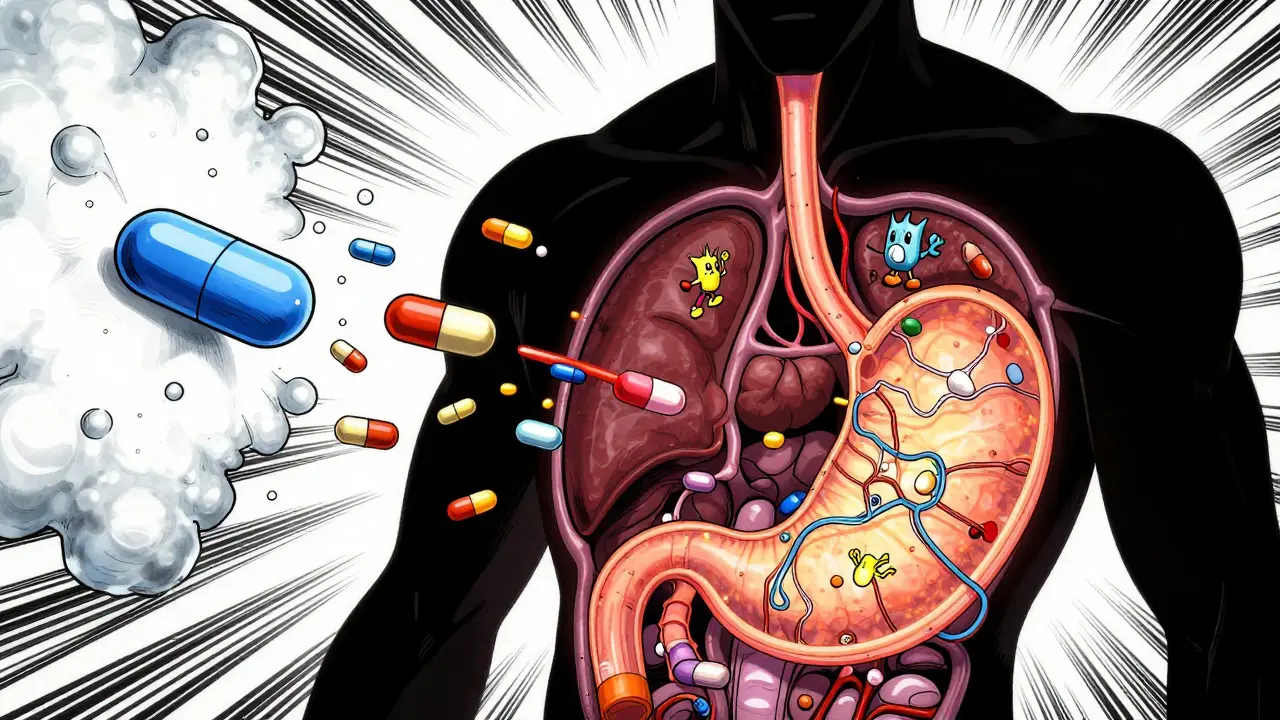
Have you ever taken a new pill and wondered if it plays nice with the others in your cabinet? It’s a fair question. We often think of medicines as working in isolation, but inside your body, they are constantly meeting, mingling, and sometimes clashing. When one drug changes how another moves through your system, we call this a pharmacokinetic drug interaction.
You don’t need a degree in chemistry to understand why this matters. These interactions can turn a helpful dose into a harmful one, or make a medication simply stop working. The U.S. Food and Drug Administration (FDA) notes that adverse drug reactions lead to over 1.3 million emergency room visits every year. A significant chunk of these-between 6% and 10% among older adults-are caused by drugs interfering with each other. Let’s break down exactly how this happens, using plain language, so you can spot the red flags before they become problems.
The Journey of a Pill: Understanding ADME
To get an effect, a drug has to go on a journey through your body. Scientists use the acronym ADME to describe these four steps: Absorption, Distribution, Metabolism, and Excretion. Think of it like a delivery service. If anything goes wrong at any stop along the route, the package either never arrives, gets delivered to the wrong address, or sits in your living room until it rots. Pharmacokinetic interactions happen when one drug messes with this delivery process for another.
This is different from pharmacodynamic interactions, where two drugs just have similar effects (like taking two sedatives that both make you sleepy). In pharmacokinetics, the problem isn’t the final effect; it’s the amount of drug reaching its target. Too much, and you risk toxicity. Too little, and you’re treating nothing.
Absorption: Getting Into the Bloodstream
Everything starts in your gut. For a pill to work, it must dissolve and pass through your stomach lining into your blood. Some drugs change the environment here, blocking others from entering.
Consider antacids. They neutralize stomach acid. That feels good for heartburn, but some medications, like the antifungal ketoconazole, actually need acid to dissolve properly. Take them together, and the ketoconazole stays stuck in your stomach, useless. Similarly, dairy products contain calcium. If you take tetracycline antibiotics with milk, the calcium binds to the antibiotic in a process called chelation. This creates a complex your body can’t absorb, cutting the drug’s effectiveness by up to half. The fix is simple: space them out. Most experts recommend waiting 2 to 4 hours between taking these types of meds and eating calcium-rich foods or taking antacids.
Motility also plays a role. Opioids like morphine slow down your gut movement. If you take acetaminophen with morphine, it might sit in your stomach longer than expected, delaying pain relief. While not always dangerous, it changes the timing of when you feel better.
Distribution: Traveling Through the Blood
Once in the bloodstream, drugs hitch a ride on proteins, mainly albumin. Imagine albumin is a bus, and the drug is a passenger. Only the passengers standing outside the bus (the "free" drug) can get off and do their job. Those sitting inside are inactive.
Protein binding displacement happens when a second drug jumps onto the bus, pushing the first drug out. A classic example involves warfarin (a blood thinner) and diclofenac (an anti-inflammatory). Both love to sit on albumin. If you start taking diclofenac while on warfarin, the diclofenac might bump the warfarin off the bus. Suddenly, there’s more "free" warfarin floating around, increasing your risk of bleeding.
Don’t panic yet. Your body is smart. It usually compensates by breaking down that extra free drug faster. However, for drugs with a narrow therapeutic index-where the difference between a safe dose and a toxic dose is tiny-this shift can be serious. Warfarin is the poster child for this. If you are on such medications, your doctor will monitor your blood levels closely if you add new drugs.
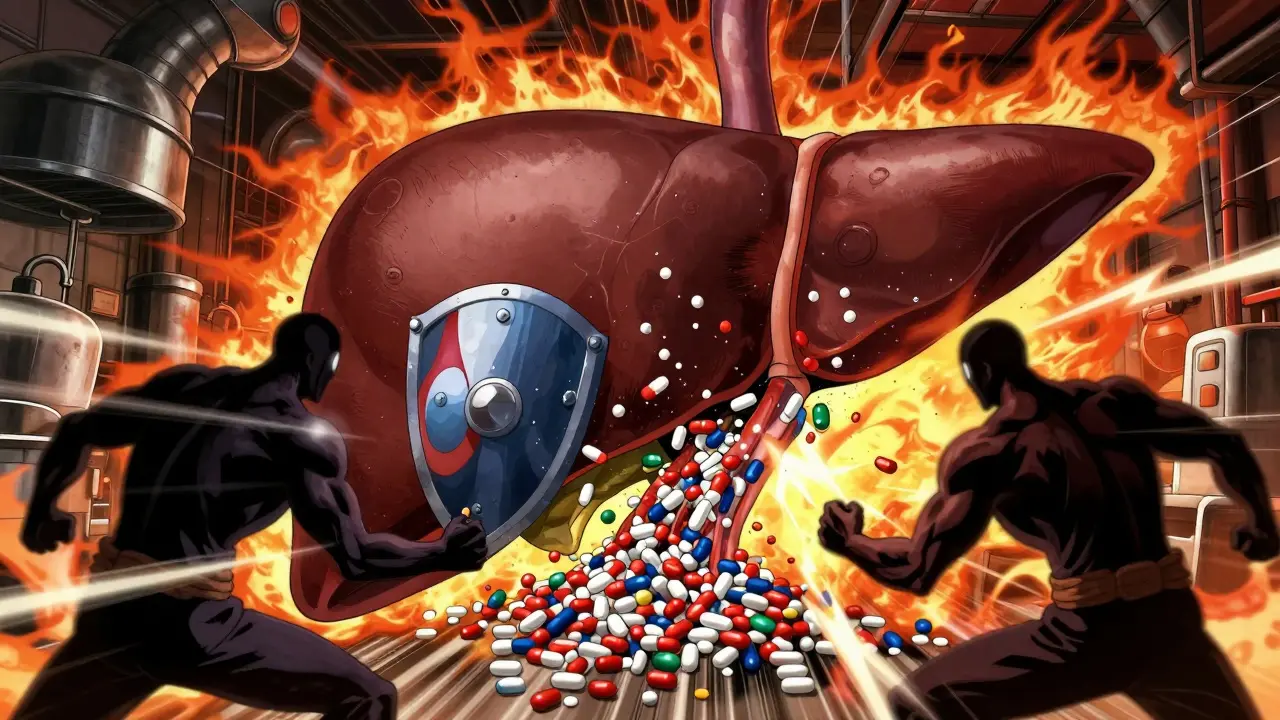
Metabolism: The Liver’s Busy Kitchen
This is where most major interactions happen. Your liver uses enzymes to break down drugs so they can leave your body. The main crew responsible for this is the Cytochrome P450 (CYP) family, especially CYP3A4 and CYP2D6. About 60% of all approved drugs rely on these enzymes.
Interactions here come in two flavors: inhibition and induction.
- Inhibition (The Blockade): One drug blocks the enzyme. The second drug can’t be broken down, so its levels rise dangerously high. For example, clarithromycin (an antibiotic) inhibits CYP3A4. If you take midazolam (a sedative) with it, the midazolam builds up, leading to excessive sleepiness or even breathing issues. Grapefruit juice is a famous natural inhibitor of CYP3A4. It doesn’t just affect grapefruits; the compounds linger in your gut for days. Avoid it if you’re taking statins, certain blood pressure meds, or immunosuppressants.
- Induction (The Accelerator): One drug tells the liver to build more enzymes. The second drug gets shredded too quickly, becoming ineffective. Rifampin (for tuberculosis) and St. John’s Wort (a herbal supplement for depression) are powerful inducers. If you take birth control pills with St. John’s Wort, the hormones may be metabolized so fast that contraception fails. Phenobarbital, used for seizures, can induce enzymes that turn lamotrigine into toxic byproducts, causing blood cell issues.
The FDA requires companies to test new drugs for these exact behaviors because the stakes are high. Knowing whether a drug is an inhibitor, inducer, or substrate helps doctors predict trouble before it starts.
Excretion: Leaving the Body
Finally, drugs need to exit, mostly through your kidneys. Sometimes, drugs compete for the same exit doors, known as transporters. P-glycoprotein (P-gp) is a key transporter that pumps drugs out of cells and into urine.
If you take itraconazole (an antifungal), it inhibits P-gp. Digoxin, a heart medication, relies on P-gp to leave the body. With the pump blocked, digoxin stays in your system longer. High levels of digoxin can cause life-threatening heart rhythm problems. Similarly, NSAIDs like ibuprofen can reduce the kidney’s ability to clear methotrexate, a chemotherapy drug, leading to severe toxicity including bone marrow suppression.
These excretion issues are particularly tricky because they often involve drugs with very specific dosing requirements. Small changes in clearance can lead to big changes in blood concentration.
| Interaction Type | Drug Pair | Effect | Risk |
|---|---|---|---|
| Absorption | Tetracycline + Dairy | Reduced absorption | Antibiotic failure |
| Distribution | Warfarin + Diclofenac | Increased free warfarin | Bleeding |
| Metabolism (Inhibition) | Clarithromycin + Midazolam | Increased midazolam levels | Respiratory depression |
| Metabolism (Induction) | St. John's Wort + Birth Control | Decreased hormone levels | Pregnancy risk |
| Excretion | Itraconazole + Digoxin | Decreased digoxin clearance | Heart arrhythmia |
How to Protect Yourself
You can’t memorize every interaction, but you can build habits that drastically cut your risk. Studies show that keeping a complete list of everything you take-including prescriptions, over-the-counter meds, and supplements-reduces interaction risks by nearly half.
Use one pharmacy. When all your meds come from the same place, the pharmacist’s computer system can automatically flag conflicts. This single step prevents hundreds of thousands of adverse events annually. Don’t skip the questions. Ask your doctor, "Could this interact with my other medications?" and "Are there foods I should avoid?" Research from the Mayo Clinic suggests this simple dialogue increases detection rates significantly.
Be wary of "natural" remedies. St. John’s Wort and grapefruit juice are potent biological actors, not harmless tea. Always disclose supplements to your healthcare team. And remember, age matters. As we get older, our liver and kidney function naturally decline, making us more sensitive to these shifts. If you are over 65, regular medication reviews are essential.
The Future: Personalized Medicine
We are moving toward a era where genetics guide drug choices. Tests for genes like CYP2C19 can tell if you are a "poor metabolizer," meaning standard doses could be toxic for you. The FDA now includes pharmacogenomic data on hundreds of drug labels. Telehealth platforms are also integrating interaction screens, making safety checks easier during virtual visits. While technology helps, your awareness remains the first line of defense.
What is the difference between pharmacokinetic and pharmacodynamic interactions?
Pharmacokinetic interactions change how your body processes a drug (absorption, metabolism, etc.), altering its concentration. Pharmacodynamic interactions occur when two drugs have similar or opposing effects on the body itself, regardless of their concentrations. For example, taking two sedatives causes a pharmacodynamic interaction (additive sleepiness), while taking an antibiotic that blocks the breakdown of a sedative causes a pharmacokinetic interaction (higher sedative levels).
Can food really interact with my medications?
Yes. Grapefruit juice inhibits CYP3A4 enzymes, raising levels of many drugs. Dairy products can bind to antibiotics like tetracyclines, preventing absorption. Even alcohol can interfere with metabolism. Always check your prescription label for dietary restrictions.
Why is using one pharmacy important?
Using a single pharmacy ensures your pharmacist has a complete view of your medication history. Their software can cross-reference all your prescriptions and over-the-counter purchases to flag potential interactions that might be missed if your records are split across multiple locations.
What are the signs of a drug interaction?
Signs vary but can include unexpected side effects, worsening of the condition you're treating, or new symptoms like dizziness, nausea, or changes in heart rate. If a medication suddenly stops working or causes severe reactions after adding a new drug, contact your doctor immediately.
Do herbal supplements cause pharmacokinetic interactions?
Absolutely. St. John’s Wort is a potent enzyme inducer that can render many drugs ineffective, including birth control and antidepressants. Garlic and ginkgo biloba can affect blood clotting. Always treat supplements with the same caution as prescription drugs.
Author
