
Imagine a pharmacist discovering that a life-saving medication currently being dispensed to dozens of patients has a critical impurity. In the world of pharmaceutical safety, this isn't a hypothetical-it's a daily reality. Whether it's a nitrosamine impurity in a generic drug or a labeling error, the speed at which a pharmacy identifies and acts on a recall can be the difference between a minor inconvenience and a medical emergency. For pharmacy staff and owners, drug safety monitoring isn't just a regulatory chore; it's a frontline defense for patient health.
A pharmacy-level recall notification is a formal alert from a manufacturer, distributor, or regulatory body stating that a product must be removed from inventory. According to the FDA, a recall is any action taken by a manufacturer to correct or remove products that violate federal laws. Not all recalls are equal. They are split into three classes: Class I is the most serious (reasonable probability of serious health consequences or death), Class II involves temporary or reversible health problems, and Class III involves products unlikely to cause adverse health consequences.
Quick Summary of Recall Monitoring
- Redundancy is Key: Never rely on a single notification source; use at least three different channels.
- Prioritize by Class: Class I recalls require immediate action, often needing verification within 4 hours.
- Automate Where Possible: Integrated pharmacy management systems significantly reduce the risk of "near misses" compared to manual mail or email checks.
- Document Everything: Keep verification records for at least 3 years to satisfy FDA and CMS audits.
The Most Reliable Channels for Recall Alerts
If you're only checking your email once a day, you're missing critical windows for patient safety. Effective monitoring requires a multi-channel approach. The gold standard involves a mix of government alerts, wholesaler data, and internal software.
First, the FDA MedWatch is the FDA's Safety Information and Adverse Event Reporting Program. Registering for MedWatch email alerts is a non-negotiable first step. These alerts provide the most direct line to federal safety data. Additionally, the FDA publishes Enforcement Reports every Wednesday, which act as a weekly audit of all active recall actions.
Second, look to your wholesalers. Major distributors like McKesson often provide dedicated recall alert systems. While these are highly efficient, be wary of "false positives." Because wholesalers often alert based on general product lines rather than your specific batch numbers, you might spend hours chasing a recall that doesn't actually affect your current stock.
Finally, there are Pharmacy Management Systems is software used by pharmacists to manage prescriptions, inventory, and patient records. Tools like PioneerRx or QS/1 can integrate FDA data feeds directly. This is where the real efficiency happens. Instead of reading a PDF and manually searching your shelves, the software cross-references the recalled lot number against your inventory and patient profiles in seconds.
| Method | Delivery Speed | Acknowledgment Rate | Best For |
|---|---|---|---|
| Integrated Software | Near Instant | 89.4% | Hospital & High-Volume Pharmacies |
| MedWatch Email | Fast | 62.3% | General Awareness & Compliance |
| Wholesaler Alerts | Fast | High (but higher false positives) | Inventory Replacement |
| Certified Mail | Slow (Avg 47 hrs) | Low | Legal Documentation Only |
Step-by-Step Verification Protocol
Receiving a notification is only half the battle. The real work is in the verification. If you get a Class I notification, the clock starts immediately. You can't afford to wait until the end of the shift.
- Classify the Urgency: Determine if the recall is Class I, II, or III. If it's Class I, the FDA expects action within 24 hours, and many pharmacies aim to confirm receipt within 4 hours.
- Cross-Reference Identifiers: Do not just look at the drug name. Check the NDC (National Drug Code) and the specific lot number. A manufacturer might recall only one batch from a specific plant, meaning 90% of your stock is still safe.
- Audit Patient Records: Search your dispensing history for that specific lot number. Who received it? When? How much is left in their bottle?
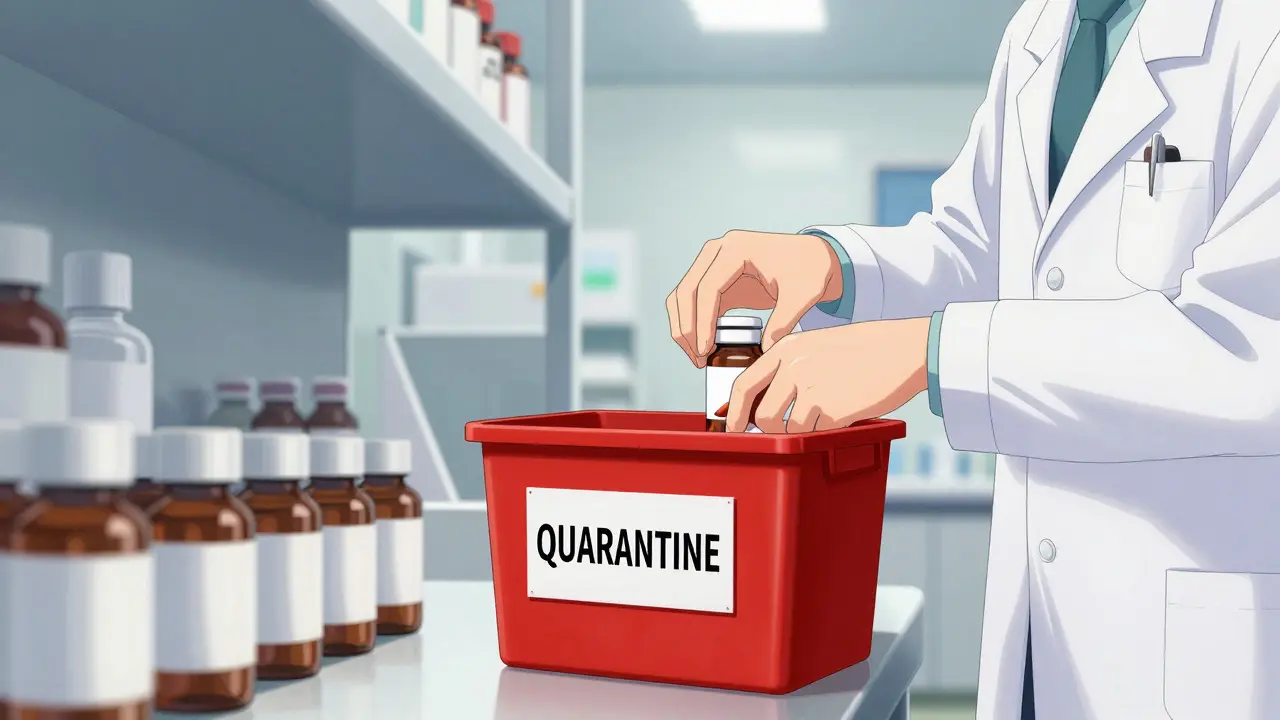
- Isolate Stock: Physically remove the affected medication from the shelves and place it in a designated "Quarantine" area. Mark it clearly so no one accidentally dispenses it during a rush.
- Notify Patients: Based on the class, you'll need to reach out to a certain percentage of affected patients. Class I requires 100% notification; Class II requires 80%.
Common Pitfalls and How to Avoid Them
Even experienced pharmacists run into "near misses." One of the biggest issues is the "noise" of non-applicable notices. Some pharmacies receive 20 recalls a week, but only one actually affects their inventory. This leads to alert fatigue, where staff starts skimming notices and misses a critical detail.
Another dangerous gap is the medication synchronization (med-sync) program. If a patient is on a 90-day supply because of a sync program, they may have been dispensed a recalled lot weeks before the alert hit. If your verification only looks at "current" inventory and not "historical dispensing," those patients remain at risk.
Finally, avoid the "single-point-of-failure" trap. If only the head pharmacist checks the recall email, and they are on vacation or out sick, the pharmacy is blind. Establish a Recall Response Team with at least two people who know how to access the alerts and pull the inventory reports.
The Future of Drug Safety Monitoring
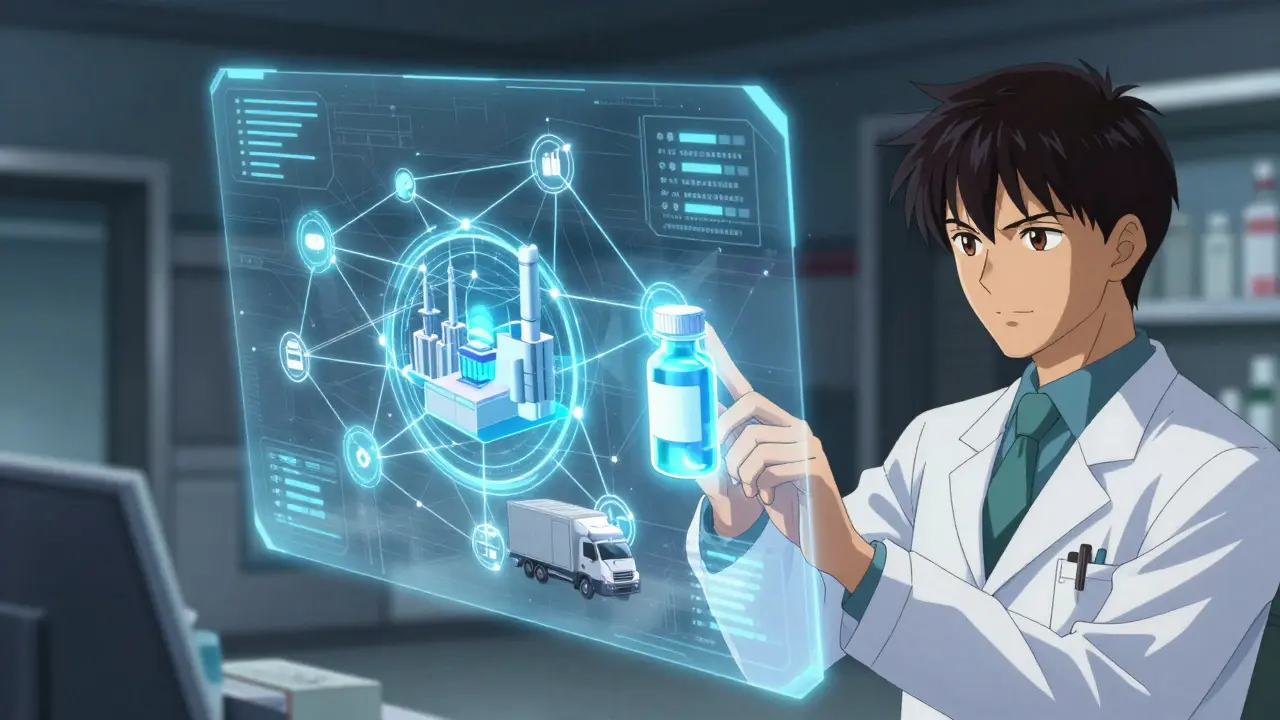
We are moving away from PDFs and faxes. The FDA's Recall Modernization Initiative is pushing for structured electronic data. By 2025, the goal is for all Class I recalls to use HL7 standards, which allows computers to "talk" to each other without a human needing to type in a lot number.
We're also seeing the rise of blockchain-based verification. Projects like MediLedger are testing ways to track a drug's journey from the factory to the patient in real-time. In a few years, a recall might be as simple as a system automatically locking a specific bottle in your pharmacy so it cannot be scanned or sold, effectively eliminating human error.
How long must I keep recall records?
According to FDA 21 CFR 203.24, pharmacies are required to maintain recall verification records for at least 3 years. This includes proof that you checked your inventory and a list of patients who were notified.
What is the difference between a Class I and Class III recall?
A Class I recall is the most severe, where there is a high probability that using the drug will cause serious health problems or death. A Class III recall involves products that are unlikely to cause adverse health consequences, such as a minor labeling error or a slightly off-color tablet.
Can I rely solely on my wholesaler for recall notices?
No. While wholesalers are reliable, they aren't infallible. The ASHP recommends at least three redundant systems, such as combining wholesaler alerts with FDA MedWatch and an integrated pharmacy management system.
What do I do if I find a recalled drug already dispensed to a patient?
Immediately identify the patient via your dispensing records. For Class I recalls, you must contact 100% of affected patients to instruct them to stop using the medication and arrange for a replacement. Document the date and method of contact for audit purposes.
Do automated systems replace the need for pharmacist review?
No. Automated systems are tools for identification, but a licensed pharmacist must still verify the clinical risk and oversee the patient notification process to ensure the correct medical advice is given.
Next Steps for Pharmacy Owners
If you're currently relying on a single source of information, start by creating a free account on the FDA MedWatch portal today. Next, audit your current software to see if it supports FDA data feeds. If it doesn't, consider if the cost of a recall module is worth the reduction in manual labor-typically, integrated systems reduce processing time from over 7 hours to under 2 hours.
For those in hospital settings, the priority should be implementing an automated inventory verification protocol that links directly to your bedside dispensing systems, ensuring that recalled meds are blocked at the point of administration.
Author

Jasmin Stowers
April 14, 2026 AT 16:57medwatch is definitely the way to go. keeps things simple
Milo Tolley
April 15, 2026 AT 00:06THE ABSOLUTE HORROR of a Class I recall!!! 😱 Imagine the pharmacokinetic nightmare if a patient is already in a steady-state concentration and the lot is contaminated!!! It's a total regulatory meltdown!!! The sheer volatility of the supply chain is just... UNREAL!!! 💊💥
Anurag Moitra
April 15, 2026 AT 19:20The emphasis on documentation for three years is a prudent requirement. It ensures that there is a verifiable audit trail which is essential for maintaining public trust in the pharmaceutical supply chain. I believe this level of rigor is necessary for global health standards
rupa das
April 16, 2026 AT 14:23integrated software is overrated. human eyes are better for catching weird errors
mimi clouet
April 18, 2026 AT 07:07Omg no way! 😂 Manual checks are literally how mistakes happen. The software doesn't get tired or skip a line because it's 4pm on a Friday! 🚀
Mark Dueben
April 19, 2026 AT 21:34I can see where some people might prefer a manual check, but we have to consider that the volume of data is just too high for a person to handle without help. We should try to support our teams by giving them the best tools available so they don't feel overwhelmed.
Ikram Khan
April 19, 2026 AT 23:16Whoa!! The blockchain part sounds like some sci-fi movie stuff!! 🤯 I wonder if that'll actually stop the human error or if we'll just find new ways to mess up!! Either way, it's pretty wild!! :D
Randy Ryder
April 21, 2026 AT 16:31The transition to HL7 standards for Class I recalls is the real game-changer here. By leveraging interoperability between the FDA's data lakes and the pharmacy's internal EHR or PBM interfaces, we're basically eliminating the latency inherent in legacy PDF-based notifications. It's all about reducing the mean time to remediation for high-risk lot numbers.
Brooke Mowat
April 23, 2026 AT 09:57This whole thing is like a digital dance of safety!! 💃 it's all about vibing with the data to keep people healthy. Imagine the cosmic chaos if we just winged it lol. we gotta stay woke on these lot numbers and just ride the wave of technology to a safer tomorrow!! ✨🌈
David Snyder
April 24, 2026 AT 23:27It's really encouraging to see the move toward automation. It takes a lot of the pressure off the staff and lets them focus on actually talking to the patients instead of digging through boxes in the back. I'm sure this will make the workplace much more positive for everyone involved!