
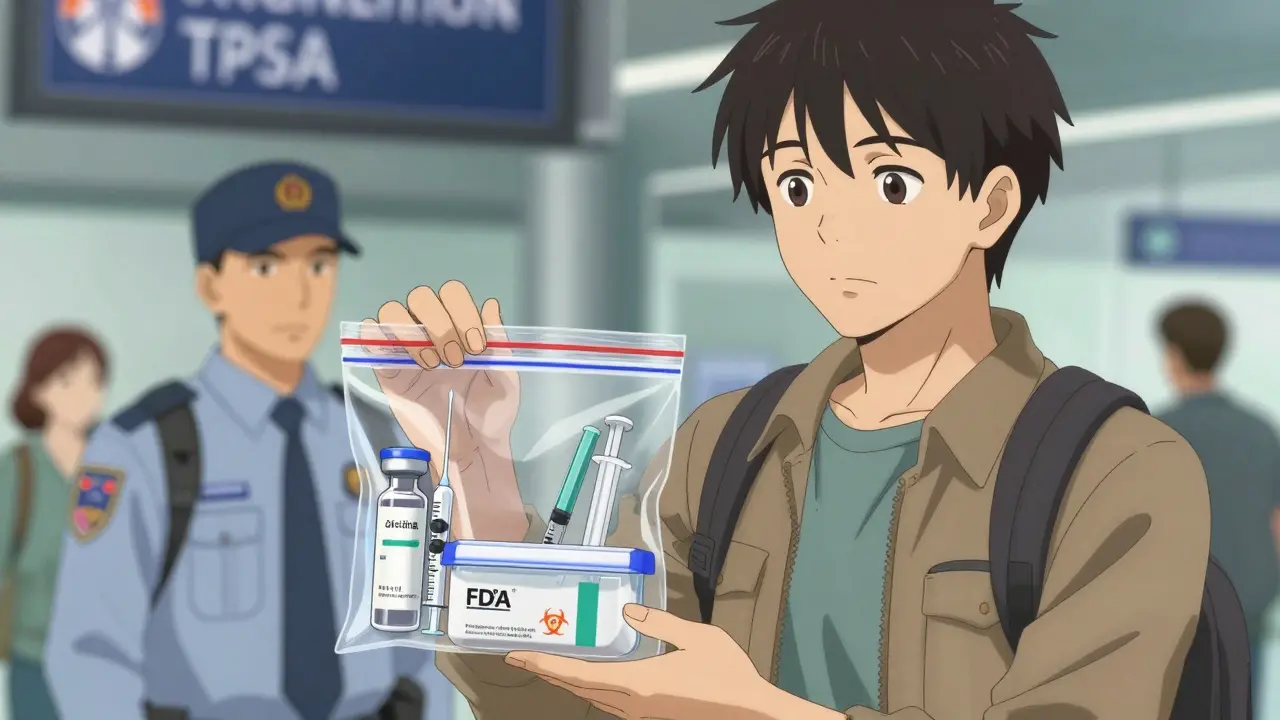
Traveling with injectable medications like insulin, EpiPens, or hormone treatments doesn’t have to be stressful-if you know the rules. Every year, over 15 million Americans rely on injectables to manage chronic conditions like diabetes, multiple sclerosis, or severe allergies. And every year, thousands of them face confusion, delays, or even denial at airport security because they don’t know how to properly pack and declare their medical supplies. The good news? The TSA allows you to bring all the injectables and syringes you need on a plane. The catch? You have to do it right.
What You Can Bring On a Plane
You can carry unlimited amounts of injectable medications and syringes on domestic flights in the U.S. There’s no limit on how many vials, pens, or unused needles you can bring. This includes insulin, glucagon, epinephrine, growth hormone, and other prescription injectables. The key is that the medication must be for your personal medical use. TSA doesn’t require a prescription or doctor’s note-but having one helps avoid delays.
Used syringes are allowed too, but they must be stored in an FDA-approved sharps container. These aren’t just any plastic boxes. They need to be rigid, puncture-resistant, and labeled with the universal biohazard symbol. You can buy these at any pharmacy for under $10. Don’t use old soda bottles, coffee cans, or cardboard boxes-they’ll get flagged or confiscated.
Liquid medications over 3.4 ounces (100ml) are exempt from the standard 3-1-1 liquids rule. That means your 10ml insulin vials, 30ml glucagon kits, or 50ml hormone pens can all go through security without being packed in a quart-sized bag. But you must declare them to the TSA officer at the checkpoint.
How to Pack Your Medical Supplies
Organization saves time-and stress. Here’s how to pack like a pro:
- Keep all medications in their original pharmacy-labeled containers. The label should show your name, the drug name, and the prescribing doctor’s info. If the original bottle is too big, transfer the medication to a smaller, labeled container that still shows all required info.
- Store syringes with their matching medication. Don’t bring a box of 50 empty syringes without any medicine. TSA may question it.
- Use a hard-sided, FDA-compliant sharps container for used needles. Look for the ANSI/ISEA Z308.1-2021 standard on the box.
- Place everything in a clear, zip-top bag so it’s easy to pull out during screening. Don’t bury it in your suitcase.
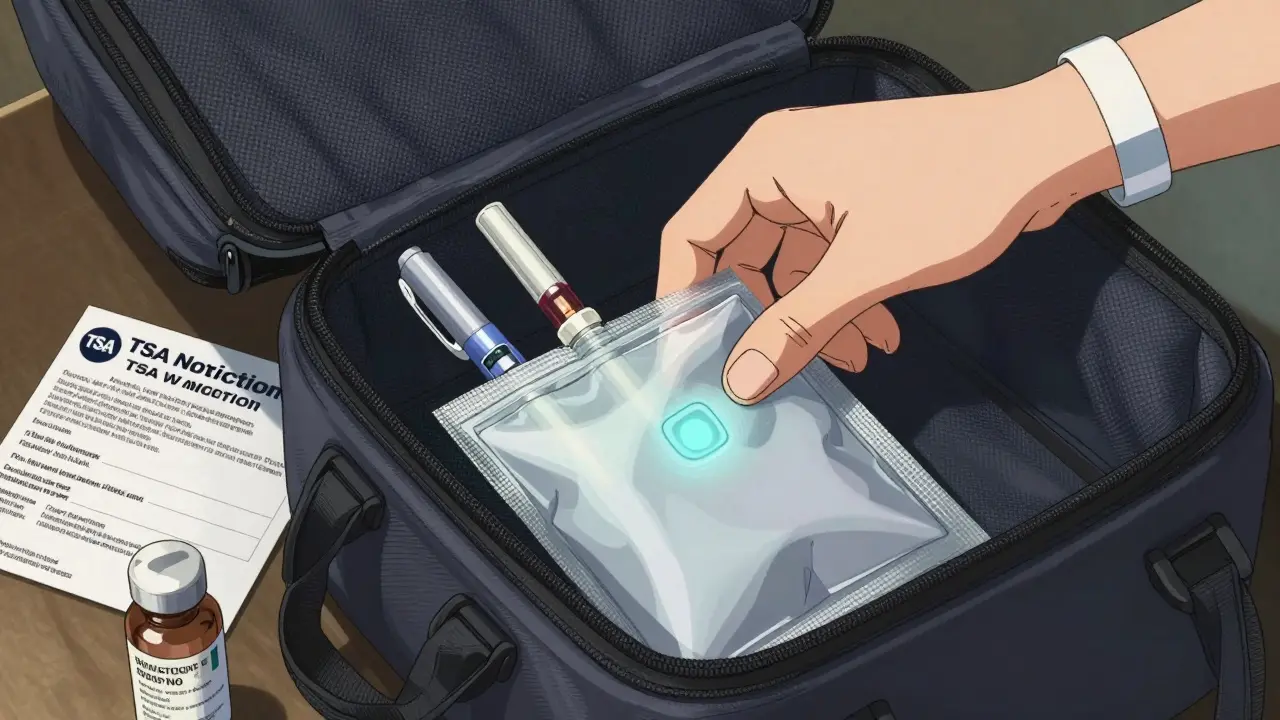
- If you’re carrying temperature-sensitive meds (like insulin), include a reusable ice pack or gel pack. These are allowed without size limits, but they’ll need to be screened separately.
Pro tip: Keep your sharps container in your carry-on. Never check it. Checked luggage gets handled roughly, and needles can puncture bags or injure baggage handlers.
What Happens at Security
At the checkpoint, you’ll need to tell the TSA officer you have medical supplies. Don’t wait for them to ask. Say it clearly: “I have injectable medication and sharps.”
They’ll likely ask you to remove the items from your bag and place them in a bin. Your meds and syringes will be visually inspected. They might swab them for residue or run them through an X-ray. You can request a visual inspection instead of X-ray for temperature-sensitive items like insulin-but they’re not required to comply. Most officers will honor it if you ask politely.
Don’t be surprised if you get pulled aside for a pat-down or extra screening. That’s normal. About 68% of travelers with insulin pumps or injectables report additional screening, according to Reddit user reports from 2023. It doesn’t mean you did anything wrong. It just means the system is being cautious.
Bring a TSA Notification Card (Form TSA-11-032). It’s a one-page printable form that explains your condition and supplies. Over 29% fewer miscommunication incidents happen when travelers use it, according to TSA’s 2022 report. Print it, fold it, and hand it to the officer before you even start unpacking.
International Travel Is Different
Domestic rules don’t apply overseas. Each country has its own laws. Japan, for example, requires a special permit for any syringe over 10 units. Australia bans syringes without a doctor’s letter written in English. The UK allows injectables but requires them to be in original packaging with a prescription.
Before you fly internationally, check your destination’s health ministry website or contact their embassy. Don’t rely on airline websites-they often give outdated or incomplete info. Some countries require a letter from your doctor on official letterhead, translated into the local language. Others want a copy of your prescription. A few, like Saudi Arabia, require prior approval from their health authority.
When flying with European carriers, remember they follow EASA rules, not TSA. While EASA allows the same items, they often demand documentation in the destination country’s language. A 2022 study found only 63% of European airports consistently follow medical supply protocols, compared to 78% in the U.S.
What Not to Do
Here are the biggest mistakes travelers make:
- Don’t pack sharps in checked luggage. It’s dangerous and against regulations.
- Don’t bring syringes without medication. Empty needles raise red flags.
- Don’t hide your supplies. Trying to sneak them through causes delays and possible fines.
- Don’t assume your airline knows the rules. Crew members aren’t trained in medical screening.
- Don’t use non-approved containers. A pill bottle with needles inside? That’s not a sharps container.
Also, avoid carrying needles in your pocket or purse. If they’re loose, they can puncture your clothing or bag-and cause a security incident. Always keep them in a proper container.
Real-Life Tips from Travelers
People who’ve done this before know what works:
- One diabetic traveler carries two insulin pens in her purse, two in her carry-on, and a backup in her coat pocket. “If one fails, I’ve got backups,” she says.
- A parent flying with a child who uses an EpiPen keeps it in a small insulated pouch with a gel pack, labeled “Life-Saving Medication.” They’ve never been delayed.
- A man with multiple sclerosis always wears a medical ID bracelet that says “Injectable Medication Required.” He says it reduces questions before he even opens his bag.
Travel forums like Reddit and TripAdvisor show that 82% of people who used proper sharps containers had no issues. Only 47% of those who used makeshift containers made it through without problems.
What If You Get Refused?
It’s rare, but it happens. If a TSA officer says no:
- Ask to speak to a supervisor. Most issues are resolved at that level.
- Remind them of TSA’s official policy: “Medically necessary injectables and syringes are permitted.”
- Use your TSA Notification Card. It’s an official document.
- If you’re still blocked, call the TSA Cares Helpline at 1-855-787-2227. They have specialists who can help at the checkpoint.
Under the Air Carrier Access Act of 1986, airlines can’t deny boarding because you need medical supplies. If you’re turned away, file a complaint with the Department of Transportation. You have rights.
Future Changes Coming
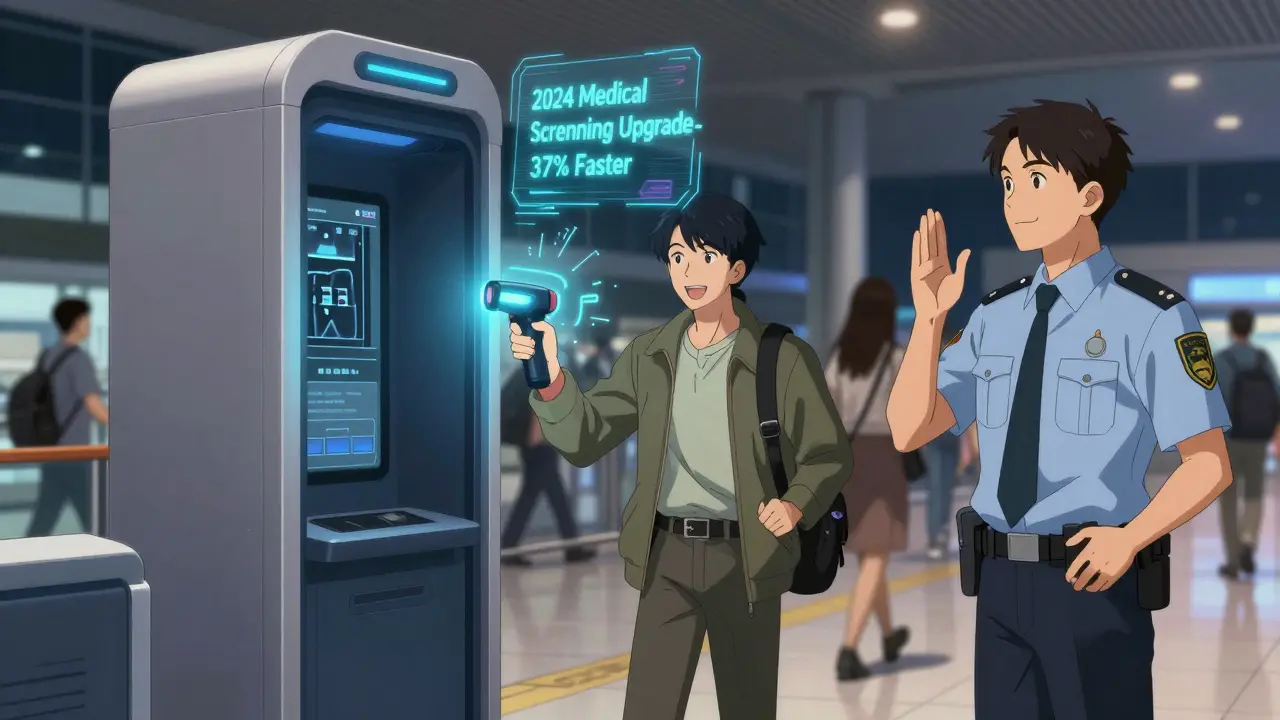
The TSA is rolling out a new Medical Screening Enhancement Initiative at 15 major U.S. airports as of January 2024. By the end of 2024, it’ll be at 50 airports. These lanes have dedicated officers trained in medical equipment, and they use handheld scanners to detect medication without X-ray. Early results show screening time dropped by 37% on United Airlines flights using this system.
The FAA is also investing $22.7 million in new detection tech to reduce false alarms from medication components. By 2026, expect faster, smarter screening for travelers with medical needs.
Long-term, the World Health Organization is working on global standards for medical travel supplies. By 2027, you might see consistent rules across countries-making international trips much easier.
Final Checklist Before You Fly
Use this before you leave for the airport:
- ☑ All medications in original labeled containers
- ☑ Syringes stored with matching medication
- ☑ Used needles in FDA-approved sharps container
- ☑ Ice packs or gel packs for temperature-sensitive meds
- ☑ Printed TSA Notification Card
- ☑ Doctor’s note (recommended, not required)
- ☑ International: Destination country’s rules checked and documents prepared
- ☑ All items in clear, easily accessible bag
Plan for 30 to 45 minutes of extra screening time. Arrive early. Stay calm. Be polite. You’ve got this.
Can I bring insulin on a plane?
Yes. Insulin, whether in vials, pens, or pumps, is allowed in unlimited quantities on U.S. flights. You don’t need a prescription, but keep it in its original labeled container and declare it at security. You can bring ice packs to keep it cool, and TSA allows them even if they’re larger than 3.4 ounces.
Do I need a doctor’s note for syringes?
No, TSA doesn’t require a doctor’s note. But having one helps. If an officer questions your supplies, a note on letterhead explaining your condition and the need for syringes can clear up confusion fast. It’s not mandatory, but it’s smart.
Can I carry syringes in my checked luggage?
No. Syringes and sharps must be in your carry-on. Checked bags go through rough handling, and loose needles can puncture bags or injure baggage handlers. TSA will confiscate them if found in checked luggage.
What if I forget my sharps container?
If you forget your sharps container, ask at the airport pharmacy or gift shop-they often sell them. If not, you can use a rigid plastic bottle with a screw-top lid (like a laundry detergent bottle) as a temporary solution. Tape the lid shut and label it “Sharps-Do Not Open.” TSA may accept it, but it’s not guaranteed. Better to bring your own.
Can I bring needles on an international flight?
Yes-but rules vary by country. Japan requires a permit for more than 10 syringes. Australia needs an English-language doctor’s letter. The UK requires original packaging with a prescription. Always check your destination’s health ministry website at least 30 days before flying.
Can TSA X-ray my insulin?
TSA can X-ray insulin, but you can request a visual inspection instead. Most officers will honor this request, especially if you explain that X-rays can damage insulin. If they refuse, ask to speak to a supervisor. Insulin is not dangerous and won’t trigger alarms.
Are insulin pumps allowed on planes?
Yes. Insulin pumps are considered medical devices and are allowed through security. You don’t need to remove them. You can request a pat-down instead of going through the body scanner if you prefer. TSA has trained officers for medical devices, and over 90% of pump users report smooth screenings.
What happens if my medication is confiscated?
It’s rare, but if your medication is taken, ask for a receipt and the officer’s name. File a complaint with TSA’s Cares Helpline at 1-855-787-2227 or the Department of Transportation. Under the Air Carrier Access Act, you have the right to carry medically necessary supplies. Confiscation without cause is a violation.
Author

Ben Kono
January 13, 2026 AT 05:46I just flew with my insulin pens and forgot the sharps container so I used a detergent bottle taped shut and labeled it and they let me through no problem
Jessica Bnouzalim
January 15, 2026 AT 05:10YES YES YES this is so important!! I used to hide my stuff in my purse and got pulled aside every single time until I started using the TSA card and a clear bag and now it’s like I’m flying first class??
laura manning
January 15, 2026 AT 12:41While the article provides a comprehensive overview of TSA protocols, it is critically deficient in addressing the legal implications of non-compliance with 49 CFR § 1540.111 regarding the transportation of medical sharps. The absence of statutory citation undermines its authority and may mislead travelers into assuming discretionary compliance is sufficient when, in fact, failure to adhere to standardized containment protocols constitutes a Class C violation under 49 U.S.C. § 46317.
Bryan Wolfe
January 17, 2026 AT 01:11You guys are doing amazing just by being prepared and speaking up. I’ve flown with an insulin pump for 12 years and I still get nervous every time-but the more we normalize this, the easier it gets for everyone. Keep using that notification card, keep asking for visual inspections, and don’t let anyone make you feel like your health is a hassle. You’re not asking for special treatment-you’re asking for basic human dignity. And you deserve it.
Rinky Tandon
January 17, 2026 AT 11:37Let me just say as someone who’s been denied boarding twice for having ‘unauthorized medical devices’-this isn’t just about TSA, it’s about systemic ableism wrapped in bureaucratic red tape. The fact that you need a printed card to prove you’re not a terrorist just because you have diabetes is beyond absurd. And don’t get me started on how they treat people with MS or autoimmune disorders like we’re smuggling contraband. The real issue isn’t the syringes-it’s the lack of training, the lack of empathy, and the fact that 78% of officers still treat injectables like they’re part of a crime scene. We need mandatory disability sensitivity training, not just a notification card.
Sumit Sharma
January 18, 2026 AT 12:01Regarding international travel, the EASA compliance gap is statistically significant but mischaracterized. The 63% figure cited is drawn from a non-peer-reviewed survey conducted by a US-based advocacy group, not EASA’s official audit data. Per ICAO Annex 18 and EU Regulation 2018/1139, all member states are legally obligated to permit injectables under Article 12.3, provided they are accompanied by a prescription in Latin script. The real issue is inconsistent enforcement at regional airports-particularly in Eastern Europe and the Balkans-where local customs agents impose unauthorized restrictions under the guise of ‘biosecurity.’ Always carry your prescription in both English and the destination language, and never rely on airline staff. They’re not medical professionals, and they don’t have the authority to override national law.
Daniel Pate
January 19, 2026 AT 16:14It’s interesting how we treat medical devices as if they’re threats rather than lifelines. The same system that lets you bring a 20-pound laptop through security without a second glance will make you unpack 12 vials of insulin like you’re smuggling contraband. There’s a deeper cultural assumption here-that illness is something to be hidden, something to be justified, something that needs proof. We don’t ask people with glasses to prove they need them. We don’t ask people with hearing aids to explain why they’re carrying a device. Why do we treat insulin like it’s a weapon? Maybe the real problem isn’t the needles-it’s the fear behind them.
Christina Widodo
January 20, 2026 AT 13:31Has anyone tried the new TSA Medical Screening lanes at Atlanta? I used them last month and the officer knew exactly what an insulin pump was and didn’t even ask me to remove it. Just nodded and said ‘carry on’ like it was normal. It felt like a small victory.
TiM Vince
January 22, 2026 AT 05:34I’m from India and I’ve flown to the US with my insulin pens and syringes. The key is to always have your name on the vial and to keep them in your hand luggage. When I landed in Chicago, the officer asked if I needed help and I said yes-I was nervous. She smiled and said ‘I have a cousin with type 1’ and just waved me through. Sometimes the system works when you let it.
gary ysturiz
January 22, 2026 AT 09:18Just fly with confidence. You’re not breaking rules-you’re following them. Keep your stuff organized, say it loud, and don’t apologize for needing to stay alive. You’ve got this.