
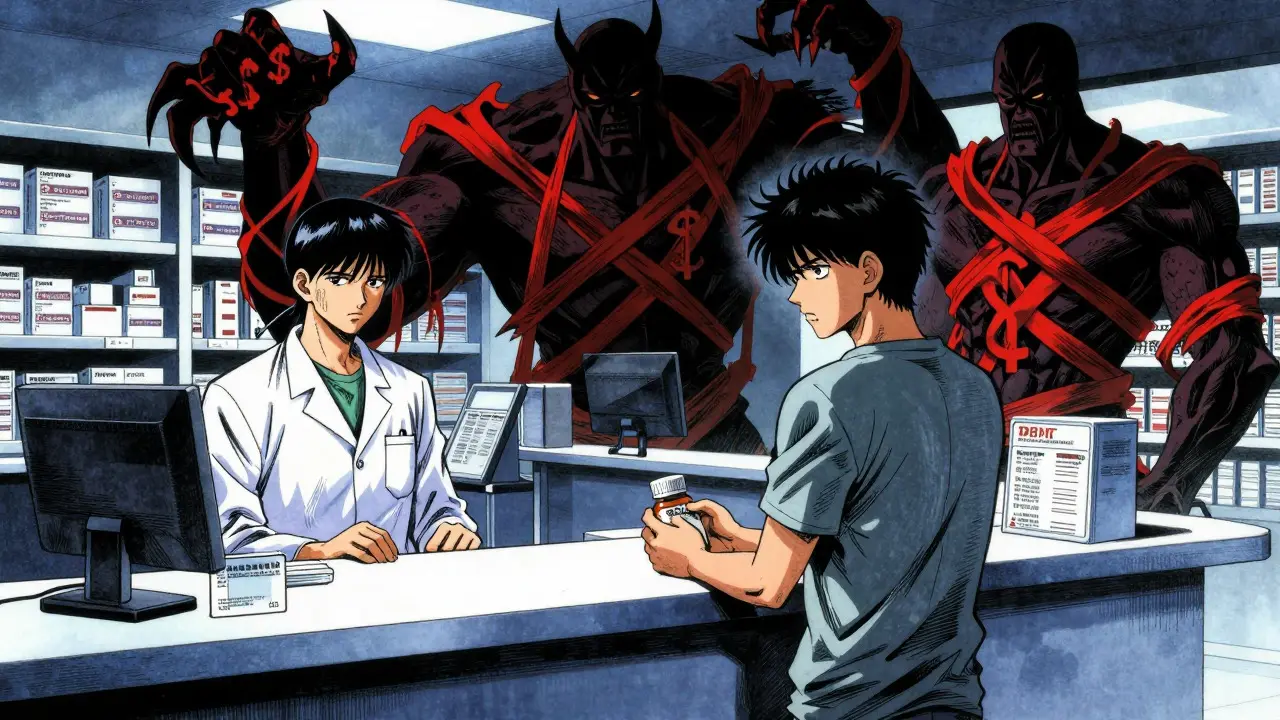
Walking into a pharmacy to pick up a generic blood pressure medication, you might expect the price to be fixed and predictable. In many parts of the world, that’s exactly how it works. But if you are in the United States, the answer is far more complicated. The question isn’t just how much the drug costs, but who is paying for it, what rebates are being kicked around behind the scenes, and whether your specific insurance plan has negotiated a deal that actually benefits you.
For decades, the U.S. federal government largely stayed out of direct price-setting for commercial drugs. Instead, it relied on market competition among hundreds of manufacturers to drive prices down after patents expired. That model worked well for high-volume drugs like statins, where dozens of companies compete fiercely. But for lower-competition generics, prices could swing wildly, sometimes spiking by hundreds of percent when only one or two manufacturers remained.
That era of hands-off regulation is ending. With the implementation of the Inflation Reduction Act (IRA) provisions starting in 2025 and 2026, along with new transparency rules and tariff policies announced in late 2025, the landscape of drug pricing regulation has shifted dramatically. Today, we have a hybrid system: heavy government intervention for public programs like Medicare and Medicaid, coupled with market forces for private insurance, all under increasing scrutiny from both consumers and policymakers.
The Core Mechanism: Medicaid Rebates and Average Manufacturer Price
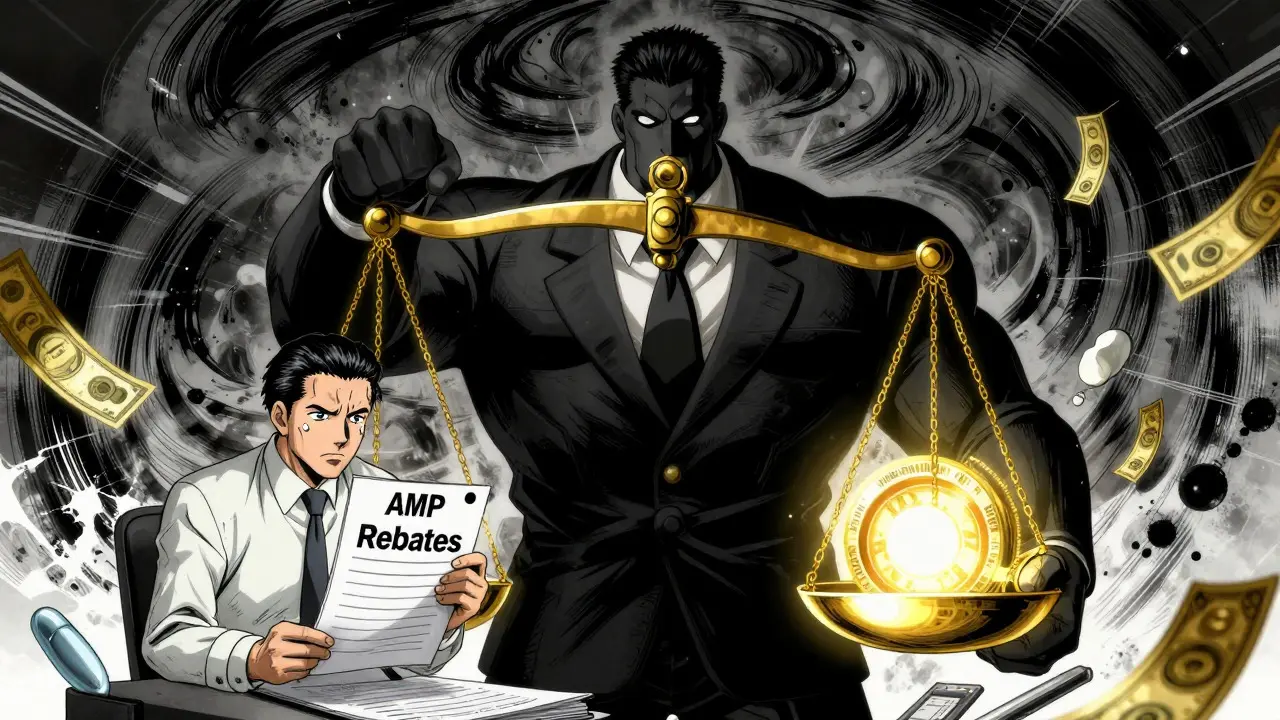
To understand how the government influences generic prices, you first need to look at the Medicaid Drug Rebate Program (MDRP). Established in 1990, this is arguably the most significant lever the federal government holds over pharmaceutical pricing. It doesn’t set a maximum retail price directly. Instead, it mandates that manufacturers pay rebates to state Medicaid programs based on their sales data.
Medicaid Drug Rebate Program (MDRP) is a federal mandate requiring pharmaceutical manufacturers to provide rebates to state Medicaid programs for brand-name and generic drugs dispensed to beneficiaries. For generic drugs, the rebate formula is codified at 42 U.S.C. § 1396r-8(c)(2).
Here is how the math works for generics. Manufacturers must calculate and report their Average Manufacturer Price (AMP) quarterly to the Centers for Medicare & Medicaid Services (CMS). AMP is essentially the average price wholesalers pay to buy the drug. The manufacturer then owes a rebate equal to the greater of:
- 23.1% of the AMP, or
- The difference between the AMP and the "single best price" offered to any other customer (like a large hospital system or PBM).
This creates a floor for pricing. If a manufacturer tries to sell a generic drug too cheaply to one buyer to undercut competitors, they might trigger a higher rebate obligation to Medicaid. Conversely, if they keep prices high, they pay a larger percentage rebate. In fiscal year 2024, these generic rebates totaled $14.3 billion, making up 78% of all Medicaid drug rebates. This mechanism ensures that while the government doesn’t dictate the shelf price, it captures a significant portion of the margin back from manufacturers.
Medicare Part D: Copays, Caps, and the IRA Impact
If you are on Medicare, your experience with generic drug pricing is defined by your benefit structure, which changed significantly in 2025 due to the Inflation Reduction Act. Before the IRA, there was no cap on out-of-pocket spending for Part D beneficiaries, leading to unpredictable costs. Now, the annual out-of-pocket cap is set at $2,000 for 2025, providing a hard ceiling for catastrophic expenses.
For standard beneficiaries, the cost-sharing structure remains tiered. During the initial coverage phase, you typically pay 25% coinsurance for generic drugs. However, the real game-changer is the Low-Income Subsidy (LIS), often called the "Extra Help." If you qualify for LIS, your copay for generic drugs is capped at $4.90 per prescription in 2025, compared to $12.15 for brand-name drugs. Many LIS beneficiaries pay $0.
Let’s look at the numbers. According to 2025 CMS data, the average Medicare beneficiary spends about $327 annually on generic drugs out-of-pocket, down from $412 in 2022. This drop is largely attributed to the IRA’s structural changes and increased competition. However, the system is not without its glitches. Patients have reported surprise bills when pharmacies substitute one generic manufacturer for another, triggering different formulary tiers and higher copays. For example, a retiree in Florida recently faced a $90 bill for lisinopril because her pharmacy switched brands, despite her usual copay being $15.
Market Competition vs. Government Control: The International Divide
The U.S. approach stands in stark contrast to countries like the UK, Canada, and Germany. In those nations, centralized bodies like the National Institute for Health and Care Excellence (NICE) in the UK directly negotiate prices based on clinical value and cost-effectiveness. They use reference pricing, tying domestic prices to averages in other wealthy nations.
In the U.S., we rely on post-patent competition. There are approximately 1,500 generic manufacturers producing over 10,000 products. This competition drives prices down significantly-generics cost 80-85% less than their brand-name equivalents. By volume, 90% of prescriptions filled in the U.S. are generics, compared to 65% in Europe. This rapid availability is a major strength of the American system.
| Feature | United States | UK / EU Model |
|---|---|---|
| Pricing Authority | Market-driven + Public Program Rebates | Centralized Negotiation (e.g., NICE) |
| Generic Penetration | 90% of prescriptions by volume | 65% of prescriptions by volume |
| Price Level vs. OECD Avg | 1.3x higher | Benchmarked to international averages |
| Volatility Risk | High in low-competition markets | Low due to price caps |
| Innovation Incentive | Higher margins encourage delivery innovation | Tight margins may limit process R&D |
However, the U.S. system has a blind spot: "orphan" generics. When only one or two manufacturers remain for a specific drug, competition vanishes. We saw this in 2024 with pyrimethamine (Daraprim), where prices jumped 300% because only two makers were left. Without direct price controls, these shortages and spikes are harder to prevent quickly. A 2025 KFF analysis found that while U.S. generic prices are only 1.3 times higher than the OECD average, the volatility in these niche markets leaves patients vulnerable.
The Role of PBMs and Transparency Rules
You cannot talk about drug pricing without mentioning Pharmacy Benefit Managers (PBMs). These intermediaries negotiate rebates from manufacturers on behalf of insurers. While rebates are supposed to lower costs for consumers, critics argue the savings often stay within the PBM ecosystem. A July 2025 Senate HELP Committee report found that 68% of generic drug rebate savings never reach the patient at the counter.
To combat this opacity, new transparency rules took effect in April 2025. Manufacturers must now disclose actual costs before dispensing, as documented in Federal Register document 2025-06837. Additionally, the Trump administration’s September 2025 announcement of a 100% tariff on imported branded drugs, alongside the launch of TrumpRx.gov, signaled a shift toward direct-to-consumer pricing models. While TrumpRx primarily targets brand-name discounts (up to 85% on specialty brands), it highlights a growing political appetite for bypassing traditional insurance channels.
For the average person, this means more information is available, but navigating it is still tough. The average Medicare beneficiary spends 4.7 hours a year trying to understand their Part D coverage. Independent pharmacists spend over 11 hours weekly managing reimbursement claims. The complexity is a barrier to realizing the theoretical savings promised by competition.
Future Outlook: Negotiations and Legal Battles
Looking ahead to 2026 and beyond, the role of government control is expanding. The second round of Medicare drug price negotiations under the IRA will include generic versions of high-spending drugs like apixaban (Eliquis) and rivaroxaban (Xarelto) in 2027. Analysts predict this could cut prices for these select generics by 25-35%. The Congressional Budget Office estimates these IRA provisions will save Medicare $196 billion through 2033, with generic-specific measures accounting for $12.7 billion.
However, the industry is fighting back. PhRMA sued the Most-Favored-Nation pricing executive order in May 2025, arguing it violates the Fifth Amendment. Meanwhile, experts like Dr. Mark McClellan warn that excessive price controls could squeeze manufacturer margins below sustainable levels, potentially reducing investment in manufacturing efficiency and drug delivery innovations. Currently, 70% of generic manufacturers operate on profit margins below 15%.
The balance is delicate. Too little control leads to price gouging in low-competition markets. Too much control risks supply chain instability and reduced innovation. As we move through 2026, the focus will likely remain on enhancing competition rather than imposing blanket price caps, though the lines are blurring with each new policy update.
Does the US government set the price of generic drugs?
Not directly in the commercial market. The US relies on competition among manufacturers to lower prices. However, for public programs like Medicaid and Medicare, the government uses rebate formulas and negotiation powers to influence effective prices. Medicaid requires manufacturers to pay rebates based on the Average Manufacturer Price, effectively capping net revenue.
How much do I pay for generic drugs on Medicare in 2026?
It depends on your income and plan. Standard beneficiaries typically pay 25% coinsurance during the initial coverage phase, with an annual out-of-pocket cap of $2,000. If you qualify for the Low-Income Subsidy (Extra Help), your copay is capped at $4.90 per generic prescription, and many pay $0.
Why are generic drug prices so volatile in the US?
Volatility occurs in "orphan" generic markets where only one or two manufacturers remain. Without direct price controls, these companies can raise prices significantly when competition disappears. High-volume generics with many competitors remain stable and cheap, but niche drugs are prone to sudden spikes.
What is the Medicaid Drug Rebate Program?
The MDRP is a federal law requiring drug manufacturers to pay rebates to state Medicaid programs. For generics, the rebate is the greater of 23.1% of the Average Manufacturer Price or the difference between the AMP and the best price offered to any other buyer. This ensures Medicaid receives a discount relative to market rates.
Will Medicare negotiate prices for generic drugs?
Yes, starting in 2027, Medicare will negotiate prices for select high-expenditure generic drugs, including versions of Eliquis and Xarelto. This is part of the Inflation Reduction Act. Previously, generics were exempt due to existing competition, but the new rules target high-cost exceptions.
Author

Anna Salamon
August 1, 2026 AT 16:14Chris McQuaid
August 2, 2026 AT 07:04sam howard
August 3, 2026 AT 09:11Samuel Hershberger
August 5, 2026 AT 01:56Mathew Stuckey
August 6, 2026 AT 20:55John Divers
August 8, 2026 AT 02:35Ambria St louis
August 9, 2026 AT 05:20Dennis Leeftink
August 10, 2026 AT 19:20Traci Bobbitt
August 11, 2026 AT 10:28Sansaray Jones
August 12, 2026 AT 18:30Michelle Alavaski
August 13, 2026 AT 03:35Veronica Agbanyim
August 13, 2026 AT 13:25