
Imagine buying a life-saving heart medication, only to discover it contains chalk and sugar instead of the active ingredient. It sounds like a scene from a thriller, but for millions of people in low- and middle-income countries, this is a terrifying reality. The World Health Organization estimates that 1 in 10 medical products in these regions is substandard or falsified. This isn't just about lost revenue for big pharma; it’s a global health emergency. As regulations tighten globally, the industry is scrambling to deploy futuristic technologies to seal every gap in the supply chain.
The fight against fake drugs has moved beyond simple holograms on boxes. We are now entering an era where every single pill bottle has a unique digital identity, tracked via blockchain and verified by your smartphone. With the U.S. Drug Supply Chain Security Act (DSCSA) mandating unit-level traceability by November 2025, and similar laws in Europe and emerging markets, the technology behind anti-counterfeiting is evolving faster than ever. Here is what you need to know about the innovations stopping counterfeit medications today.
The Shift to Mass Serialization
Gone are the days when a batch number was enough to track a product. Today, the gold standard is Mass Serialization, which assigns a unique identifier to every single pharmaceutical unit. Think of it like a passport number for each box of medicine. This technology currently holds a massive 34% share of the market because it satisfies strict regulatory demands.
When a manufacturer produces a box of antibiotics, they print a unique code-often a serialized barcode-on the package. This code links to a central database that records every step of the journey: who made it, who shipped it, and which warehouse stored it. If a recall happens, companies don’t have to pull back entire batches. They can pinpoint exactly which serial numbers are affected. This precision reduces recall execution time by nearly 60%, saving money and, more importantly, protecting patients from bad stock.
However, serialization alone has a weakness. Standard QR codes and barcodes are easy to copy. In fact, research indicates that 78% of pharmaceutical QR code implementations fail security audits because they lack cryptographic protection. Counterfeiters simply scan a real code, print it on a fake box, and sell it. To fix this, the industry is layering other technologies on top of serialization.
NFC Technology: The Smartphone Shield
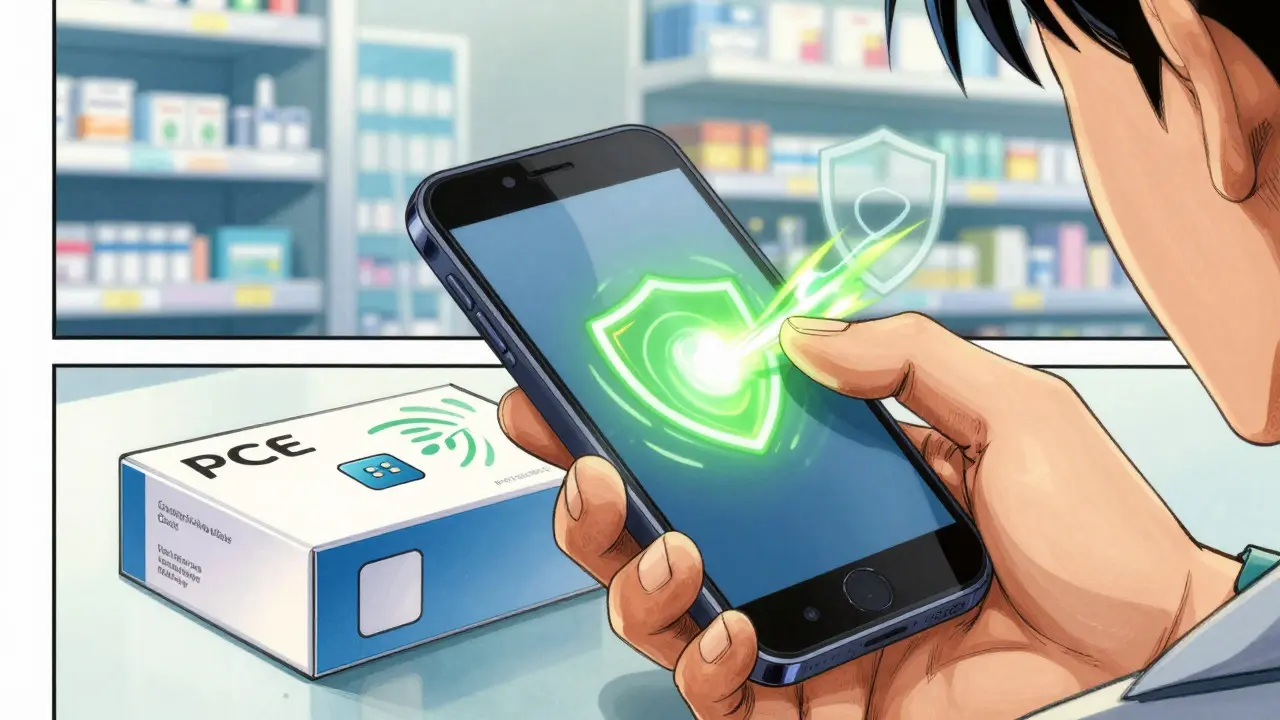
If you’ve used contactless payments, you already know Near Field Communication (NFC). Now, it’s becoming the frontline defense against drug fraud. Unlike QR codes, which anyone can photograph and duplicate, NFC chips embedded in packaging use cryptographic security. These tiny chips store data that is incredibly difficult to clone without specialized equipment.
For the consumer, this means peace of mind with zero effort. You tap your smartphone against the medicine box, and within two seconds, you get a green checkmark confirming authenticity. Data from ForgeStop’s 2025 demonstrations shows this method achieves 99.98% accuracy. In Latin America, pharmacy chains using NFC platforms reported a 98% drop in counterfeit incidents within just six months. Pharmacists there verify over 1,200 products daily, adding only three to five seconds per check.
The barrier to entry is low because most modern smartphones support NFC. Android 8.0+ and iOS 11+ devices make up 89% of global shipments. This ubiquity makes NFC a practical solution for both high-tech hospitals and rural clinics, provided the infrastructure supports it.
Blockchain: The Unbreakable Ledger
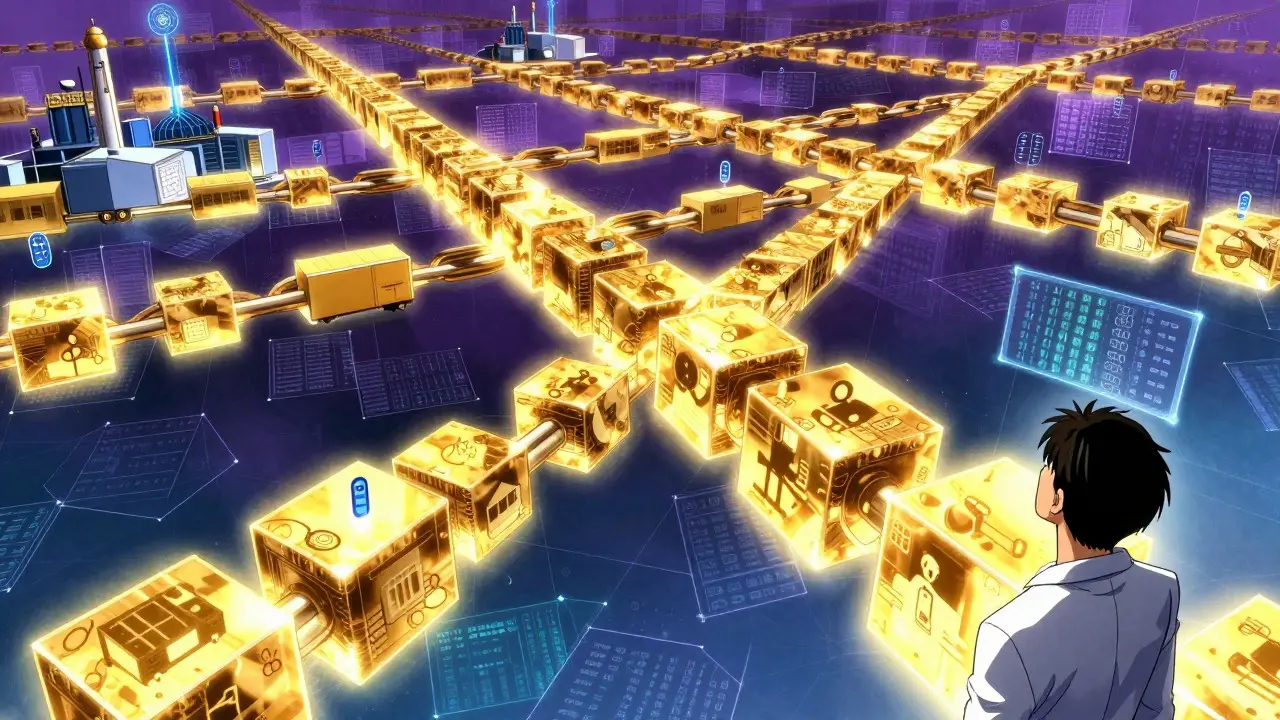
While NFC secures the physical package, Blockchain secures the data trail. Blockchain creates an immutable record of provenance. Once a transaction is recorded-say, a shipment moving from a factory to a distributor-it cannot be altered or deleted. This transparency is crucial for cold-chain medications, like insulin or vaccines, which require specific temperature controls.
Pharmaceutical companies are adapting platforms originally designed for diamonds, such as De Beers’ Tracr, to track drugs. By integrating Internet of Things (IoT) sensors, the blockchain doesn’t just record location; it logs temperature and humidity data at every stop. If a truck’s cooling system fails during transit, the blockchain flags the product as compromised before it ever reaches the pharmacy shelf.
Despite its power, blockchain is complex to implement. Gartner estimates that full integration takes 18 to 24 months, compared to 6-12 months for traditional serialization. It requires significant investment and training, which is why smaller manufacturers often lag behind. However, as regulators demand deeper visibility, blockchain is becoming less of a luxury and more of a necessity for major players.
Covert Features: DNA Markers and Smart Inks
Sometimes, the best security is invisible. Covert technologies include features that aren’t immediately obvious to the naked eye but can be detected with specialized tools. One of the most advanced methods is DNA-based authentication. Manufacturers mix unique biological markers into the ink or packaging material. To verify the drug, a lab uses a simple test kit to confirm the presence of that specific DNA sequence.
This offers the highest level of security because replicating biological markers is exponentially harder than copying a barcode. However, cost remains a hurdle. Implementing DNA authentication averages $0.15 to $0.25 per unit, whereas standard serialization costs only $0.02 to $0.05. For expensive specialty drugs, this premium is worth it. For generic painkillers, it might not be.
Other covert options include thermochromic inks that change color with heat or UV-reactive inks visible only under blacklight. These provide quick checks for pharmacists and regulators without needing expensive scanners. Combined with overt features like tamper-evident seals and shrink bands, they create a multi-layered defense that frustrates counterfeiters.
| Technology | Security Level | Cost Per Unit | Verification Speed | Best Use Case |
|---|---|---|---|---|
| Serialization (Barcode) | Medium | $0.02 - $0.05 | Fast (Scanner needed) | Regulatory Compliance |
| NFC Chips | High | $0.05 - $0.10 | Very Fast (Smartphone tap) | Patient Verification |
| Blockchain | Very High | Variable (Infrastructure heavy) | Instant (Digital lookup) | Cold Chain Tracking |
| DNA Markers | Highest | $0.15 - $0.25 | Slow (Lab testing) | High-Value Specialty Drugs |
The Role of AI in Detection
Artificial Intelligence is stepping in to handle the visual inspection process. AI-driven systems can analyze images of packaging to detect subtle signs of tampering or poor-quality printing that human eyes might miss. Recent deployments show these systems achieving 99.2% accuracy in controlled environments.
However, real-world conditions are messy. Lighting varies, boxes get crushed, and labels peel. Early AI models struggled with this variability, but newer versions are improving rapidly. Accuracy jumped from 89.7% in 2024 to 94.3% by mid-2025. These systems are particularly useful at distribution centers, where thousands of packages pass through conveyor belts daily. They act as a final gatekeeper, flagging suspicious items before they enter the broader supply chain.
Challenges and Real-World Implementation
Technology is only as good as its implementation. The transition to these new systems is painful for many companies. A warehouse manager in Europe recently shared that implementing serialization under EU regulations took 14 months, cost €2.3 million, and initially cut throughput by 37%. Legacy systems often clash with new software, requiring extensive retraining for staff.
Small and mid-sized manufacturers are especially vulnerable. While 97% of the top 100 pharmaceutical companies had implemented serialization by the 2025 deadline, adoption among smaller firms sits at just 43%. Cost constraints and technical complexity keep them behind. Meanwhile, geopolitical factors like tariffs on pharmaceutical inputs from China and India have added another layer of disruption, increasing production costs by up to 18%.
Yet, the momentum is undeniable. Emerging markets like Brazil and Nigeria have introduced mandatory serialization rules, forcing rapid adoption. The Pharmaceutical Serialization Community on LinkedIn now boasts over 12,500 members sharing troubleshooting tips and best practices. Support from vendors is also maturing, with top providers offering 24/7 assistance and average response times under 10 minutes.
What Comes Next?
The future of anti-counterfeit tech lies in convergence. No single solution is perfect. The industry consensus points toward multi-layered approaches: combining serialization for tracking, NFC for patient verification, and blockchain for data integrity. Sustainability is also becoming a priority, with 62% of new packaging solutions incorporating recyclable materials.
As the EU’s Digital Product Passport regulations approach their 2027 deadline, we’ll see even tighter integration between physical products and digital identities. For consumers, this means greater trust. For the industry, it means higher upfront costs but long-term resilience against a threat that kills thousands annually. The technology exists to stop fake drugs; now, the challenge is ensuring every player in the supply chain adopts it.
How can I tell if my medication is fake?
Look for tamper-evident seals and check for unique codes like QR codes or NFC tags. If the packaging has an NFC chip, tap it with your smartphone to verify authenticity instantly. Also, inspect the box for poor printing quality, misspellings, or unusual texture, which are common signs of counterfeits.
What is the difference between serialization and blockchain in drug tracking?
Serialization assigns a unique ID to each product unit for tracking purposes, usually via barcodes. Blockchain provides an immutable, decentralized ledger that records every transaction involving that ID. Serialization tells you where the item is; blockchain proves that the history of the item hasn't been altered.
Why are QR codes considered less secure than NFC for anti-counterfeiting?
QR codes are static images that can be easily scanned and copied by counterfeiters. NFC chips use cryptographic encryption, making them extremely difficult to clone without specialized hardware. Additionally, NFC verification happens directly through a secure handshake between the phone and the chip, reducing the risk of man-in-the-middle attacks.
Do all pharmacies need to upgrade to these new technologies?
Regulations like the DSCSA in the U.S. and FMD in Europe mandate that distributors and dispensers must be able to verify serialized units. While small pharmacies may not need full blockchain infrastructure, they will likely need scanners or smartphone apps capable of reading and verifying serialized codes to remain compliant.
Is DNA-based authentication widely available yet?
Not yet. Due to higher costs ($0.15-$0.25 per unit vs. cents for barcodes), DNA authentication is primarily used for high-value specialty drugs or in regions with severe counterfeiting issues. It is not yet standard for generic medications due to economic constraints.
Author
