
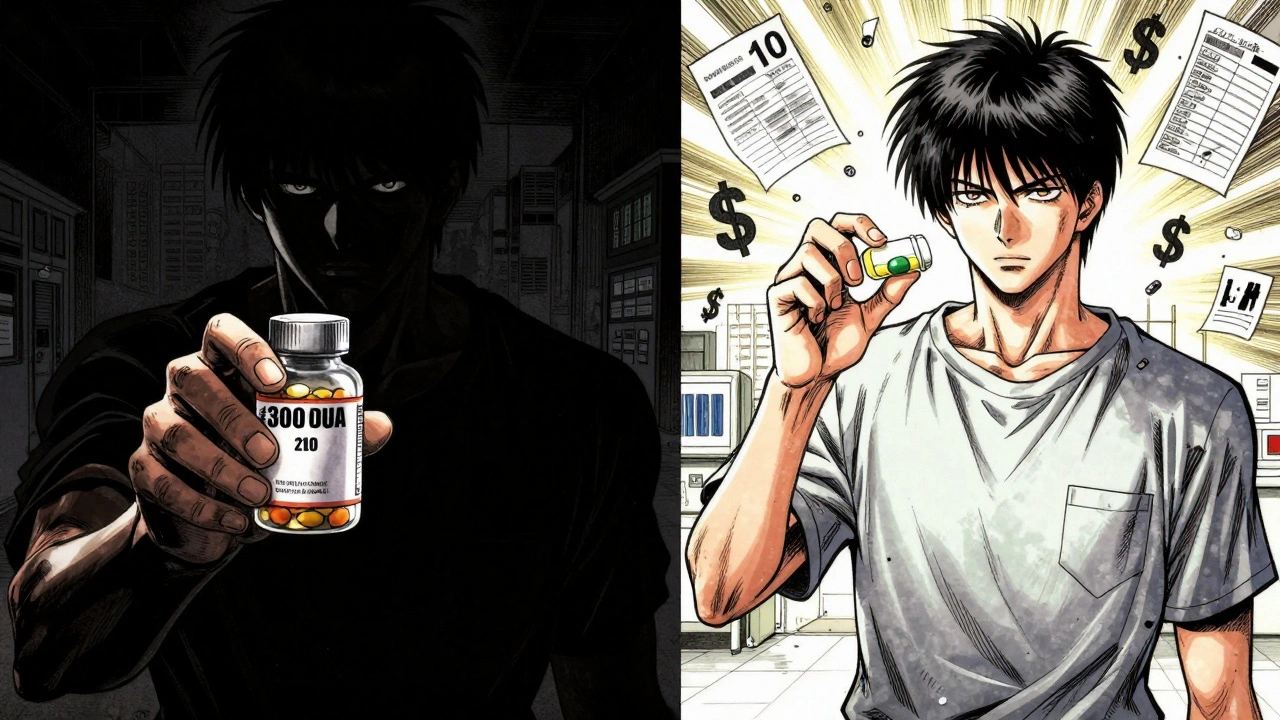
Every year, the U.S. health system saves billions of dollars simply because generic drugs hit the market. These aren’t small savings. They’re the difference between a patient paying $300 for a brand-name pill and $10 for the same medicine under a generic label. The FDA tracks these savings closely - and the numbers tell a powerful story.
What the FDA Actually Measures
The FDA doesn’t just count how many generic drugs get approved. It calculates exactly how much money is saved in the first year after each new generic enters the market. This is called the first-year savings from new generic approvals. It’s not about all generics in use - it’s about the immediate price drop when a brand-name drug loses its monopoly.
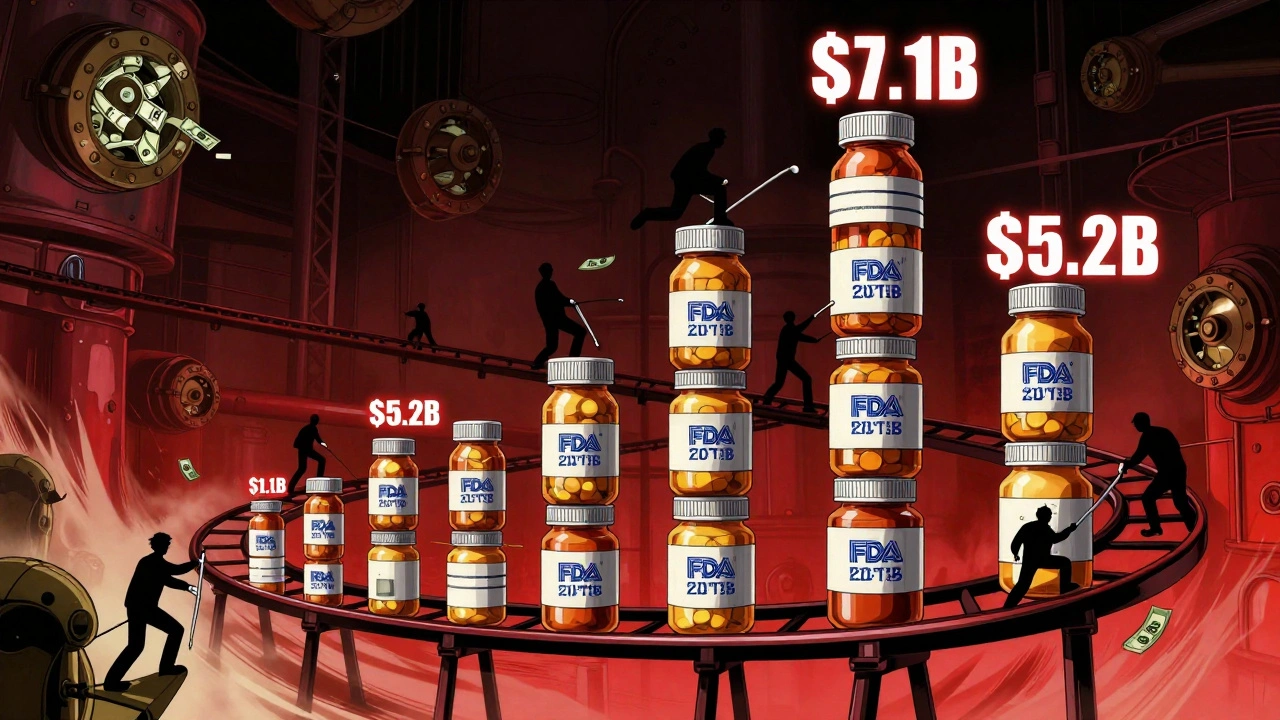
Here’s what happened in recent years:
- 2018: $2.7 billion saved
- 2019: $7.1 billion saved - the highest on record
- 2020: $1.1 billion saved
- 2021: $1.37 billion saved
- 2022: $5.2 billion saved
That jump in 2022 wasn’t random. It came from a few high-demand drugs - like those for high cholesterol, diabetes, and depression - where the brand versions were selling for hundreds of dollars a month. Once generics arrived, prices dropped over 70% almost overnight.
Why the Numbers Jump Around So Much
These savings aren’t steady. They spike when a blockbuster drug goes generic. In 2019, the $7.1 billion surge came from just five drugs. One of them, a cholesterol medicine, saved patients and insurers over $1 billion in its first year alone. That’s more than the entire annual savings from most other years.
But in 2020, the pipeline was quieter. Fewer big-name drugs lost patent protection. So savings dropped - not because generics stopped working, but because there weren’t enough high-revenue drugs coming off patent.
This is why the year-to-year numbers look like a rollercoaster. It’s not a glitch. It’s the nature of the market. Generic savings are tied to patent cliffs. When a drug’s patent expires, the savings flood in. When no big patents expire, the savings slow down.
What About All Generics - Not Just the New Ones?
The FDA’s numbers only show savings from new approvals. But the real story is bigger. The Association for Accessible Medicines (AAM) tracks total savings from every generic drug sold in a year - whether it was approved last month or 10 years ago.
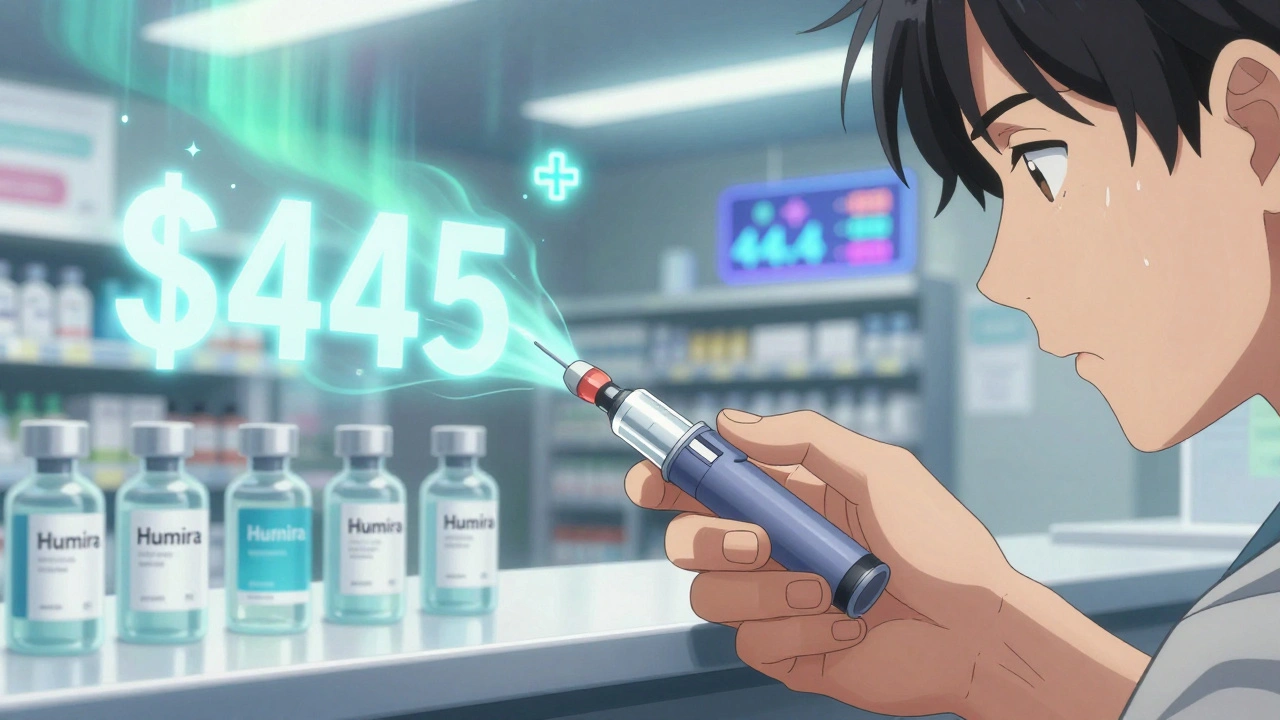
In 2023, that total hit $445 billion. That’s not a typo. Half a trillion dollars in one year. Here’s how it breaks down:
- $206 billion saved in the commercial insurance market
- $137 billion saved through Medicare
- $102 billion saved through Medicaid
That’s $2,672 saved per Medicare beneficiary just from generics. For someone on insulin, heart meds, or antidepressants, that’s life-changing. One patient told me they used to pay $450 a month for their diabetes drug. After the generic came out? $12.
Who’s Really Getting the Savings?
It’s easy to assume lower prices mean lower costs for patients. But that’s not always true. Pharmacy benefit managers (PBMs) - the middlemen between insurers, drugmakers, and pharmacies - often keep a big chunk of the savings.
A 2023 Senate investigation found that only 50% to 70% of generic savings actually reach patients. The rest gets buried in rebates, fees, and complex contracts. A pharmacist in Ohio told me: “I see the price drop on the screen. But the patient still pays $50 because their plan has a high deductible and the PBM didn’t pass the savings along.”
Medicaid programs, on the other hand, are better at passing savings to patients. California’s Medi-Cal program saved $23.4 billion in 2023. Alaska saved $354 million. The bigger the population, the bigger the savings.
Generics Are the Backbone of U.S. Prescriptions
Here’s the most striking stat: 90% of all prescriptions filled in the U.S. are generics. But they make up only 13.1% of total drug spending. That’s the power of competition.
Without generics, the U.S. would be paying over $3 trillion more for medications every decade. Since 2014, generics have saved the system $3.1 trillion. By 2028, that number will hit $3.9 trillion.
And it’s not slowing down. In 2024, over 700 generic applications were approved by the FDA. More big-name drugs are losing patents - including top-selling biologics like Humira and Enbrel. That’s where the next wave of savings will come from.
Why Some Generics Take Longer to Arrive
Not every patent expiration leads to a generic right away. Brand companies use tricks to delay competition. They file lawsuits, extend patents with minor changes, or lock up distribution networks through risk evaluation and mitigation strategies (REMS).
One drug, a treatment for multiple sclerosis, had its generic held up for five years because the brand company controlled the only approved distribution channel. The FDA had to step in. That’s why the agency’s 2023 Drug Competition Action Plan focuses on breaking these barriers.
Also, complex generics - like inhalers, injectables, or topical creams - take longer to approve. But the FDA is speeding things up. Thanks to the Generic Drug User Fee Amendments (GDUFA), 95% of standard applications are reviewed in under 10 months. That’s down from over two years in the early 2010s.
The Future: Biosimilars and Beyond
Biologics - complex drugs made from living cells - used to be impossible to copy. But biosimilars are changing that. As of August 2024, the FDA had approved 59 biosimilars. They’re not exact copies, but they work the same way and cost 15% to 35% less.
So far, biosimilar savings are small - just $1.5 billion total since 2015. But that’s about to change. Humira, the world’s top-selling drug, lost its patent in 2023. Ten biosimilars hit the market in 2024. Early estimates show it could save $10 billion in its first year alone.
If biosimilars follow the same path as small-molecule generics, we could see $100 billion in annual savings from them by 2030.
What This Means for Patients
If you take a daily medication - for blood pressure, asthma, depression, or arthritis - chances are you’re already saving money because of generics. The average generic copay is $6.97. Most are under $20. That’s not just affordable. It’s life-saving.
But savings don’t always reach the patient. If you’re paying more than $20 for a generic, ask your pharmacist: “Is this the lowest price available?” Sometimes, paying cash is cheaper than using insurance. Some pharmacies offer $4 generic lists. Others have discount cards.
And if you’re on Medicare or Medicaid, make sure your plan covers the generic version. If it doesn’t, ask for a formulary exception. You’re entitled to the lowest-cost option.
Generics aren’t just a cost-cutting tool. They’re a public health win. More people take their meds when they’re affordable. More people stay healthy. More people avoid hospital visits.
How does the FDA calculate savings from generic drug approvals?
The FDA calculates savings by comparing the price of the brand-name drug before a generic enters the market to the price after. It multiplies that difference by how many units of the generic were sold in the first 12 months after approval. It also accounts for any price drop the brand company makes to compete. For example, if a brand drug cost $200 and the generic costs $40, and 1 million prescriptions were filled, the savings would be $160 million.
Why was 2019 the highest year for generic savings?
2019 saw the largest savings because several high-revenue brand drugs lost patent protection at once. One of them was a cholesterol drug with annual sales over $4 billion. When its generic arrived, the price dropped over 80%, saving the system $7.1 billion in just one year. That kind of surge doesn’t happen every year - it depends on which patents expire.
Do generics really work as well as brand-name drugs?
Yes. The FDA requires generics to have the same active ingredient, strength, dosage form, and route of administration as the brand. They must also be bioequivalent - meaning they work the same way in the body. Over 90% of prescriptions filled in the U.S. are generics, and they’re used safely every day by millions of patients.
Why don’t I always save money when my prescription goes generic?
Sometimes, pharmacy benefit managers (PBMs) don’t pass savings along to patients. They might keep rebates from drugmakers or structure your plan so your copay stays high even when the drug price drops. If you’re paying more than $20 for a generic, ask your pharmacist if paying cash is cheaper. Some stores offer $4 or $10 generic lists.
What’s the difference between a generic and a biosimilar?
Generics are exact copies of small-molecule drugs - pills or injections made from chemicals. Biosimilars are similar to, but not exact copies of, complex biologic drugs made from living cells. They’re harder to produce and approve, so they cost more than generics. But they still save money - often 15% to 35% less than the brand biologic.
How many generic drugs are approved each year?
The FDA approves between 600 and 800 generic drug applications each year. In 2022, it approved 742. But not all are first generics - some are additional versions of drugs that already have generics. The number of first-time generics varies - from 48 in 2021 to 67 in 2022 - depending on which patents expire.
Final Thought: Generics Are the Quiet Hero of American Health Care
Most people don’t think about generics until they see their copay drop. But behind every $10 pill is a system of regulators, manufacturers, and lawmakers working to keep drugs affordable. The FDA’s approvals are the trigger. The savings are the result. And the real winners? The patients who can finally afford their medicine.
Author

Annie Grajewski
December 4, 2025 AT 14:15Lynette Myles
December 6, 2025 AT 10:33sean whitfield
December 7, 2025 AT 08:54Stephanie Fiero
December 7, 2025 AT 20:06Jennifer Patrician
December 8, 2025 AT 06:58Mark Curry
December 9, 2025 AT 11:39Carole Nkosi
December 11, 2025 AT 00:46an mo
December 11, 2025 AT 10:43Jimmy Jude
December 11, 2025 AT 12:17Stephanie Bodde
December 12, 2025 AT 19:37Philip Kristy Wijaya
December 13, 2025 AT 04:13Mellissa Landrum
December 13, 2025 AT 13:13Ali Bradshaw
December 15, 2025 AT 05:59aditya dixit
December 15, 2025 AT 20:50